
Back to Bow River: Mossy on the songs, memories and years between


THE BIG READ
There are moments in interviews you know you’ll remember long after you’ve stopped taking notes.
Talking to Ian Moss about Bow River produced one of them. I’d asked what the song, written by a much younger Moss dreaming of escape and another life, meant to him now at 71.
There was a pause. Then, before answering, “Mossy” started to sing.
“Listen now to the wind, babe…”
Just that opening fragment, delivered down the line without accompaniment. No warm-up, no guitar, and no band. And there it was: that unmistakable Ian Moss voice, crystal clear and seemingly untouched by the passing decades.
For a bloke who has spent more than 50 years making music, including as guitarist and vocalist with one of Australia’s most revered rock bands, it was a small moment. For the bloke at the other end of the phone, it was a goosebump moment.
Moss eventually returned to my question.
“It’s good memories,” he says.
He remembers the beginnings of Bow River stretching back to Cold Chisel demo sessions at Sydney’s Trafalgar Studios in 1978. It wasn’t the famous opening or chorus that came first, but the bridge.
“One of the guys had taken a toilet break, and the rest of us were just sitting behind our instruments in the studio. I suddenly sang that bridge, and the late Steve Prestwich said, ‘That’s pretty cool – what’s that? Who’s that?’
“I said, ‘I just made it up.’
“He said, ‘I’d keep working on that. There’s something going on there.’”
There certainly was. But Moss says the rest of the song didn’t simply tumble out.
“Over the next few years, the other bits and pieces finally presented themselves. Songwriting is funny that way. You can sit there and try, but sometimes you just have to wait for that little window to open and say, ‘Okay, I’m ready now. I’ll give you the next bit. Write this down – I’m not going to hang around for long.’”
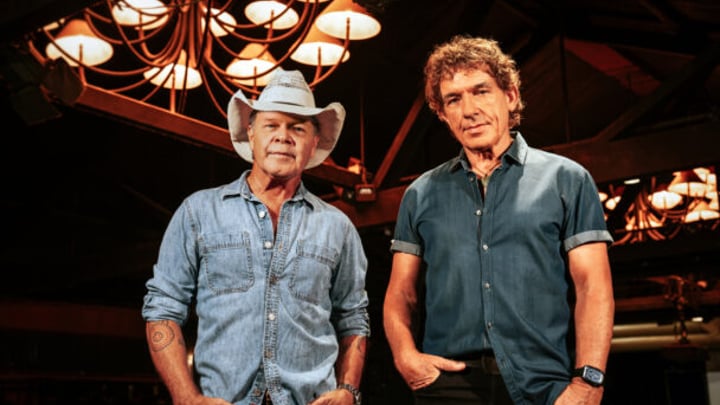
More than four decades later, Bow River remains one of the songs Moss will take back on the road with his good mate Troy Cassar-Daley as their acclaimed Together Alone partnership rolls on through the remainder of 2026 and into a newly announced capital city tour in 2027.
There’s also a new live album on the way, Together Alone – Live at the Ulumbarra Theatre, recorded in Bendigo during their 2022 tour and due for release on October 2.
But what becomes clear talking to Moss is that this isn’t simply another lap around Australia playing the old favourites.
He’s still fascinated by the songs, still studying his instrument and still learning, and, perhaps more than ever, acutely aware of time.
Nowhere to hide
Moss and I have crossed paths before. Many years ago, I helped him with liner notes for one of his acoustic releases, back when stripping rock songs to their bare bones was still something of a novelty.
He remembers the era well.
“I suppose all that began when the whole world went ‘unplugged’, with various degrees of unplugged-ness,” he laughs.
“Suddenly you’re on stage, you start playing, and I remember the first time I almost looked around to see why the rest of the band hadn’t joined in.”
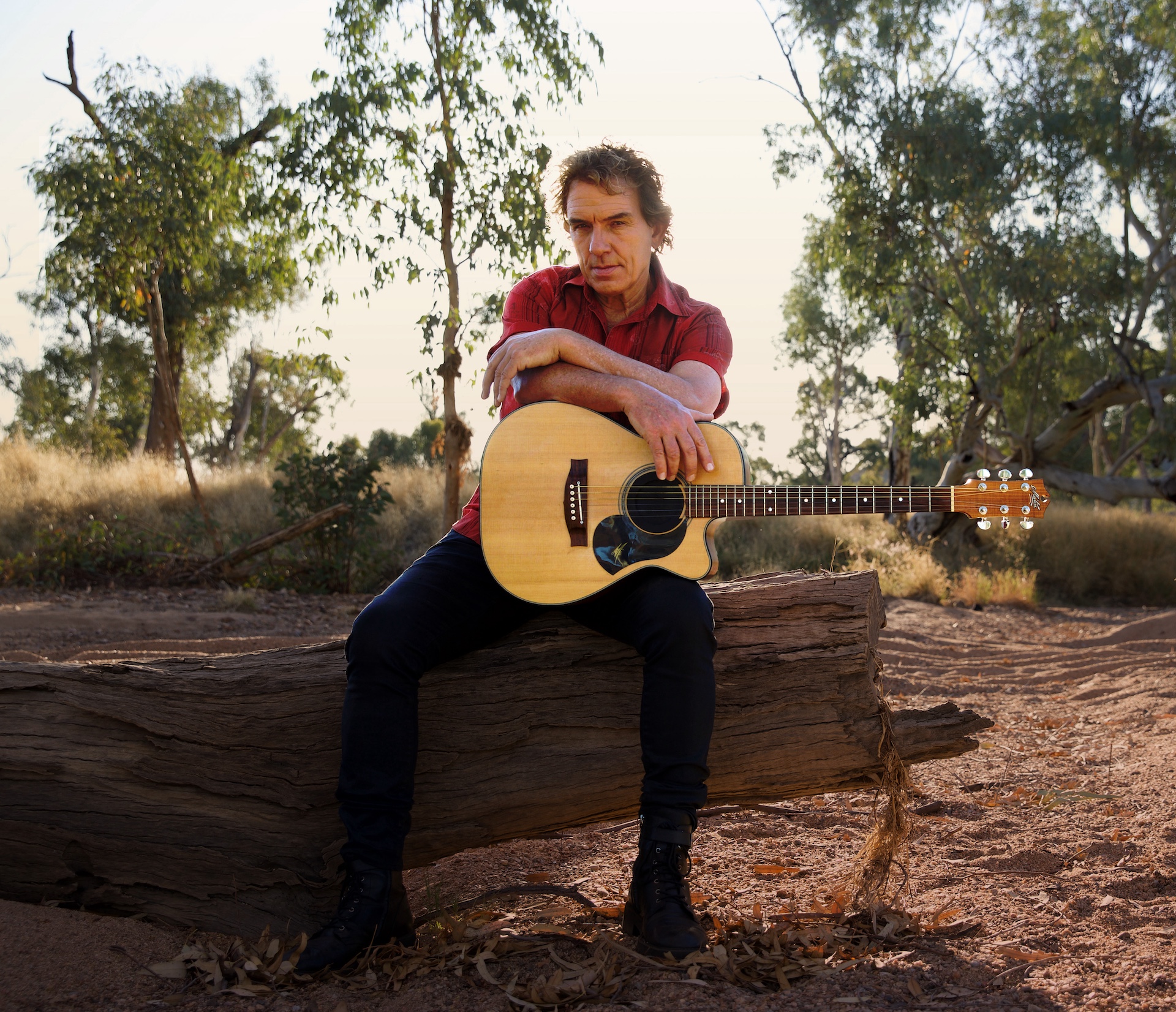
The stripped-back format he now shares with Cassar-Daley brings its own challenge.
“There’s absolutely nowhere to hide,” Moss says.
“You don’t realise how much you could hide in a band situation – not deliberately, hopefully – especially if there’s another guitar player, or piano, or another instrument occupying the same frequencies as you.
“You can get away with a clangour, a wrong chord, if the other guy’s got it right. Some people might feel that something happened, but they won’t quite know what.
“With the stripped-back acoustic thing, it’s all there. It forces you to really focus and concentrate.”
There’s also something rewarding about passing that test, as he explains: “When it works, you feel pretty chuffed that you pulled it off. It’s also a great test of how good a song really is. If it works with one person and one instrument, you know you’re on solid ground.”
Finding common ground with Troy
The musical friendship between Moss and Cassar-Daley goes back much further than either initially remembered.
They once thought they’d first connected around 2010. It turned out to be 2004.
Cassar-Daley was recording an album of soul and blues covers on the NSW Central Coast with producer Matt Fell. Don Walker, who knew Cassar-Daley through their shared Grafton connections, invited Moss along.
Moss admits he wasn’t immediately convinced.
“I said, ‘I don’t know about the country thing,’ and he said, ‘No, I know you like good songs and good lyrics. Just come and have a listen.’”
It didn’t take long. Moss arrived while Cassar-Daley was recording the Dan Penn soul classic The Dark End of the Street.
“Next thing, I’m in there while Troy’s in the middle of doing a vocal … and it wasn’t long before I was in there doing a vocal duet with him.
“I was blown away by how bluesy and soulful this so-called ‘country’ guy was. Then I found out about his fantastic guitar playing, and that he loves his blues.
“So I knew it was always going to work if we ever started properly working together.”
More than two decades later, The Dark End of the Street is the first single from their new live album.
The night everything clicked
The album itself wasn’t originally supposed to come from one concert.
Moss and Cassar-Daley recorded multiple performances during their 2022 tour with the intention of assembling the best possible live record.
Their sound engineer Dan Webb was, Moss says, particularly adept at getting the recording equipment running.
“He’d have it all recording in five minutes.”
Shows in Brisbane and Grafton were among those considered, and they’d already begun mixing some recordings when Moss remembered another night.
Bendigo.
“I thought, ‘I’ll just have a quick listen to Bendigo,’ which I’d almost forgotten about, even though Dan had flagged it and told us we really should give that one a listen.”
It changed the plan completely.
“I started listening and found that every track from that night was head and shoulders above everything else.
“The original plan was to pilfer one track from each night to make a great album, just pick the best versions. But every song from that Bendigo show was the best version.”
The venue itself added another dimension, as Ulumbarra Theatre incorporates part of the former Sandhurst Gaol, including remnants of its prison history.
“They’ve turned it into a beautiful theatre with great acoustics, but they’ve kept the prison cells and the gallows as a kind of museum piece,” Moss says.
“Our joke is that the gallows were between us and the exit doors: if we didn’t play well, we weren’t going to make it out!
“So we really pulled our finger out that night.”
The movie inside the song
Something else happens when you’ve lived with songs for 30, 40 or even 50 years.
The singer changes.
The audience changes.
Life changes.
But Moss says the pictures inside certain songs can remain remarkably vivid.
He talks about Telephone Booth, Bow River and Flame Trees, songs connected in different ways by travel, distance, place and the pull of somewhere else.
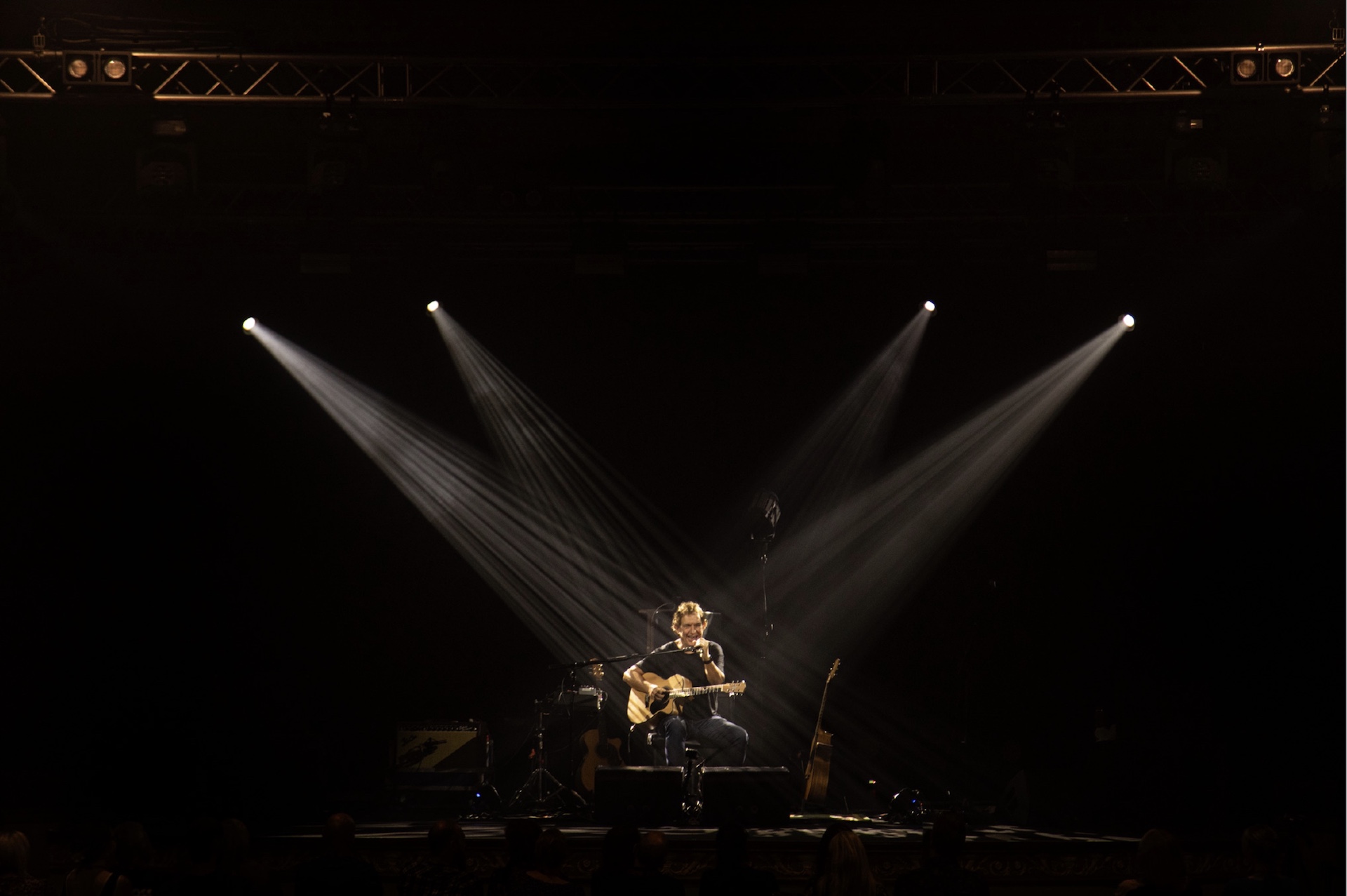
“When I’m singing them now, I can find myself reflecting and picturing things,” he says.
“I like to get right inside the song and be that guy in the song.”
With Flame Trees, written by Don Walker and Steve Prestwich, the images remain deeply personal.
“The images are still the ones I probably had when I first heard the lyrics to Flame Trees. I was picturing something, and somebody.
“I’ve got my own movie going on in my head.
“Whenever I sing it now, I go back to that movie. It means a lot to me. It’s nostalgic, and I lock myself in and play my part.”
For audiences who have carried those songs through their own lives, perhaps they’re running their own movies too.
Moss can see it from the stage.
“You see it in the looks on people’s faces, their expressions, their enthusiasm, the tears. You see a lot of that.”
‘We were nearly in tears’
That connection was particularly powerful during Cold Chisel’s Big Five-0 tour.
Moss recalls the atmosphere inside the band’s huge circus-style tents, where the acoustics created an intimacy he says conventional entertainment centres struggle to match.
“There’s something about the acoustics in a tent – they just leave a big entertainment centre for dead.
“In an entertainment centre, it’s just ‘crowd’, but in the tent it’s like the crowd is right there with you.”
Then Jimmy Barnes would hand a chorus over to them.
“Jim would do the thing where the band would drop down and he’d get the audience to sing a chorus. It was so moving.
“The tent somehow made them ten times louder than they’d be in a normal venue, something about the reflective surfaces.
“We knew that, and they knew that, so they sang harder.
“We were nearly in tears on stage – it was just beautiful.”
These were people who had grown older with Cold Chisel.
Some had first heard the band as teenagers. They’d bought the records, gone to the shows, raised families, lost people, changed jobs, moved towns and accumulated lives while songs such as Flame Trees, Khe Sanh and Bow River remained somewhere in the background.
Moss has been ageing alongside them.
The voice or the guitar?
Which brings us to a cruel question.
Ian Moss possesses one of the most distinctive voices in Australian rock and is equally revered as a guitarist.
So I ask him: if tomorrow he could keep only one, which would hurt more to lose?
He laughs.
There isn’t much deliberation.
“I don’t think I’d want to lose the guitar.”
After all these years, it is still the instrument that keeps drawing him back.
Even at home, with no audience and no gig waiting, Moss continues to explore it.
“I spend a lot of time on finding new things,” he says.
Lately, that has included studying jazz. Not because Moss suddenly wants to reinvent himself as a jazz guitarist, but because it offers new musical possibilities.
“There are so many more colours to add to the palette by going down that road – more theory, more chord knowledge.
“You do tend to fall into patterns and habits. It’s not that you get lazy, because you put the work in initially, but you suddenly realise you can play any given chord in 12 different ways, and you’re only going to the same shapes all the time.
“So you start looking: ‘What if I go to that shape instead?’ That might lead you into this, and then into that.”
Then comes a line that says plenty about why Moss is still doing this.
“I’m always still a keen learner.”
Opposites on the road
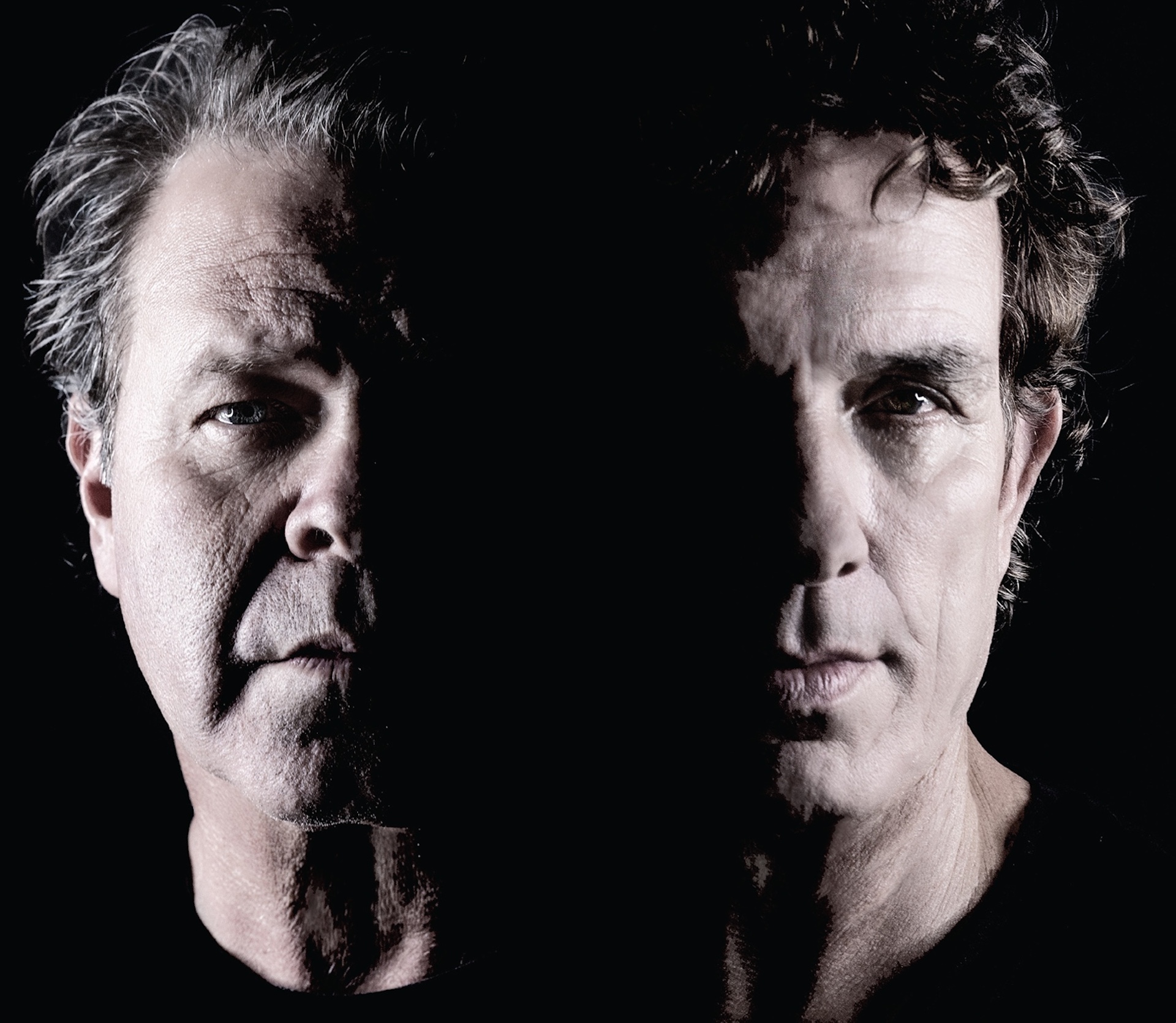
There is, naturally, another ingredient in Together Alone: two blokes spending a lot of time in each other’s company.
So after the deeper questions, I ask Moss what Cassar-Daley does on tour that drives him mad.
He struggles to come up with much.
Then he finds something.
“He’s probably too punctual.”
The bigger problem, Moss concedes, may be himself.
“On that last tour, what would’ve driven him mad is me saying, ‘We’re staying at this hotel, but the venue’s down there, and we’re in peak-hour traffic … Oh no, I’ll leave early,’ and then arriving at soundcheck late.
“That’d be what drives him mad about me.”
Somehow you suspect they’ll survive another tour.
‘Please slow down’
Before we finish, I ask Moss about something that has little to do with records, ticket sales or touring schedules.
Time.
Does reaching your 70s change your relationship with it?
Does it create a stronger urge to play the songs you want to play, make the records you want to make and get on with the things you still want to do?
This time there is no hesitation.
“Definitely.”
Then Ian Moss, who has spent much of our conversation laughing, remembering, talking about songs and sounding like a man with plenty still left to discover, offers perhaps the simplest explanation for why he keeps going.
“The scary part is that time just seems to be flying by faster and faster.
“In the old days, it felt like a week was never going to end.”
He pauses.
“Now it’s like, ‘Please slow down, slow down – I don’t want to go yet, Lord.’”
And there it is.
The bloke who once sang about getting out of town and making his way back to Bow River isn’t ready to go anywhere just yet.
See Ian Moss and Troy Cassar-Daley live
Ian Moss and Troy Cassar-Daley’s Together Alone tour continues across regional Australia in October, November and December 2026 before heading to Canberra, Melbourne, Adelaide, Tanunda, Sydney, Brisbane, Perth and Bunbury in February and March 2027.
Together Alone – Live at the Ulumbarra Theatre will be released on October 2, 2026 on double 180g vinyl, CD and digital formats.
For tour dates, tickets and more information, visit Ian Moss’s official website or Troy Cassar-Daley’s official website.





 Proudly Australian owned and operated
Comments 0
Join the conversation. Comments are reviewed before they appear.
Be the first to comment.
Join the conversation
Tell us who you are to post a comment. We'll remember you next time.