
Absurd moments in medicine you couldn’t make up


Dr Kathryn Fox is an Australian medical doctor and bestselling crime writer, best known for her forensic thrillers featuring pathologist Dr Anya Crichton. Drawing on her medical expertise, she crafts gripping, authentic crime fiction and is also a passionate advocate for forensic medicine education and public engagement.
There are moments in medicine that aren’t funny at the time.
They’re confusing. Occasionally stressful. Sometimes slightly surreal, like being in a Monty Python sketch. But later — usually with colleagues — they become something else.
Not comedy exactly. More … absurdist theatre with a clinical setting. The kind of situations you couldn’t write, because no one would believe them.
One shift in emergency, I was the senior doctor when a man arrived by ambulance after an apparent seizure.
He responded quickly to treatment, became alert, and started chatting. So far, so good.
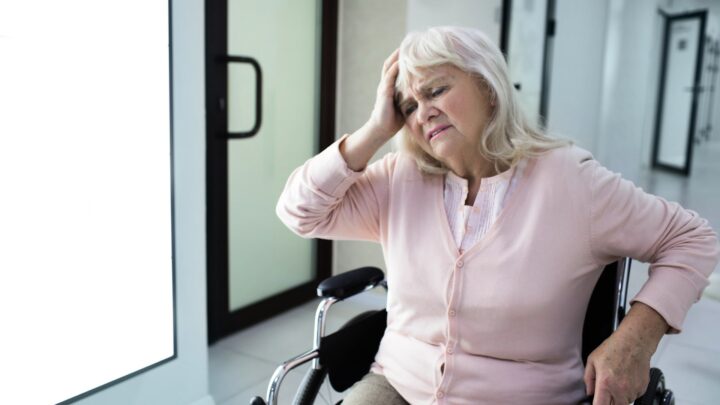
His wife was with him. She explained that she was completely paralysed from the waist down and used a wheelchair. She positioned herself squarely in my line of sight.
Something didn’t quite add up.
A quick look through the man’s notes revealed a familiar pattern — repeated presentations with what are now called psychogenic non-epileptic seizures (PNES).
These are real, involuntary episodes that resemble epilepsy, but are driven by psychological distress rather than abnormal brain activity.
I reassured him the episodes weren’t dangerous.
Out of the corner of my eye, I saw something that made me pause.
His wife stood up.
She took a few steps forward.
Then sat back down in the wheelchair.
I waited a moment, in case I’d imagined it.
I hadn’t.
“I didn’t realise you were able to stand and walk a little,” I said.
She looked at me as though I’d suggested she take up marathon running.
“That’s outrageous,” she said. “I’m paralysed.”
“I thought I just saw—”
“I did not walk.”
At that exact moment, her husband began convulsing again.
Back to the bedside.
Treatment. Monitoring. Reassurance.
Out of the corner of my eye again — movement.
She stood.
Walked.
Sat. Closer to the action.
At this point, medicine and reality were no longer entirely aligned.
“I’m sorry,” I said carefully, “but I really did just see you stand up.”
“I did not,” she said, more offended.
Somewhere in the background, a small part of my brain quietly filed this under: things you will struggle to explain later.
Another patient with similar episodes had been investigated by almost every specialty available — cardiac, respiratory, neurological — and was awaiting psychiatric assessment.
Her episodes were prolonged and disturbing to observe. Her carbon dioxide levels rose despite oxygen therapy. They were real, distressing, and unexplained.
As the most junior doctor on the team, I tried something radical.
I made her a cup of tea, sat with her and started a conversation.
She eventually told me she was trying to leave an abusive relationship. That she was frightened. She believed people connected to her husband might harm her because she “knew too much.”
It sounded like paranoia. Until she told me her husband’s name.
It was one I recognised from media reports associated with serious criminal activity.
The shift was immediate. What had sounded implausible minutes earlier now felt entirely possible. This patient’s life could be in real danger.
Not everything that sounds irrational is.
Sometimes it’s just missing context. The case took on a whole new perspective and, thankfully, got the help she so desperately needed to escape the abuse.
Then there was the patient whose seizures had a very specific trigger.
They always occurred after a three-course meal.
At restaurants.
When the bill arrived.
The man had been brought in by ambulance on multiple occasions, this time followed by police, who had begun to suspect a pattern.
When I saw him, he was sitting up in bed, cheerful, relaxed, and more than happy to describe the meal in detail.
No confusion. No drowsiness. Just a very satisfied diner.
I asked a few routine questions.
“During these episodes, do you ever lose control of your bladder or bowels?” He asked why. I explained that it could happen with seizures.
He listened carefully.
About half an hour later, I heard my name being called.
Urgently.
I went straight back.
He looked delighted.
“I just lost control of my bowels,” he announced.
He had. Completely. While fully alert. I was stunned because he seemed so pleased with himself.
“Thanks for the tip,” he added.
There are moments in medicine where you pause and reconsider everything you thought you understood about human behaviour. This was another one of them.
Then I did what seemed most appropriate. I invited the police in to have a chat.
There’s something medicine doesn’t teach you. Patients don’t always behave in ways that are logical, consistent, or easy to explain.
And sometimes, there’s a final twist.
Before they left the emergency department, I asked the couple from that first case where they had met: the man with recurrent psychogenic episodes and the wife who couldn’t walk – except when she did. It turns out they’d met and fallen in love at a support group for people with psychogenic disorders. I gave up wondering about the complexities of that relationship.
Most moments in medicine are not funny at the time. But later, they reveal something important. Medicine is structured, whereas humans are unpredictable.
And every now and then, the two collide in ways that feel less like science and more like something you couldn’t possibly make up.





 Proudly Australian owned and operated
Comments 0
Join the conversation. Comments are reviewed before they appear.
Be the first to comment.
Join the conversation
Tell us who you are to post a comment. We'll remember you next time.