
A classic reimagined: Natasha Lester brings Jane Eyre to Hollywood in The Chateau on Sunset



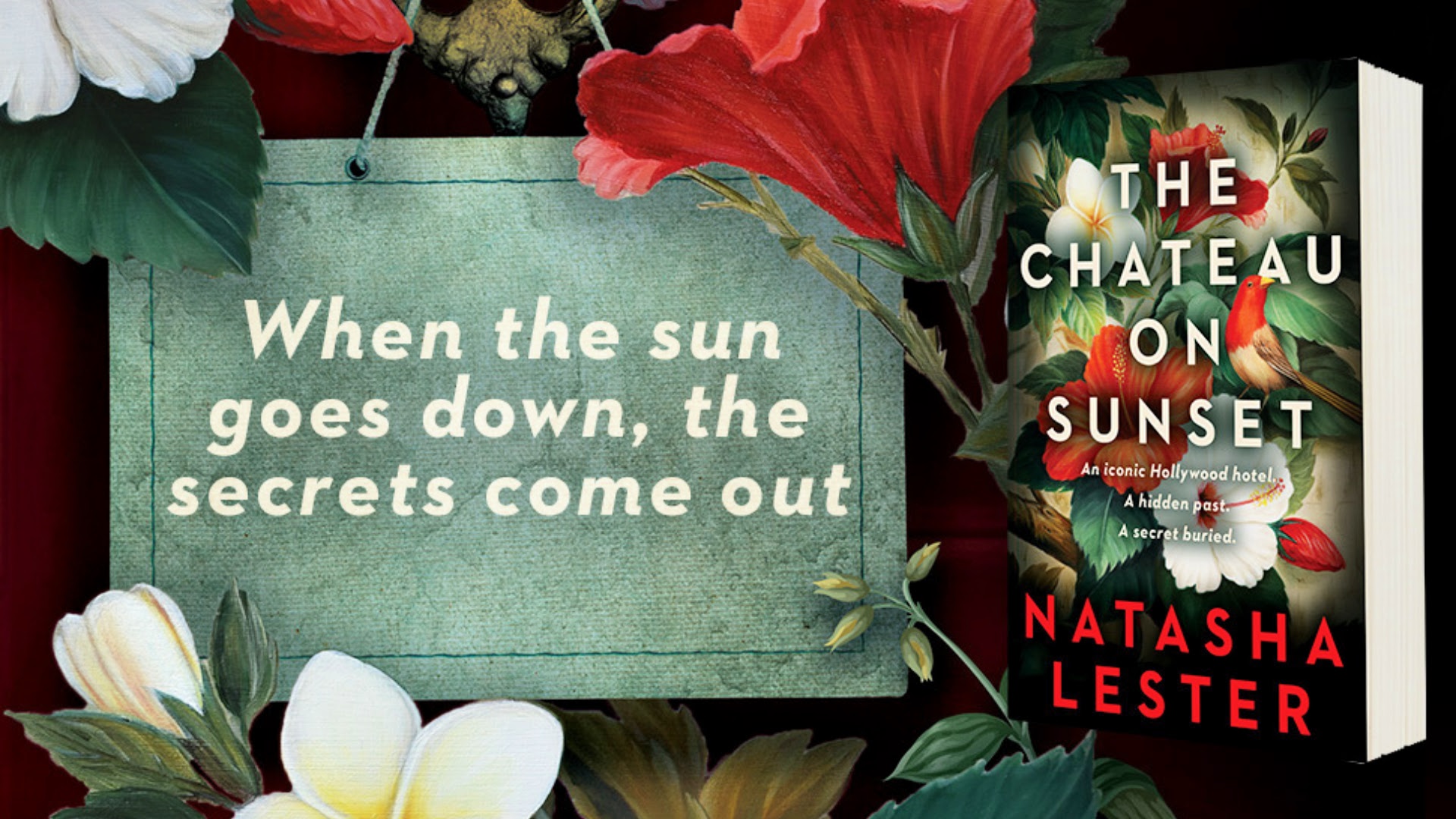
There’s a certain pull to stories that take something familiar and rework it into something new. With The Chateau on Sunset, Natasha Lester has taken Jane Eyre and placed it inside one of Hollywood’s most infamous hotels, the Chateau Marmont. The result leans into the glamour of the era while exposing what sat behind it.
Lester, a former L’Oréal marketing executive and New York Times and internationally bestselling author of The Paris Orphan and The Paris Seamstress, has built a strong following for her historical fiction.
The idea did not begin in Los Angeles. It came to her on a train in Italy.
“I was sitting on a train to Florence, thinking about books I’d enjoyed,” Lester says. “Hello Beautiful by Ann Napolitano was one, which is loosely based on Little Women. Demon Copperhead by Barbara Kingsolver was another. Suddenly the idea popped into my head as I looked out at the Northern Italian countryside. What if I did something like that with one of my favourite books, Jane Eyre?”
That moment shaped the direction of the novel. It also changed how she approached the story. She started with a literary foundation and asked what might happen if it unfolded in a place defined by fame, power and secrecy.
Her connection to Jane Eyre runs deeper than admiration. It is tied to what she believes the original heroine never truly received.
“Jane Eyre was a woman who yearned for liberty. She looked at the horizon and longed to go beyond it,” Lester says. “The ending is romantically satisfying, but she never really got what she most wanted. That didn’t seem fair.”
That sense of unfinished business became central to the novel.
“I wanted to write a story where Jane got both a romantically satisfying and a personally satisfying ending. An ending that such a great heroine deserved.”
The Chateau Marmont plays a strong role in the story, and its presence came about unexpectedly.
“I was struggling to find the voice of the story,” she says. “I started handwriting pieces just to see where my imagination would take me. In one of those, the Marmont took on a voice and a sense of itself. I loved it.”
From there, the hotel developed into something that feels watchful, holding onto the secrets of the people who pass through it. That reflects the real history of the Marmont, long associated with excess and scandal.
Researching Hollywood’s Golden Age revealed a version of the era that contrasts sharply with its polished image.
“There was a lot of ugliness beneath the glamour,” Lester says. “Women were fighting every day against a very male-controlled studio system that wanted to take away their power.”
That tension carries through the novel, particularly in how women were labelled, controlled and often silenced. Many of those stories were hidden or reframed at the time.
“Many people know the film Rebel Without a Cause,” Lester says. “But fewer know that the 43-year-old director Nicholas Ray had a sexual relationship with the 16-year-old star Natalie Wood.”
She is clear about how that history should be understood.
“Calling it a relationship normalises something that is clearly wrong. There was a power imbalance, and it was covered up. Later it was treated as gossip, when it was far more serious than that.”
That contrast between surface glamour and what sat beneath it runs throughout the book. It keeps the story anchored in the reality of the time.
At the centre of the novel is Aria, a character who begins from a place of wanting to disappear rather than stand out.
“It’s easy to write about obvious heroes,” Lester says. “What I wanted was someone more ordinary. Someone who just wants to be invisible, and to explore what it would take for her to rise up and claim her voice and her power.”
Her journey builds gradually, shaped by what she sees and what she uncovers inside the hotel. The story focuses on how someone finds their voice rather than presenting strength as something they already have.
The book also marks a change in Lester’s work. The historical detail is still there, yet the structure draws on a classic and places it in a different world, asking whether the original ending was ever enough.
For readers, that question sits at the centre of the story. It revisits a well-known character and gives her the agency she was missing, placing her in a setting that demands it.
Away from her own writing, Lester has been reading Wild Dark Shore by Charlotte McConaghy, a novel she says shares a similar Gothic tone.
That influence can be felt in The Chateau on Sunset. It draws readers into a world that looks polished at first glance, then reveals what sits behind it once you stay a little longer.
Like the sound of this book? BUY IT HERE.





 Proudly Australian owned and operated
Comments 0
Join the conversation. Comments are reviewed before they appear.
Be the first to comment.
Join the conversation
Tell us who you are to post a comment. We'll remember you next time.