
10 things every home had in the good old days



Be warned: this list may cause sudden flashbacks.
One minute you’re reading about an old kitchen table, the next you’re 10 years old again eating Vegemite toast before school while Mum reminds you to hurry up because “we’re leaving in five minutes”.
Long before streaming services and picture-perfect homes, Australian houses had their own personality. Not always stylish, mind you. Sometimes very brown, sometimes very orange, and occasionally both.
But they felt lived in.
They had the phone in the hallway, the special glasses nobody was allowed to touch, the drawer full of flat batteries and mystery keys, and at least one room children entered only under strict supervision.
Decades later, just seeing one of these things can take you right back.
The “good room” nobody was allowed to use
Many families had one.
The room at the front of the house with the polished furniture, matching cushions, carefully arranged ornaments and carpet that looked like it had never known a muddy shoe.
Children understood it was not part of everyday life. It was for visitors, Christmas Day, important relatives or people your parents wanted to impress.
The rest of the year, everyone walked past it on their way to the room with the actual television.
The telephone table
Before phones lived in pockets, the family phone had its own little command centre.
Usually in the hallway, the telephone table held the phone book (or Teledex if you were a bit fancy!), a notepad, emergency numbers and a pen that had given up years earlier.
Privacy was limited. Trying to talk to a friend while Mum, Dad or a sibling wandered past “just getting something” was almost impossible.
Every family member suddenly developed excellent hearing.
The biscuit tin sewing kit
The greatest betrayal of childhood.
You spotted the familiar tin, hope rose and maybe, just maybe, there were still biscuits inside.
Then came the rattle of buttons.
And Cotton reels, needles, safety pins, and a tiny tape measure. And some mysterious scraps of fabric that had clearly been important once.
No child from our era ever fully recovered from opening a biscuit tin and finding haberdashery.
The Hills Hoist
Technically outside, but spiritually part of the house.
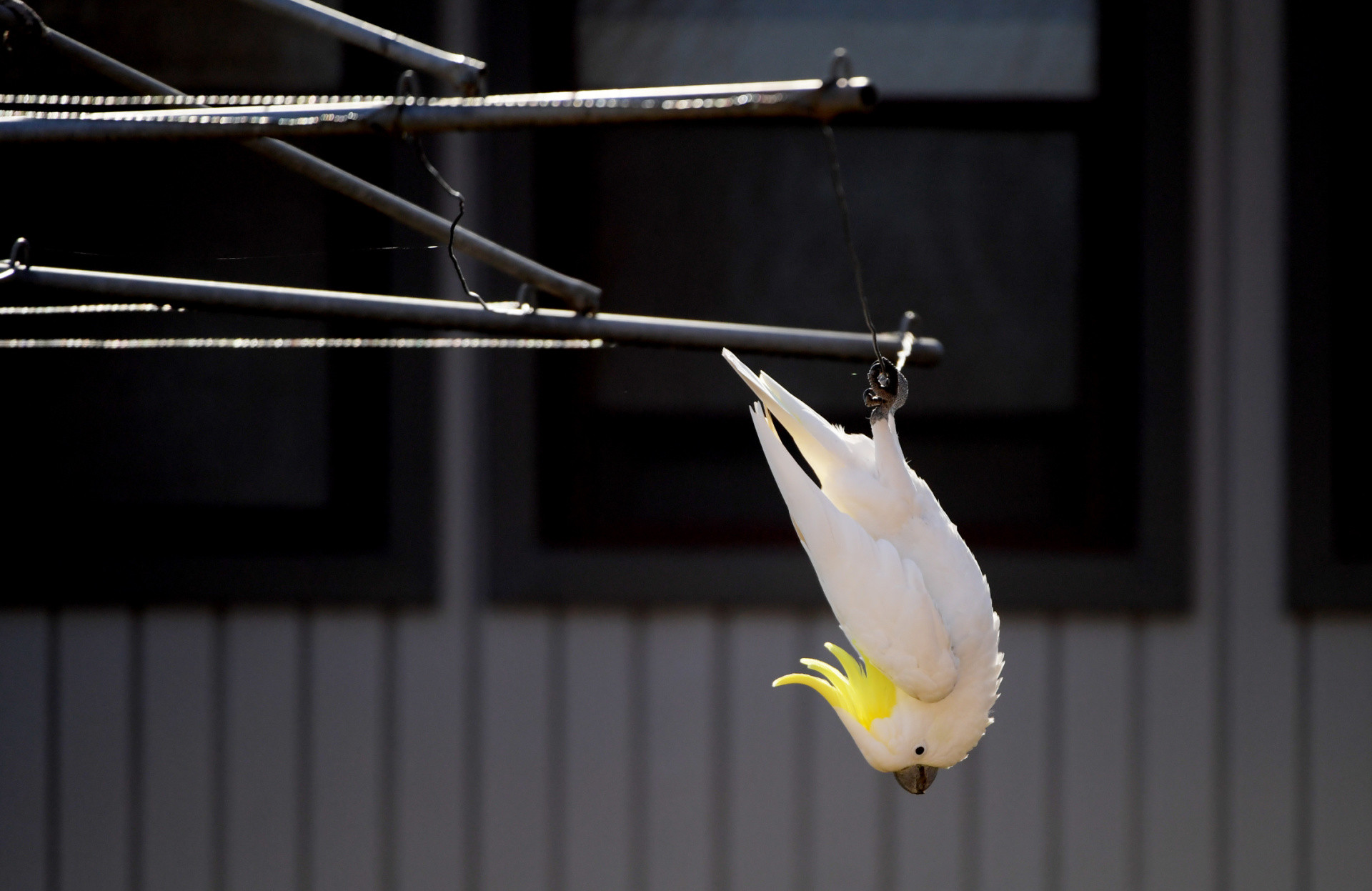
The Hills Hoist dried sheets, held school uniforms, interrupted backyard cricket and tempted children into using it as a spinning ride despite repeated warnings.
Cockatoos or Magpies held meetings on it. Fresh washing flapped on it, every dogs ran around it and cricket balls bounced off it.
It was practical, indestructible and more Australian than half the souvenirs at the airport.
The encyclopaedia set
Before the internet, there was the encyclopaedia.
A giant row of heavy books that made the lounge room look instantly more intellectual, even if nobody had opened volume Q-R for years.
School assignments began with “look it up”, which meant sitting on the floor, turning actual pages and hoping the topic wasn’t in the missing book.
It was Google before Google: slower, heavier and no help at all if you needed anything that happened after the set was printed.
The big wooden television
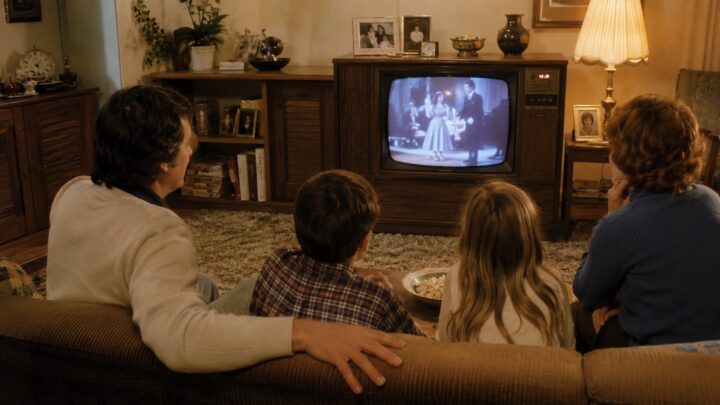
You know the one. The television wasn’t just an appliance, it was a piece of furniture.
A large wooden box sat proudly in the lounge room, usually with family photos, ornaments or a doily perched on top.
There were only a few channels, programs started when they started, and if you missed something, bad luck.
Changing channels required someone to get up of their arse. In many homes, that someone was the nearest child.
The crystal cabinet
Every home seemed to have at least one collection of things that were apparently too precious to use.
Glasses nobody drank from. Plates nobody ate from. Bowls that sat there for years waiting for a level of occasion that never quite arrived.
Children knew not to touch the cabinet because Mum’s look said enough, not because somebody set the rule book on it.
The Laminex kitchen table
This was the real headquarters of the house.
The place for brekky before school, homework after school, birthday cakes, a cuppa, the bills, board games, and family discussions that started casually and somehow became serious.
The table took everything: hot plates, spilt cordial or Milo milk, school projects and somebody carving their initials underneath when they thought nobody would notice.
It wasn’t fancy, it was useful. And it was always there.
The junk drawer
Every house had one, usually in the kitchen.
Try this list for size: flat batteries, rubber bands, old receipts, bread tags, takeaway menus, mystery keys, pens that might work if you scribbled hard enough. Maybe even a torn unswappable damaged Scanlens footy card.
Nobody admitted to filling it, yet it was always full.
And you couldn’t throw any of it out because the moment you did, someone would need that exact screw, fuse or Allen key.
The record cabinet or stereo system
Music once required a bit of ceremony.
You chose the album, slid the record from its sleeve, placed it carefully on the turntable and lowered the needle as though performing surgery.
There were rules, of course. Don’t scratch it. Don’t bump the cabinet. Don’t touch Dad’s records unless you wanted a lecture about proper handling.
The upside was that you were kind of forced to listen to the entire album, not just 20 seconds before skipping to something else.
Honourable mentions…
Of course, every home had its own extras: macramé plant holders, Tupperware cupboards, mission-brown curtains, shagpile carpets, Avon bottles, barometers on the wall, crochet toilet roll covers and family photo displays that never seemed to change.
They were ordinary things at the time.
Now, of course, they are little time machines.





 Proudly Australian owned and operated
Comments 20
Join the conversation. Comments are reviewed before they appear.
More like the sixties and early seventies era.
Yeah, we had a video recorder around 1981 so changed channels wirelessly on that, and timeshift recorded TV programs, our VCR allowed up to a 14 day timeshift.
My Mum never got into Tupperware much, so had a lot of other plastics, undoubtedly full of bad chemicals. But gotta go of something.
By '79 had my big sister's proper full on stereo set with Dolby and Chrome tape settings in our loungeroom that allowed for cassettes and taping, which I did a lot of... when newish they played beautifully, much more easily than the vinyl & could easily transfer them to our cars. Still got some and some still work well.
Funny, gone back to vinyl now. Nothing like original FMac, Eagles, Billy Joel, Boz Scaggs, Ricki Lee Jones, Cold Chisel, Dragon and Men at Work and so on with crackles and the odd small scratch from a long forgotten party night.
My sister had a rocking horse that was 2 profiles cut out of plywood (another thing I miss) joined by a seat and a hand rail. I remember there were others shaped like swans etc. It lived on the front verandah and got lots of use.
I had a swan one, which was painted very nicely to look like a swan. You are the only person I've ever heard mention one.
My neighbour had a rocking horse one in her garage which she gave to me this year for one of my great grandchildren. My children had one the same in the 60s!
The junk drawer, I still have one in my garage and if you check the 3rd drawer in the kitchen you might find it there too. Everything when you need it is at a hands reach.
Still got the junk drawer ( I think🤔 most people do)… however everything else has changed
Still have most of those!
AYE THOSE WERE THE DAYS
Winter, NZ, fire in the fireplace, Us kids lying in front of it, reading, colouring in, and waiting for dinner. Later, married, kids, sitting in front of the fireplace, and the kids toasting marshmallows, and placed on chocolate wheaten. Also good outside around a fire. A great camping threat as well. When, over here, when fires are allowed.
That is so unbelievably true. We had like 95% of all of those things. The phone in the hallway in the phone stand with the phone book on the shelf. Thankyou for all of those memories 🥰👏👏
I still have the laminate kitchen table, bought at an auction a couple of years ago.
OMG Sott you nailed it. We even had a white cocky out the back. You must be in your sixties to know all of this. Keep up these brilliant articles as you make my day and sometimes, I send them to my clients as they are such a good read. I am a Financial Planner who looks after retirees only, so they are absolutely perfect for them. keep up the great work and thank you. cheers Anne Marie
Oh I loved this walk down memory lane. You are just spot on!! Took me right back to my childhood. And we didn’t go without a thing!! Best of all we grew up to be caring, loving human beings.
All these resonate
As a boomer - still have a few
Love my hills hoist 😊
More memories
The cribbage board
Swivel ash tray stands
Poofet’s
Tupperware salt and pepper
Happy Aid
So many more
Ironically- I see the return of many items - including some ugly furniture that’s straight out of my childhood loungerooom 😊
And a cuppa apparently wasn't complete without a Vincent's APC or a Bex powder. No wonder my Mother seemed to fly through the day.
My house still has almost everything listed, probably because I am the third generation to own it and have kept lots of things the same from when my grandmother had it and then my parents’ ‘modern’ touches. My New World gas stove and oven for example was my grandmother’s and is still going strong. It’s so unrecognisable as a cooking appliance to the young one of my grandchildren’s friends asked what it was 😄
My house still has most of these. 😄 As the 3rd generation to inherit it I have done very little to it and so still has some furniture from the 50’s and 60’s I still use the original New World gas stove which would be well over 70 years old now.
oh the nostalgia! Yes, yes, yes to all these!
Agree.
Join the conversation
Tell us who you are to post a comment. We'll remember you next time.