


By Tess Ikonomou
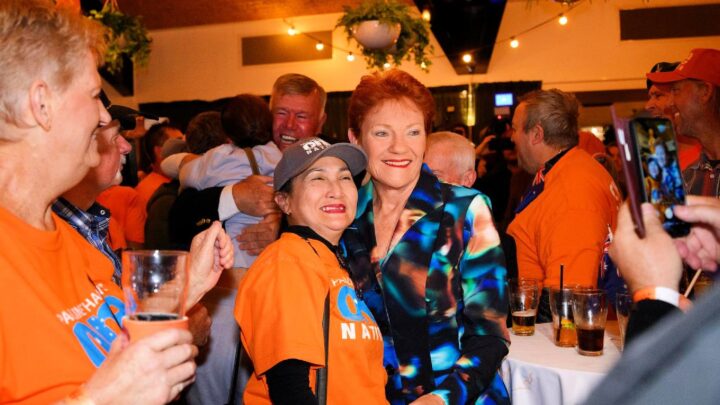
Frustrated Australians want a cut to migration as anger among voters continues to fuel a surge in support for Pauline Hanson’s One Nation, the Nationals say.
Fresh polling has shown the right-wing party pull ahead of Labor, as the coalition continues to lose its standing with voters.
Pointing to economic issues as a factor behind the rise in populism, Anthony Albanese issued a warning about the potential for political violence.
Calling for a “united” Australia, the prime minister on Monday promised to reduce the nation’s migration intake.
Nationals Leader Matt Canavan said people felt like they were going backwards economically.
“What these polls show is that people are very frustrated and angry about their elected representatives not listening to them,” he told Sky News on Tuesday.
“There are some very clear requests from people right now, people want migration to come down.
“They want … the government to focus on living costs, to focus on getting interest rates down and spending under control.”
Environment Minister Murray Watt said the government was responding to the concerns of voters through measures contained in the May budget such as tax reform.
“We know that there’s a lot of Australians doing it tough out there, and they’re sending a message to the major parties that they want us to do better, they want things to change,” he told Nine’s Today.
The government’s controversial changes to negative gearing and the capital gains tax is being opposed by the coalition.
It comes as the Labor Party appealed to its supporters to donate up to $27 for social media ads targeting One Nation as support for the minor party is growing.
The Newspoll, published in The Australian, showed a four-point rise in One Nation’s primary vote to 31 per cent, pulling ahead of Labor which dipped one point to 30 per cent.
Support for the coalition has further declined, this survey showing a drop by two points to 18 per cent.





 Proudly Australian owned and operated
Comments 0
Join the conversation. Comments are reviewed before they appear.
Be the first to comment.
Join the conversation
Tell us who you are to post a comment. We'll remember you next time.