
After a strong 2025, how will property move this year?


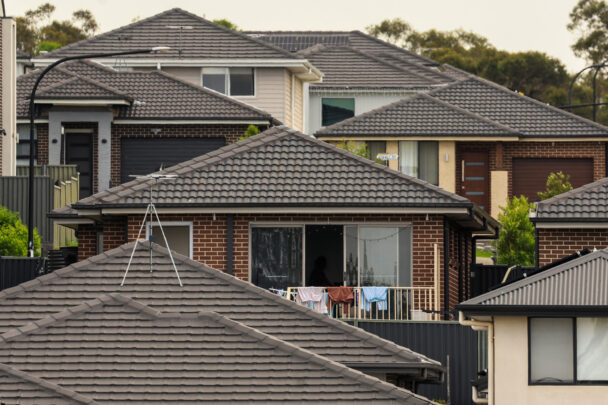
After a string of record months of growth, Australia’s housing market showed signs of slowing at the close of 2025, prompting a more subdued and uneven property price outlook for 2026.
National data released recently by Cotality shows Australia’s Home Value Index rose 0.7 per cent in December – the smallest monthly gain in five months – with Sydney and Melbourne the main drag on growth as values in both cities slipped 0.1 per cent on ongoing unaffordability concerns.
That marked the first month-on-month decline in the two largest markets since last January, preceding rate cuts that began in February. Every other capital and areas in the broader state recorded price rises in December, though momentum waned in most markets.
Cotality research director Tim Lawless said broader confidence was being undermined.
“Renewed speculation that the rate-cutting cycle is over and the next move from the RBA could be a hike has dented housing confidence,” he said.
“A ‘higher for longer’ setting on interest rates, alongside a resurgence in cost-of-living pressures and worsening affordability pressures, looks to have taken some heat out of the market.”
Strong annual gains but shifting dynamics
Despite the softer December result, Australia’s housing market delivered a strong 8.6 per cent annual rise in 2025, adding roughly $71,400 to the national median dwelling value, which was the strongest calendar-year gain since 2021.
All capital cities and rest-of-state regions recorded growth over the year, with Darwin leading at 18.9 per cent and Melbourne the slowest at 4.8 per cent. Regional markets outpaced cities overall, rising 9.7 per cent versus 8.2 per cent for combined capitals.
The upper end of the market continued to lag. Nationally, upper-quartile values rose only 0.2 per cent in December, compared to 1.1 per cent for lower- and middle-market segments. Lawless attributed this divergence to affordability and serviceability pressures pushing more buyers toward lower price points.
Forecasts points to continued growth – but slower
Multiple independent forecasts point to continued price growth in 2026, but at a more moderate pace than 2025.
Domain research anticipates combined capital city home prices to rise about 6% in 2026, with unit prices slightly less, on track to reach record highs by year-end. Economists describe the year ahead as potentially a “year of two halves,” where early growth may give way to slower conditions if interest rates rise.
Realestate.com.au’s Property Outlook report suggests growth of 6–8% across combined capitals in 2026, broadly in line with the long-term historical average but slower than 2025. The forecast references tight supply, population growth and demand supported by government schemes as key drivers, while stretched affordability and an extended pause on interest rates are likely to temper momentum.
PropTrack forecasts more moderate Sydney growth of 5–7% in 2026 as price momentum eases compared with 2025’s gains, driven in part by affordability pressures and emerging supply.
These forecasts contrast with some earlier expectations of double-digit growth, reflecting increasing emphasis on affordability headwinds and the possible end of rate cuts.
Affordability, supply and policy forces
Cotality’s study shows affordability remaining a major constraint in many parts of the country. Analysts point to low vacancy rates and tight housing supply as supportive of prices but also note that stretched household budgets and credit capacity will likely temper future gains.
Government incentives including expanded first home buyer schemes like the 5% deposit scheme and Help to Buy plans are expected to underpin demand at lower price points, even as borrowing costs and deposit hurdles continue to bite.
The consensus among economists and property analysts is that while national dwelling values are likely to continue rising through 2026, growth will slow and vary by region and market segment. Where price rises were strongest in 2025 – notably in Perth, Brisbane and some regional markets – conditions may remain relatively robust.
In contrast, Sydney and Melbourne are forecast to see more modest gains as affordability pressures increasingly shape buyer behaviour.
Overall, sustained demand underpinned by population growth and constrained supply should limit downside risk, but rising living costs and interest rate uncertainty could keep momentum subdued compared with the robust gains seen in 2025.





 Proudly Australian owned and operated
Comments 0
Join the conversation. Comments are reviewed before they appear.
Be the first to comment.
Join the conversation
Tell us who you are to post a comment. We'll remember you next time.