
The ‘Most Impressive’ Method for Reviving Dirty Sofas – Plus What to Check Before You Try It


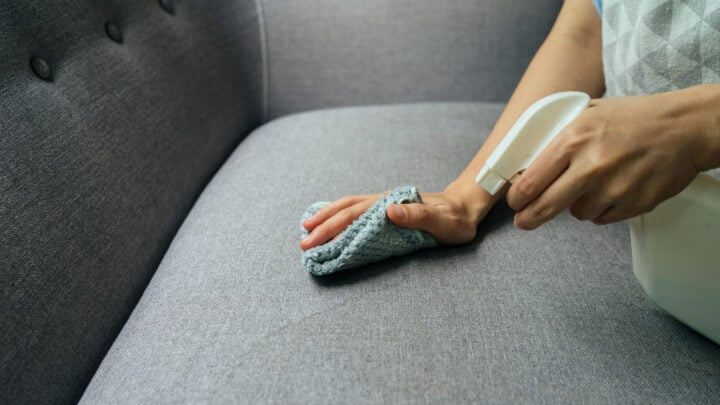
If your sofa is looking a little worse for wear, home hack queen Anita Birges has a solution that’s become something of a cult favourite. Known for her clever cleaning and organising tricks, Birges once shared what she called “by far the most impressive” method for reviving a tired couch, after “testing and trying so many cleaning hacks over the years.”
“It takes about an hour to do and you most probably have the items you need already in your home,” she explained.
Anita Birges’ couch cleaning method
Using nothing but everyday household items, here’s the process Birges swears by:
- Take all your cushions off and give the couch a good vacuum.
- Put a dishwashing tablet in a bowl and pour over some boiling water, letting it dissolve.
- Pop a microfibre cloth into the solution and let it cool down to a temperature that won’t burn your hands.
- Wring out the excess liquid and use the warm cloth to wipe down the fabric, working in sections.
- Rinse and re-dip the cloth as needed, continuing until the whole couch has been gone over.
- Allow the couch to air dry fully before putting the cushions back on.
Birges recommends doing a patch test with the cleaning solution before trying the method properly. “You want to make sure it doesn’t cause any weird reactions,” she said. A good place to test is a spot at the back of the couch where no one can see, just in case there’s any discolouration or texture change.
Before you try it: check your couch’s cleaning code first
This is the step that’s easy to miss, but genuinely important: not every couch is suited to a water-based cleaning hack like this one. Most upholstered furniture comes with a cleaning code tag, usually found under a cushion or on the frame, that tells you what kind of cleaning products are safe to use:
- W — Water-based cleaners are safe.
- S — Solvent-based cleaners only; avoid water, which can cause staining, shrinking or watermarks.
- WS — Either a water-based or solvent-based cleaner can be used.
- X — Vacuum only; no liquid cleaners of any kind, as they may cause shrinking, staining or watermarking.
Birges’ method is designed for fabric and microfibre couches with a W or WS code. If your couch is leather, suede, or tagged S or X, this particular hack isn’t the right fit and could cause damage.
Alternative options for other couch types
Leather couches generally do best with a dedicated leather cleaner and conditioner, applied with a soft cloth, rather than any water-based method. Avoid dishwashing detergents on leather altogether, as they can strip natural oils and dry out the material over time.
Heavily soiled or older fabric couches may benefit from a professional upholstery steam clean, particularly if the couch hasn’t been deep cleaned in several years or has ingrained odours from pets or smoking. Many carpet cleaning companies also offer upholstery cleaning as an add-on service.
Tackling specific stains
For common trouble spots, a targeted approach often works better than an all-over clean:
- Pet accidents or odours — a mix of white vinegar and water, or an enzyme-based pet stain remover, tends to work better than dishwashing detergent, as it helps break down and neutralise odour-causing bacteria rather than just masking the smell.
- Wine or fruit juice stains — blot (don’t rub) with a clean cloth immediately, then treat with a small amount of dishwashing detergent mixed with cool water, working from the outside of the stain inward to avoid spreading it.
- Grease or oily marks — sprinkle with bicarbonate of soda, leave for 15–20 minutes to absorb the oil, then vacuum before treating with your usual cleaning method.
The bottom line
Anita Birges’ warm dishwashing tablet method remains a genuinely clever, low-cost way to freshen up a fabric couch using items you likely already have at home. Just be sure to check your couch’s cleaning code and do a patch test first — a great hack applied to the wrong material can turn a quick refresh into a costly mistake.





 Proudly Australian owned and operated
Comments 0
Join the conversation. Comments are reviewed before they appear.
Be the first to comment.
Join the conversation
Tell us who you are to post a comment. We'll remember you next time.