
The day that put Queensland on the AFL map – Barry Denny on Marie, Morningside and a Hall of Fame honour


There have been nearly 200 Queensland Aussie rules players who have made their way into the ranks of the AFL, or its predecessor the VFL but most have done so in the 21st century.
The ones that reached the top level of Australia’s game, right back to Erwin Dornau at South Melbourne in 1948, before that can be regarded as the pioneers who paved the way for the likes of Jason Dunstall and Jason Akermanis.
One of them was Barry Denny and he reckons he can trace the growth in Queensland’s acceptance of Australian football to an exact date.
It was May 18, 1975 and Queensland, a minnow state in Aussie rules terms, were taking on Tasmania, a state Queensland had never beaten.
Barry was a member of the Queensland team that was coached by Terry Moule and captained by Billy Ryan and the Maroons defeated the Apple Islanders 16.29 (125) to 16.7 (103) in front of 14,000 fans.
“It absolutely put Queensland on the map in Australian football terms,” Barry recalled.
“No one in Victoria took too much notice of Queensland before that. After we won, the Victorian clubs started taking an interest in Queensland and started looking at Queensland players more closely.”
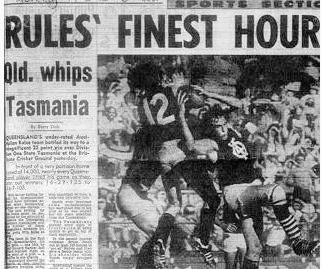
(I covered that famous match and the report led the back page of The Courier-Mail, the first time Aussie rules had led the sports section of Brisbane’s daily newspaper.)
Here Barry recalls how important the 1975 game was to him:
Barry was a Yeronga junior who played first-grade for Morningside in the QAFL competition in 1971 as a 17-year-old. Only a year later, he won Morningside’s Best and Fairest award, which he did again in ’76.
“My first senior coach John Waddington who had played for North Melbourne and Victoria and he wanted me to go down to North at the end of 1972 but I decided not to go at the time because I was halfway through my engineering course,” he recalls.
After the 1975 interstate match, he fielded approaches from Melbourne, Geelong and Essendon before going to the Demons for pre-season trials in 1976.
“I was more worried about my (engineering) job than football then so I headed back to Brisbane,” he recalls.
“In 1977, things were better at work so I went back to Melbourne.”
Barry became Morningside’s first VFL recruit, playing 22 games over three injury-plagued seasons before rejoining the Panthers.
“I had three injury-riddled years at Melbourne but was so glad that I went down to Melbourne to play and prove myself at the highest level. I broke my collarbone and ruptured a tendon in a finger in my left hand in my second game against Footscray so it wasn’t a great start,” he said.
Injury ended his career at 28 but his involvement continued when he became assistant coach to John Blair, coached the club’s Under 19s and seniors, served as a runner and sat on the club’s inaugural board.
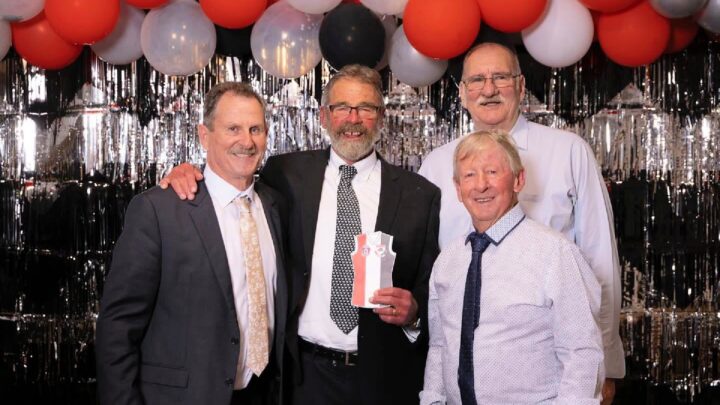
In 2025, Barry was named as one of the first three players inducted into the club’s Hall of Fame as “Legends”. The others were John Blair and Arch Blyth.
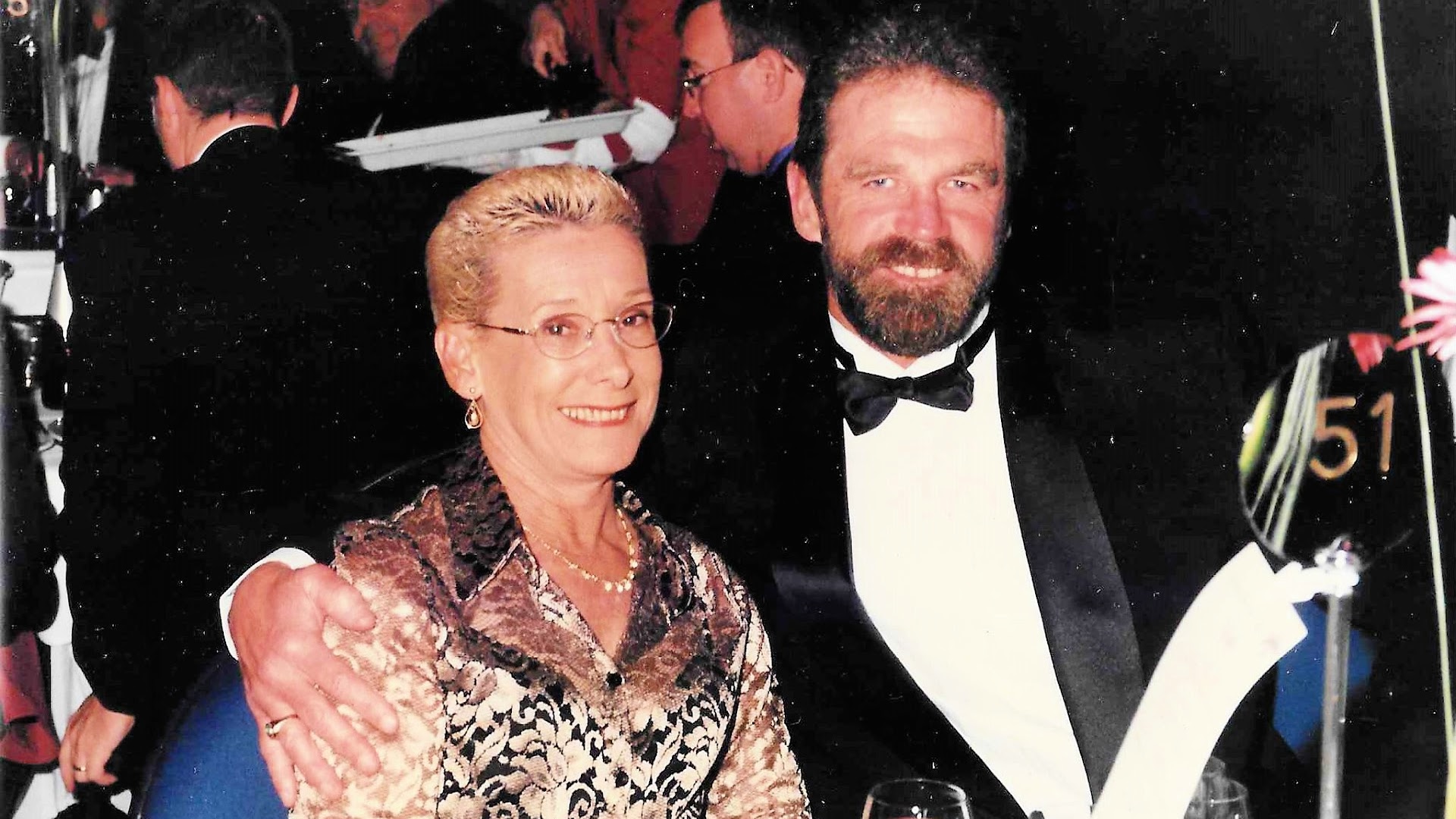
He is proud of that achievement but shattered that he didn’t get to share the moment with his wife Marie, who died in September, 2024, after a battle with a very rare small-cell lung cancer.
“We were married for 49 years and seven months so we didn’t get the 50 although we were together longer than that,” Barry said. “I would not have done any of the things I did in football without Marie, she was always there to support me.”
The couple had two sons – Matt (1986) and Sam (’88) – both of whom became more-than-handy rugby union players before succumbing to knee injuries. Barry loves spending time with his four grandchildren, Pip and Ned and twins Gus and Minty.
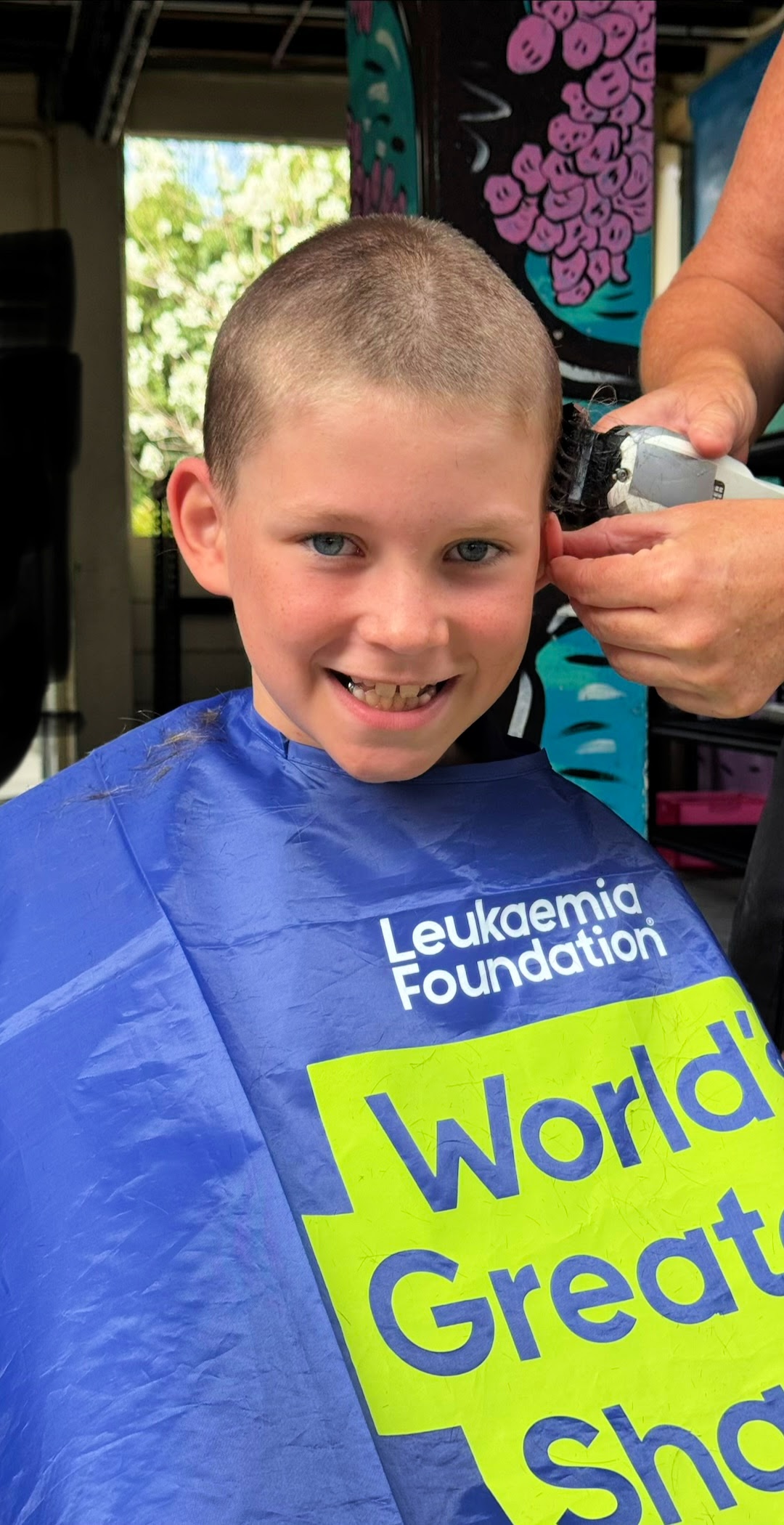
“I was the fund-raising manager for our eldest grandson Ned, who did the World’s Greatest Shave last year in honour of Marie and his great grandfather, Jim. He raised over $18k! Not bad for a 10-year-old. We were so proud of him,” Barry said.
Since retiring from civil engineering to Kingscliff, just over the NSW border, in 2015, Barry has faced a multitude of health challenges himself, including prostate cancer and heart issues.

“When I retired, I was intent on doing a whole lot of things, including surfing and refurbishing a 1976 Kombi. Before Covid and Marie’s illness we did several road/surf trips between Agnes Waters and Scotts Head. It was always fun to take it for a drive.
“I still surf and swim and do some bike-riding and keep myself busy helping to organise and attending reunions from my Senior Year at Yeronga and my 1974 Civil Engineering final-year class at UQ.
“Most of those things are in Brisbane so that gives me a chance to catch up with the four grandkids who are all up there and all playing sport.
“The worst thing about being older is losing so many people who you were close to but I’m still happy to be here!”
Barry doesn’t watch a lot of AFL these days, preferring to go to a local – or park – game.
And he’s happy to confess to having a solid background in rugby league.
“I played Australian rules first but then my father took a job in Bundaberg when I was in Years seven to 10 at school and they only played league,” he said.
“When we came back to Brisbane, I went straight back to Yeronga to play AFL but the school talked me into playing league in Years 11 and 12, so I played league during the week and Aussie rules at the weekends.
“I learned how to tackle in rugby league.”
Barry Dick was a journalist at The Courier-Mail and Sunday Mail for 43 years, before retiring in 2015. Most of that time was spent on the sports desk in a variety of roles including sports editor, digital sports editor, Rugby League editor and chief Rugby League writer. While Barry was the first full-time Australian football writer for The Courier-Mail in 1973, his true passion was always Rugby League and he covered a myriad of Grand Finals, State of Origins and Test matches. Barry was inducted into the Media Hall of Fame on March 27 2017.





 Proudly Australian owned and operated
Comments 3
Join the conversation. Comments are reviewed before they appear.
Incredible man, leader, husband, father, grandfather and friend. Congratulations on this recognition, Barry Denny. Well deserved.
Thanks Jenny 😊 Much appreciated!
Tough warrior & a great friend STILL after all the years! Cheers, Barry, one of the very best from the Pineapple 🍍 state!
Join the conversation
Tell us who you are to post a comment. We'll remember you next time.