
What Are Data Centres, and Why Is Everyone Suddenly Talking About Them?


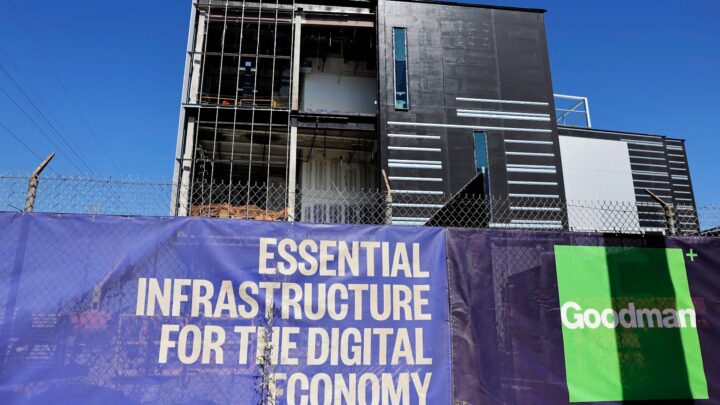
If you’ve noticed the phrase “data centre” popping up in the news more often lately – including from Prime Minister Anthony Albanese just yesterday – you’re not imagining it. These giant warehouses full of computers have quietly become one of the biggest infrastructure and energy stories in the world, and Australia is now grappling with exactly the same questions the United States has been wrestling with for the past year or two.
Here’s what they actually are, why they matter, and why governments on both sides of the Pacific are suddenly moving to regulate them.
What is a data centre, exactly?
Put simply, a data centre is a large building packed with computer servers – the physical machines that store, process and deliver digital information. Every time you check your email, stream a show, use internet banking, ask a chatbot a question, or back up photos to the cloud, that request is travelling to a data centre somewhere, being processed, and sent back to you, often within a fraction of a second.
Think of it as the unseen engine room of the internet. You never see it, but almost nothing you do online happens without one.
Why are they suddenly everywhere?
Data centres aren’t new – they’ve existed since the early internet era. What’s changed is the scale. The explosion of artificial intelligence tools like chatbots and AI image generators has dramatically increased demand for computing power, because training and running AI models requires vastly more processing capacity than a typical website or email server ever did.
This has triggered a global building boom of so-called “hyperscale” data centres – enormous facilities built specifically to handle AI workloads – from the United States to Australia.
Why do they matter so much?
Modern economies now run on data centres in much the same way earlier generations relied on power stations and telephone exchanges. Healthcare records, banking systems, government services, weather forecasting, online shopping and increasingly AI tools that businesses and individuals rely on every day all depend on this infrastructure existing somewhere. Without data centres, the modern digital economy simply doesn’t function.
So why is there a backlash against them?
This is where it gets interesting – and where Australia’s situation starts to mirror what’s already happening overseas.
In the United States, opposition to data centres has spread rapidly. New York recently became the first state to enact a one-year ban on large new data centres while it works out proper regulations, with Governor Kathy Hochul warning that unchecked development “threatens to hike up utility bills, deplete our natural resources, and create uncertainty for New Yorkers.” She’s also moving to repeal tax breaks that had been offered to attract them.
New York isn’t alone. Across the US, a genuine patchwork of restrictions has sprung up: Arizona now requires data centres to cover their own grid costs rather than passing them on to other electricity customers. Virginia has towns that have permanently banned new data centre construction outright. Michigan has 27 towns and cities with moratoriums in place. A small town near Milwaukee, Wisconsin, became the first in the country to ban data centres via a public referendum. According to Data Center Watch, a group tracking this opposition, 75 data centre projects worth a combined $130 billion were stopped or delayed in just the first quarter of this year alone – roughly matching the total for all of 2025.
Why are they such resource hogs?
The backlash comes down to two main resources: electricity and water.
Power: Large data centres, particularly those built for AI, consume enormous amounts of electricity – some hyperscale facilities use as much power as a small city. Australia’s own national science agency has noted that if data centres were counted as a country, they would rank as the second-largest destination for gas turbine orders in the world over the past year, reflecting just how much new power generation is being built specifically to feed them. That surge in demand risks pushing up electricity prices for everyone else on the grid, which is precisely the fear driving much of the US opposition.
Water: Data centres also require significant water for cooling their servers, which run hot enough that overheating would damage the equipment without it. In water-stressed regions particularly, this has become a genuine flashpoint between tech companies and local communities.

What did the Australian Prime Minister say?
This is exactly the territory Anthony Albanese stepped into on Wednesday, in a major speech in Sydney titled “AI in Australia’s Interests.” Comparing AI’s likely impact on society to that of commercial air travel a century ago, the Prime Minister announced Australia will introduce mandatory national standards for AI and data centres, with legislation expected by early 2027.
Under the proposed rules, large data centre operators would be legally required to underwrite new energy generation – meaning they’d need to help fund new power supply rather than simply drawing on the existing grid – and to put at least as much energy back into the grid as they take out of it. They would also be required to pay their full share of the costs of connecting to the grid, be as water-efficient as possible, and reduce their power use when the broader electricity network is under strain. The goal, according to the government, is to stop the enormous appetite of data centres for power and water flowing through into higher household electricity bills.
Albanese also announced a new “Office of AI” will be established within his own department, replacing what he described as a piecemeal, “issue-by-issue, sector by sector” approach with a single, whole-of-government strategy. He’ll meet with state and territory leaders next month to work through the details before legislation is introduced next year.
The Greens have called for the government to go further, pushing for an outright moratorium on new data centre construction until the new laws are actually in place – a considerably stronger stance than the government’s current approach, though one that echoes exactly the kind of moratoriums already in place across parts of the United States.
What it really means
Data centres are the invisible backbone of virtually everything we now do online, and the AI boom has turned their construction into a genuinely significant national conversation, not just a niche technical issue. Australia now finds itself trying to strike the same balance the United States has been publicly wrestling with for the past year: welcoming the economic opportunity these facilities bring, without letting everyday households foot the bill through higher power prices or strained water supplies. Expect this to remain a live political issue well into 2027, as the government’s promised legislation takes shape.





 Proudly Australian owned and operated
Comments 1
Join the conversation. Comments are reviewed before they appear.
How interesting, who knew?
Join the conversation
Tell us who you are to post a comment. We'll remember you next time.