
He changed the rules of rugby league – literally. At 82, Barry Spring is still fishing, still golfing, and still telling the story nobody knows


There have been some big-name football “code-hoppers” in Australia. Think Israel Falou, Wendell Sailor, Mat Rogers, Karmichael Hunt, Brad Thorn, Lote Tuqiri, Sonny Bill Williams and, more recently, Joseph Sualili and Zac Lomax.
But the man who was a code-hopping pioneer more than half a century ago has lived in relative obscurity.
His name is Barry Spring and he’s a happy, healthy 82-year-old keen fisherman (when we caught up he was dropping a line with his son at Bribie Island where they “got their heads blown off” but enjoyed a beer together) living north of Brisbane.
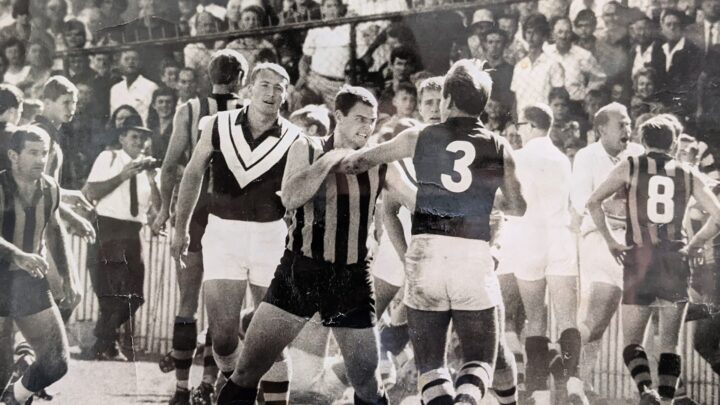
Barry was a champion Australian rules player in Brisbane’s Queensland Australian Football League in the 1960s, kicking 585 goals in 168 games with the Mayne Tigers.
The centre half-forward won premierships with the Tigers in 1966 and 1967 and represented Queensland in 1963-67 before a remarkable change of football careers.
Legendary Norths coach Bob Bax – widely regarded as the best rugby league coach Queensland has had and an early mentor of “Supercoach” Wayne Bennett – saw a cunning way of exploiting the rule under which field goals were worth two points.
He secretly approached Barry Spring and eventually signed him, on the back of a beer coaster, for a $200 sign-on fee.
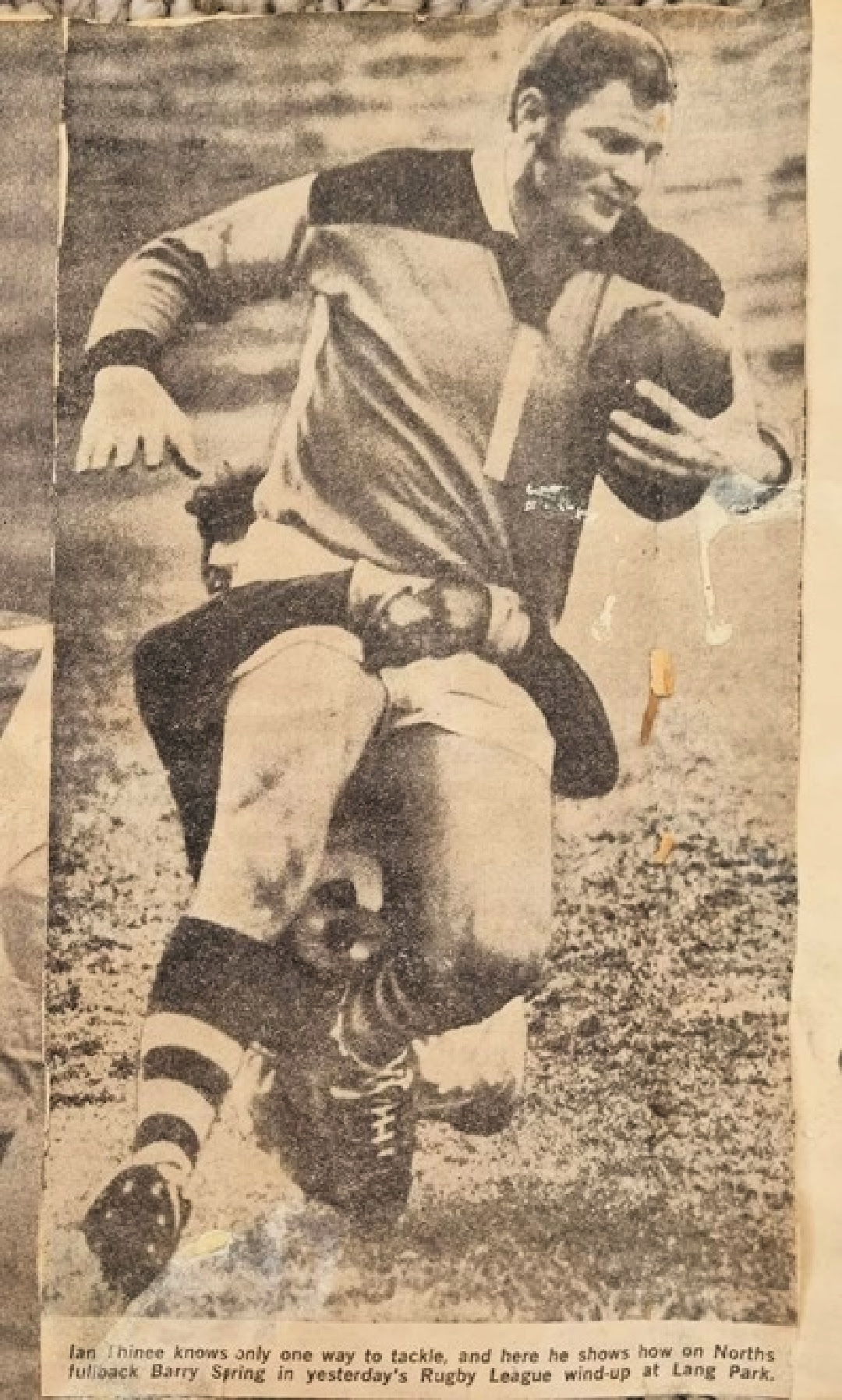
The maestro’s masterplan worked a treat with “Springy” kicking 30 field goals in the 1969 season, including four in one game on Easter Monday when the Devils beat Valleys 13-9 even though Valleys scored three tries to one. He also kicked a field goal in Norths’ 14-2 grand final triumph.
That meant that Barry had won three premierships in four years across two very different football codes. Will anyone else ever do that?
Barry’s prodigious field-goal kicking, allied with those of Eric Simms in the Sydney competition, forced the game’s administrators to change the rules in 1971, reducing the points for a field goal from two to one, which remains the case (unless you are outside the 40 metre line).
But Barry doesn’t dwell in the past although he loves catching up with old teammates, especially those from his days, after his league stint, with the Banyo Aussie rules team and where he once kicked 20 goals in a game.
Barry has fond memories of his brief time in rugby league and especially of Bob Bax. “Baxy used to say you’re not the best team I ever coached but you’re the happiest,” he says.
“There’s something in that … happy teams win.”
Being happy means a lot to Barry, especially as time takes its toll.
“You just have to live life while you can,” he said. “We’re not here forever”.
That’s probably the part of being well past his 60s that Barry enjoys least … losing old mates.
“It’s hard,” he said. “I’ve had to farewell so many good friends in recent years. A group of 10 of us used to go on a fishing trip in Moreton Bay every year and every year we’d get a photo taken at Indian Head at the end of the trip. I was looking at the photo the other day and realised there are only two of us left.”
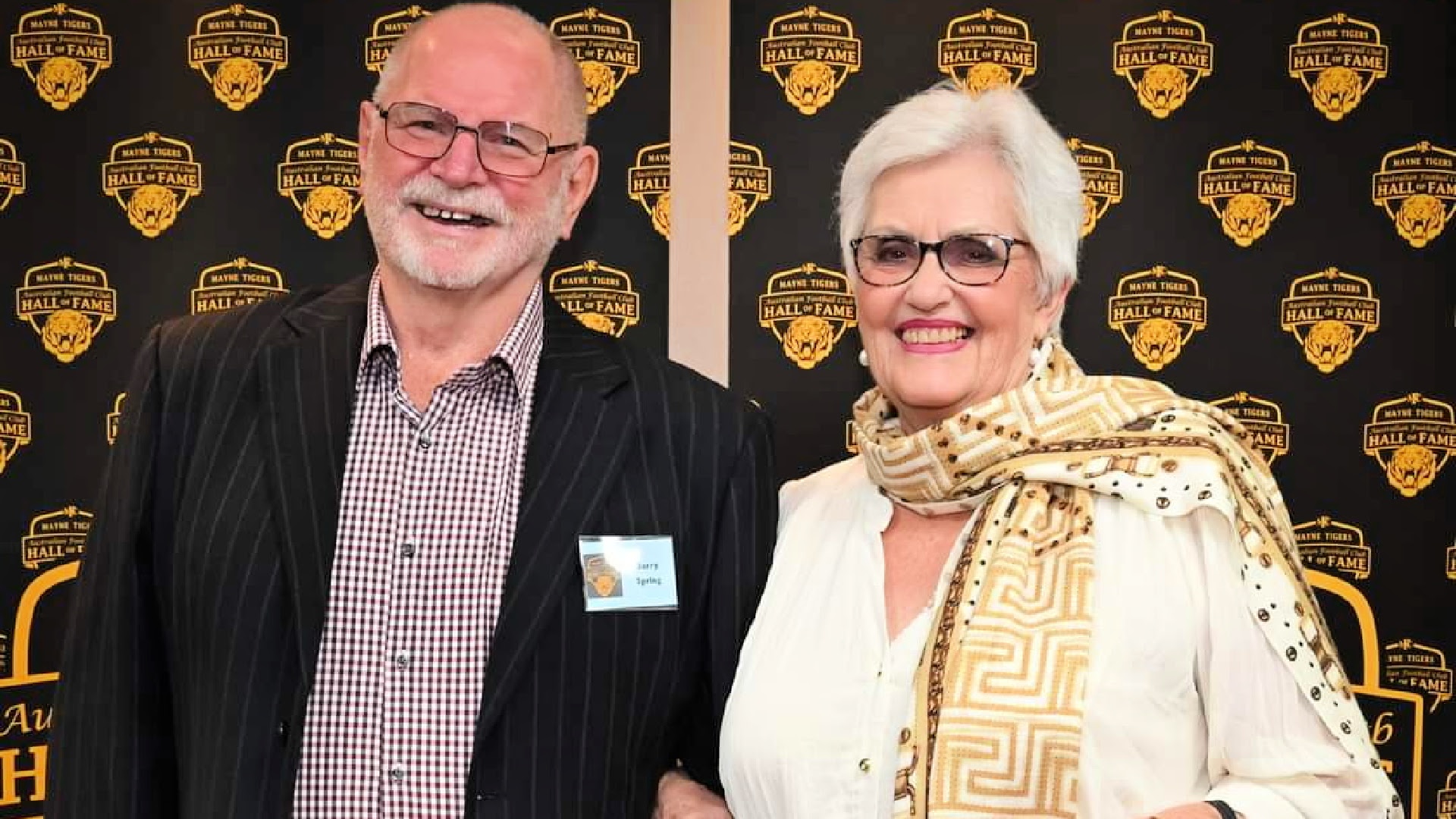
Barry has been living “right on the water” at Beachmere for 23 years and thoroughly enjoys any time he has with his three children and five grandchildren. “The grandkids are all grown up now but Shelley and I have really enjoyed watching them develop over the years,” he said.
He is also happy to be a regular golfer and proud to be the longest-serving and oldest member of the Mayne football club golf club.
“I have the usual aches and pains that come with age and can’t walk a full 18 holes any more but I still enjoy the game,” he said.
“I had prostate cancer more than 20 years ago and have had both knees ‘done’ – one six years ago and the other four years ago but I got over the operations pretty well with plenty of ice and exercise.
“Shelley had her hip replaced and the next day it popped out and she had to have it done again a week later. That was hard going for her.”
Technology has been a challenge for Barry, as it is for most people of his age.
“I’m pretty hopeless beyond paying a bill online,” he said. “I’m on Facebook but I don’t post much, basically because I can’t. I’m also wary of being scammed. The scammers seem to pop up everywhere and they’re so clever.”
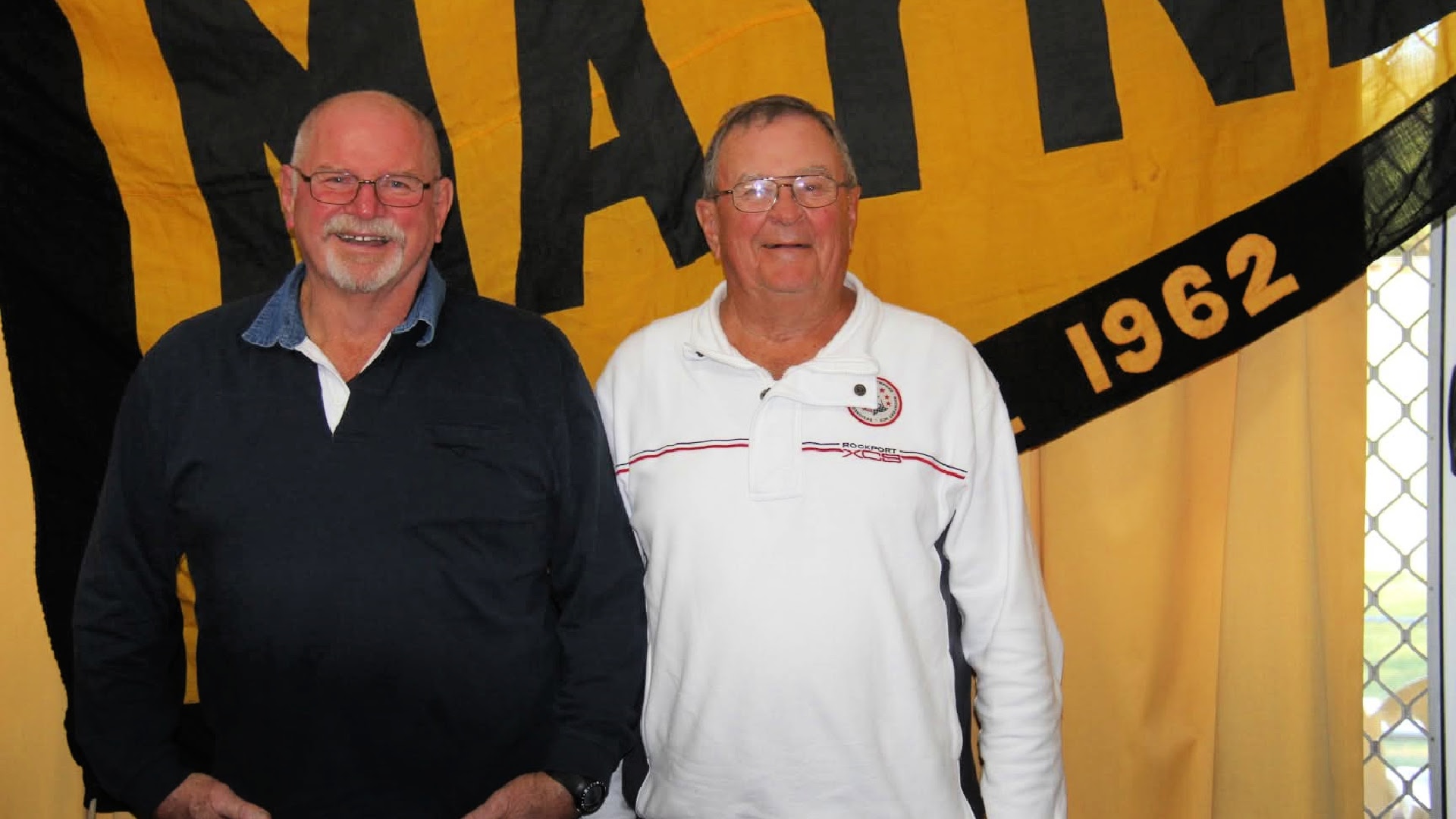
Barry has a host of friends from his football days and rarely misses a reunion. “We have a reunion of the 1969 Norths grand final team every year. The numbers might be thinning out but it’s great to get together and talk about the old times,” he said with a chuckle.
“I like going to the Brisbane Rugby League ‘old boys’ get togethers, too. You realise it might be the last time you might see some of the blokes.”
After his time in rugby league, Barry returned to Australian rules, initially through Windsor-Zillmere and then back with Mayne.
“I really thought I’d retired after that but I was having a run around Crosby Park and (Banyo coach) ‘Marbuck’ (Alan Walters) said to me ‘Why don’t you come and have a game with us?’.
“I thought it was a joke but he talked me into it and I had a ball with a good bunch of blokes.
“Some of them have become close mates and we meet at the Breakfast Creek Hotel once a year to tell each other how good we were. People like Steve Secombe and Rod Judd are great mates. We lost Peter Cubis recently and that was sad because he was such a character.”
In 1975, at the ripe old (in football terms) age of 32, B.Spring added another premiership to his resume when the “Bloods” beat a RAAF team in the grand final at the Gabba.
Barry Dick was a journalist at The Courier Mail and Sunday Mail for 43 years, before retiring in 2015. Most of that time was spent on the sports desk in a variety of roles including sports editor, digital sports editor, Rugby League editor and chief Rugby League writer. While Barry was the first full-time Australian football writer for The Courier Mail in 1973, his true passion was always Rugby League and he covered a myriad of Grand Finals, State of Origins and Test matches. Barry was inducted into the Media Hall of Fame on March 27 2017.





 Proudly Australian owned and operated
Comments 0
Join the conversation. Comments are reviewed before they appear.
Be the first to comment.
Join the conversation
Tell us who you are to post a comment. We'll remember you next time.