
When a gift comes with a price tag attached


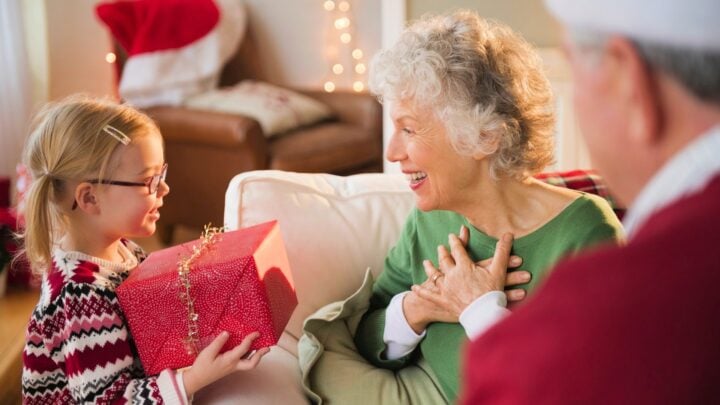
There is a particular kind of sentence that can take all the joy out of a gift.
“It was $15.”
You smile. “Thank you, that’s lovely.”
“It was $15.”
You smile again. “Thank you. The kids will love it.”
“It was $15 each.”
And suddenly you find yourself wondering whether you are at a family gathering or negotiating the purchase of two teddy bears.
This was the rather extraordinary situation one young mother found herself in when her in-laws visited her two-year-old twins. They had brought the children teddy bears and, rather than simply handing over the gifts and enjoying the moment, apparently mentioned the price repeatedly.
So repeatedly, in fact, that after hearing it around ten times, the mother took $30 from her purse and paid them for the toys.
I have to admit, my first reaction was probably the same as yours.
Good grief.
But underneath the absurdity of it is something worth talking about, because family arguments about gifts are rarely really about gifts. They are about expectations. They are about gratitude. They are about who feels appreciated and who feels taken for granted. And, sometimes, they are about keeping score.
A gift should not be an invoice
I am old enough to remember when giving someone something came with a fairly simple social contract. You gave it. They thanked you. Everyone moved on.
You didn’t spend the afternoon reminding them what it cost.
And if they didn’t react with precisely the level of enthusiasm you were hoping for, you certainly didn’t produce the receipt.
There is something quite sad about attaching a price to affection.
A $15 teddy bear given with genuine thought can mean far more than a $150 present bought out of obligation.
Children, particularly young children, don’t understand the economics of generosity. They understand whether something is soft and cuddly. They understand whether it makes them smile. They understand whether the person giving it is warm and happy to see them.
They don’t understand that Nana paid $15 and therefore they should perform gratitude accordingly. Nor should they have to.
Grandchildren aren’t an audience
There is another part of this story that makes me uncomfortable.
The children were apparently not particularly familiar with their grandparents. They were two years old, and the family didn’t see one another very often.
That matters.
We sometimes have a romantic idea of grandparenthood in which grandchildren come running through the front door, fling themselves into our arms and immediately want to sit on our laps.
Lovely.
But real families aren’t always like that.
Sometimes grandchildren are shy. Sometimes they hide behind Mum or Dad. Sometimes they don’t want a hug. Sometimes they don’t remember who you are. And sometimes the way to build that relationship isn’t to insist on affection but simply to sit nearby, play with them and let them come to you.
I know that can be hard. Especially when you have been looking forward to seeing them. Especially when you have bought them something. Especially when you’ve driven a long way and perhaps feel that you deserve a little excitement in return. But children don’t owe us a performance because we are grandparents. And they certainly don’t owe us physical affection.
The dangerous business of keeping score
I wonder how many family relationships become strained because somebody is quietly keeping a ledger.
We paid for the holiday. We bought the school shoes. We drove them to the airport. We babysat last Thursday. We bought the birthday present. We weren’t thanked properly. They didn’t visit. They visited but didn’t stay long enough. Nobody seems to remember what we’ve done for them.
It is remarkably easy to become the accountant of your own family.
And once you start, there is almost no way to win. Because there will always be another thing to add to the spreadsheet.
The trouble with keeping score in families is that love is not a particularly good accounting system.
You will always find an imbalance. Someone will give more money. Someone will give more time. Someone will make more phone calls. Someone will travel further. Someone will feel that nobody notices. And someone will eventually say, usually in the middle of an argument, “After everything I’ve done for you…”
Those seven words have probably started more family wars than we will ever know.
But grandparents are allowed to have feelings too
Now, before anyone writes to tell me I am unfairly siding with the parents, let me say this: grandparents can be hurt too.
It is painful when you feel forgotten. It is painful when your grandchildren don’t seem excited to see you. It is painful when you spend money on something you think they will love and it is barely acknowledged. And it can be particularly painful when you see your children raising their families differently from the way you raised yours.
There is a temptation to interpret all of this as rejection. But sometimes it isn’t. Sometimes it is simply life. The parents are busy. The children are tired. The toddler is overwhelmed. The teenagers are glued to their phones. The adult children have their own homes, partners, jobs and worries.
None of that necessarily means they love you less. It may simply mean that their lives are full.
And perhaps the greatest gift we can give our adult children is not another expensive toy, another unsolicited opinion or another reminder of how much we have done for everyone.
Perhaps it is a little grace.
Give because you want to give
If you want to buy your grandchildren a present, buy it because you want to.
If you can’t afford a big present, don’t buy one.
If you can afford $15, spend $15.
If you can afford $150, spend $150.
But once you’ve handed it over, let it go.
Don’t turn generosity into a debt.
And if what you really want isn’t gratitude for the present but more time with your grandchildren, say that instead.
“I’d love to see you more often.”
“I’d love to take the kids to the park.”
“Could we have them over for lunch?”
Those conversations are far more honest than dropping hints about the price of a teddy bear. Because the truth is, most of us don’t really want our families to remember what we spent.
We want them to remember that we were there.
That we laughed.
That we listened.
That we made them feel safe.
That we showed up.
And years from now, when those teddy bears have long since disappeared into the mysterious black hole where children’s toys go to die, that is the part they might actually remember.
Not the $15.
The love.
Write to Bess at [email protected]





 Proudly Australian owned and operated
Comments 3
Join the conversation. Comments are reviewed before they appear.
I agree with everything you have said. My 12 year old twin Grandaughters and 14 year old Grandson live in Sydney and I am in Cairns, so I visit maybe once a year. I buy them school shoes or help with uniforms plus birthday and Xmas presents. I don't say how much these things have cost, and I do it out of love. Will they remember the things I bought for them, probably not, but my Grandchildren always without prompting, send me "I love you so much Nana" card, and that means more to me than than all the tea in china.
I am a grandparent who lives 5 hours from my grandchildren and your story is right on the mark. I make time to travel just to see them, I take a gift for each of them if I want to. They don’t expect anything and we love just spending time with each other. Thank You for sharing your story.
We rarely see our only grandchild. We give freely and sometimes it’s not acknowledged! We live over 7 1/2 hours drive from them. I had a very close relationship with my Nana and spent about half my life with her, sleeping in her bed and just enjoying that one on one time. I expected my relationship with my grandchild to be the same. My son is the dad, my dil’s mother lived with them till my grandchild was about eight years old.
I spent many hours, with lots of love, making a beautiful Easter Bunny wall hanging frame for her. It was not mentioned when they phoned to wish us a happy Easter! I wondered if the other grand mother collected the post and got rid of it.
Nothing would surprise me, sadly!
Join the conversation
Tell us who you are to post a comment. We'll remember you next time.