
Two Adam Liaw Favourites: Shanghai Red-Braised Pork and Malaysian Chicken Curry


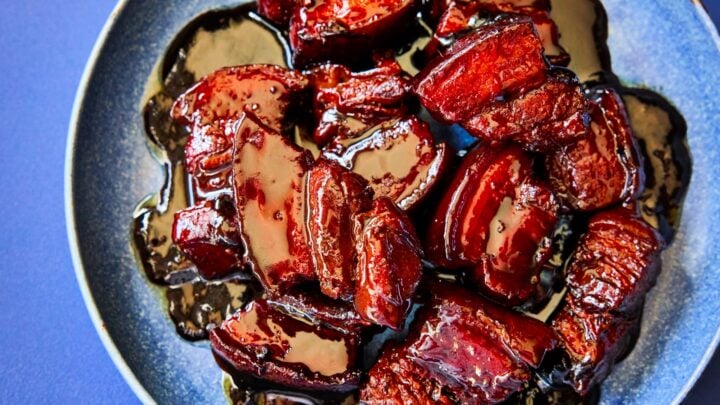
Two dishes Asian families actually cook at home, straight from Adam Liaw’s new book, Asian Home Cooking. Shanghai red-braised pork, meltingly tender in a rich, glossy soy and Shaoxing wine sauce, and kari ayam, a comforting Malaysian chicken curry from his own childhood table.
Eastern China Shanghai red-braised pork
SHÀNGHǍ I HÓNGSHĀO RÒǓ
上海红烧肉
Serves: 6–8
Preparation: 15 minutes Cooking: 1 hour 30 minutes
Hongshao rou, or red-braised pork, is one of the most popular dishes in China. Most regions have their own version, incorporating different cooking methods or aromatics, which results in variation in the texture of the pork and the sauce. In Hunan, for example, the dish is less sweet. Hangzhou’s famous Dongpo pork is named for the Song Dynasty poet and is prepared slightly more elaborately, with additional steps of blanching and steaming.
The name ‘red-braised’ comes from the use of soy sauce and sugar, which gives the meat a deep red colour. This dish is also characterised by its liberal use of Shaoxing wine and the heavily reduced rich and glossy sauce, a signature of Shanghai’s Benbang cuisine.
Ingredients
1 tablespoon vegetable oil
1.5 kg (3 lb 5 oz) boneless pork belly,
trimmed and cut into 4 cm (1½ in) cubes
4 cm (1½ in) piece ginger, peeled and bruised
3 spring onions (scallions), tied in a knot
125 ml (4 fl oz/½ cup) Shaoxing wine
80 ml (2½ fl oz/⅓ cup) soy sauce
80 ml (2½ fl oz/⅓ cup) dark soy sauce
3 tablespoons crystal sugar plus 1½ tablespoons sugar, or 3 tablespoons sugar
salt, to season
Method
Heat a wok or large saucepan over high heat and add the oil.
Fry the pork until lightly browned, then add the ginger and spring onion and fry for a few more minutes until fragrant. Add the wine and bring to a simmer, then add the soy sauces, sugar and about 500 ml (17 fl oz/2 cups) of water. Season with a little salt, but take care not to add too much as the sauce will reduce and become saltier later. Bring to a simmer, cover and cook for 1 hour.
Remove the lid and simmer for a further 20–30 minutes, or until the sauce is reduced and glossy. If the sauce is not reducing quickly enough, I find it helpful to remove the meat from the pot with a strainer (when it is tender), reduce the sauce only until very thick, then return the meat and stir it through the sauce. Remove the ginger and spring onion and serve.
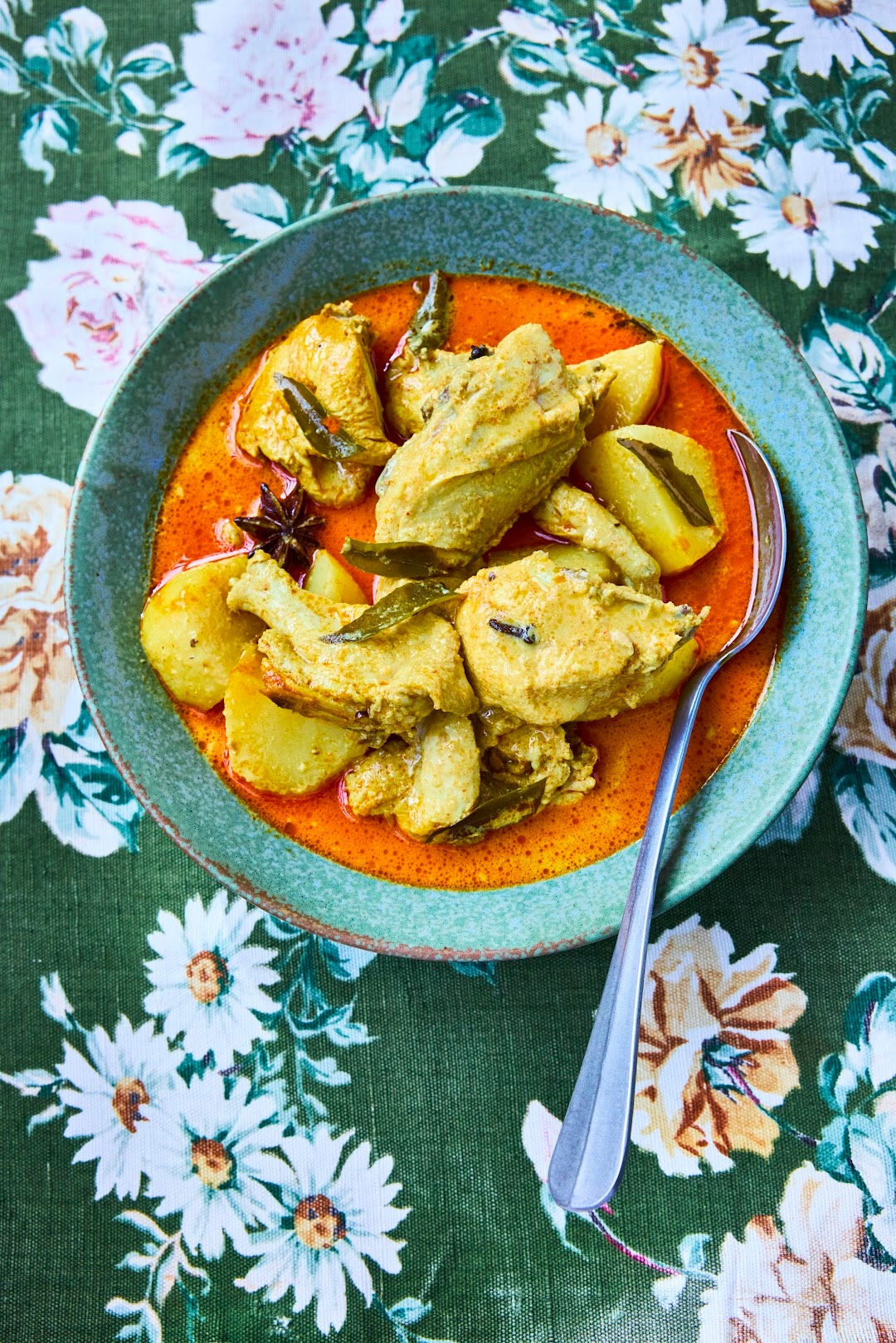
Malaysian chicken curry
KARI AYAM.
Serves: 6
Preparation: 20 minutes
Cooking: 1 hour
Rich with coconut milk and aromatic spices like cassia and star anise, chicken curry is loved across Malaysia’s multicultural community. Most Malaysian families I know will have their preferred type of curry powder to make this classic curry. When my non-Malaysian stepbrother was strugling to get the right flavour in his chicken curry, I pointed him to the Baba’s brand of curry powder my grandmother had always used to make this curry and his problems were solved.
Ingredients
4 chicken-leg quarters, or 1 × 1.6 kg (3½ lb) whole chicken, cut into pieces
125 ml (4 fl oz/½ cup) vegetable oil
1 piece cassia
2 star anise
6 cloves
1 sprig curry leaves
2–3 tablespoons Baba’s Meat Curry Powder
500 g (1 lb 2 oz) potatoes, peeled and cut into large chunks
400 ml (13½ fl oz) coconut cream
salt, to season
steamed rice or roti paratha, to serve
Rempah
6 red shallots, peeled
8 garlic cloves, peeled
4 cm (1½ in) piece ginger, peeled
2 cm (¾ in) piece turmeric, peeled
Method
Season the chicken pieces well with salt. Place the rempah ingredients in a blender and blend to a smooth paste.
Heat the oil in a large casserole dish over medium heat and add the cassia, star anise and cloves. Fry for a few seconds, then add the curry leaves and allow them to splutter.
Add the rempah and fry for about 10 minutes, until very fragrant and the oil has separated from the rempah, then add the curry powder.
Add the chicken pieces and stir to coat. Add the potato and enough water to come to about 2 cm (¾ in) below the level of the chicken. Simmer for 30 minutes, then add the coconut cream and bring to a simmer. Cook for 15 minutes, until a thin film of oil covers the surface of the curry. Allow to stand for at least 30 minutes before serving with rice or roti.





 Proudly Australian owned and operated
Comments 0
Join the conversation. Comments are reviewed before they appear.
Be the first to comment.
Join the conversation
Tell us who you are to post a comment. We'll remember you next time.