
Questions surround Iran playing at the FIFA World Cup


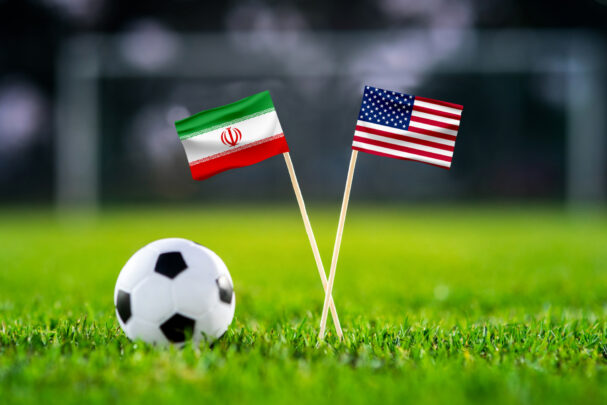
Uncertainty is growing around this year’s men’s FIFA World Cup, scheduled to take place from June 11 in the USA, Mexico and Canada, with escalating geopolitical tensions raising questions about whether Iran will take part in the tournament.
Earlier this month, Iran’s sports minister Ahmad Donyamali said he saw “no possibility” of the national team competing, following US and Israeli military attacks on Iran that have intensified instability across the Middle East.
The situation marks an unprecedented moment for the tournament. Never before has a World Cup host nation been at war with a participating country, complicating preparations for one of the world’s largest sporting events and intersecting sport with broader diplomatic and security concerns.
Mixed messages on Iran’s participation
After meeting FIFA president Gianni Infantino on March 10, US President Donald Trump initially said the Iranian team would be “welcome to compete”. However, he later posted on his Truth Social platform:
“I really don’t believe it’s appropriate that they be there, for their own life and safety.”
Iran’s national team responded, stating “no individual could exclude a country from the World Cup” and emphasising that host nations are responsible for ensuring participant safety.
Despite the uncertainty, Iran’s players have expressed a desire to compete. Preparatory fixtures against Nigeria and Costa Rica, scheduled to take place in Turkey, are still expected to proceed.
Dispute over venues
Iran is currently scheduled to play its group-stage matches in the United States, including games in California and Seattle. That arrangement has become a key point of contention.
The Iranian Football Federation (FFIRI) has indicated it is unwilling for the team to play on US soil. Its head, Mehdi Taj, said:
“We will prepare for the World Cup. We will boycott the United States but not the World Cup.”
Iran has instead sought to relocate its matches to co-host nations Canada or Mexico. Mexico’s president, Claudia Sheinbaum, signalled openness to that possibility on March 17, stating: “the nation stands prepared to host Iran’s group-stage matches should circumstances require”.
FIFA, however, has so far resisted altering the match schedule, maintaining that fixtures will proceed as planned in the United States.
Contingency planning underway
Behind the scenes, FIFA is reportedly considering contingency options should Iran withdraw or be unable to participate. These include leaving Iran’s place vacant – resulting in walkovers for opponents Belgium, Egypt and New Zealand – or replacing the team with another nation.
Potential replacements include Iraq or the United Arab Emirates, both of which narrowly missed qualification through the Asian Football Confederation. Iraq is still a chance of qualifying however, set to play an intercontinental playoff against Suriname, while the UAE could be reconsidered depending on outcomes.
Questions over neutrality
FIFA has long maintained it is a “politically neutral” organisation, though past decisions have drawn scrutiny. Russia, for example, was excluded from qualifying for the 2026 tournament, with FIFA citing operational and security concerns as several nations refused to play against it.
And what if Israel had qualified, or worse, been drawn to play a match against Iran?
Historically, teams have withdrawn or been excluded from World Cup competition for various reasons. India, Turkey and France withdrew from the 1950 tournament due to travel costs, while Indonesia withdrew from 1958 qualifying after refusing to play Israel. Yugoslavia was barred from the 1994 qualifiers following United Nations sanctions linked to the Balkan conflict.
In those cases, FIFA did not impose further penalties.
Possible consequences
If Iran ultimately withdraws, FIFA could choose to sanction the FFIRI. Possible measures range from financial penalties to more severe consequences such as exclusion from future tournaments, including the 2030 World Cup.
However, FIFA also retains discretion not to impose penalties, particularly given the unprecedented nature of the situation, where geopolitical conflict directly intersects with tournament hosting.
Peace prize controversy
The geopolitical tensions surrounding the tournament come months after Gianni Infantino introduced FIFA’s inaugural “FIFA Peace Prize” in 2025, intended to recognise “the enormous efforts of those individuals who unite people, bringing hope for future generations.”
In January 2026, Donald Trump was named the first recipient. The decision drew criticism from some observers, who pointed to US involvement in the Gaza conflict alongside Israel and described a “rapid authoritarian shift” domestically.
Two months later, the US partnered with Israel in military action against Iran, prompting renewed scrutiny of the award. Some critics have argued it should be revoked.
For now, Iran’s participation remains uncertain, with diplomatic developments likely to determine whether the team takes the field when the World Cup begins.





 Proudly Australian owned and operated
Comments 0
Join the conversation. Comments are reviewed before they appear.
Be the first to comment.
Join the conversation
Tell us who you are to post a comment. We'll remember you next time.