
The day we said goodbye to our dog – and why pet grief is far more serious than most people admit


I am not going to pretend I handled it well.
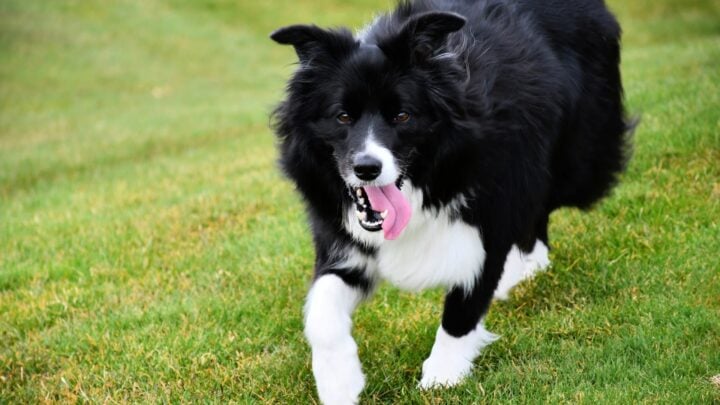
When we lost our dog – a ridiculously loveable Border Collie named Bob who had shared our house, our couch and a frankly unreasonable amount of our bed for 10 years – I cried in the car on the way home from the vet and didn’t particularly care who saw me.
My husband was worse. He didn’t eat dinner that night. Nobody said very much. It didn’t seem necessary.
What surprised me – though it probably shouldn’t have – was how many people around us simply didn’t get it.
“It was just a dog,” someone said. Not maliciously. Not even thoughtlessly, really. They genuinely meant well. But that phrase – “just a dog” – carries within it a complete misunderstanding of what a dog is in a household that has properly loved one.
Bob was not just a dog. He was the first face at the door when anyone came home. He was the presence at your feet during difficult evenings and the reason to get up and go for a walk when you didn’t particularly feel like it. He was a reliable source of uncomplicated joy in a world that is not always reliably joyful. For 10 years he had been woven into the fabric of daily life in a way that most people in our lives had not.
When he died, there was a hole. A specific, particular hole in the shape of a Border Collie, and nothing was going to fill it quickly.
Why pet grief is real – and why it deserves to be treated that way
The research on this is unambiguous, even if the social permission to act on it remains inconsistent. Studies consistently show that the grief experienced after losing a pet is comparable in intensity to losing a close human relationship. The bond formed with a companion animal activates the same neurological and emotional pathways as human attachment. The loss triggers genuine grief – not a lesser version of it, not a proxy grief, but the real thing.
What makes it harder is that pet loss sits in what psychologists sometimes call “disenfranchised grief” – grief that society does not formally recognise or validate. You don’t get bereavement leave. Most workplaces don’t acknowledge it. People expect you to be over it within days. The absence of ritual – the funerals, the formal acknowledgements, the social structures that help us process human loss – means pet grief often has nowhere to go.
If you are struggling after losing a pet, please know this: you are not being dramatic. You are not overreacting. You are grieving a relationship that was real, a love that was genuine and a presence that is genuinely gone. That is exactly what grief is for.
The practical decisions: what happens after
One of the things nobody warns you about is that in the immediate aftermath of loss, you are required to make practical decisions while feeling completely undone. It’s worth thinking about these things in advance, when you’re not in the thick of it.
In Australia, the main options for a dog after death are home burial, private cremation, communal cremation and pet cemetery burial.
Home burial is legal in most Australian states, provided the burial site is at least 50 metres from any waterway and the grave is at least half a metre deep. Check your local council regulations, as rules vary. It costs nothing beyond the emotional labour of doing it, and for many people there is something meaningful about having their dog remain on the property. The limitation is obvious – if you move, you leave them behind.
Communal cremation is the most affordable professional option, typically costing between $80 and $200 depending on the size of the dog and the provider. Your pet is cremated with others and the ashes are not returned to you. For many people this feels impersonal, but it is a dignified and respectful option handled by professionals.
Private cremation means your dog is cremated individually and the ashes are returned to you, usually in a box or urn within a few days. This is considerably more expensive – typically between $250 and $600 for a medium-sized dog, and up to $800 or more for a large breed. The ashes can then be kept, scattered at a meaningful location or interred at a pet cemetery. Most veterinary clinics can arrange this directly, or you can contact a pet crematorium independently.
Pet cemetery burial is available in most states and offers a formal grave site, often with options for a headstone or memorial plaque. Costs vary significantly but typically start at around $600–$800 for a burial plot and can run considerably higher depending on the cemetery and the memorial chosen. Some pet cemeteries also offer ongoing maintenance of the site. For people who want a permanent place to visit, this option provides something that home burial cannot.
A number of Australian services also offer aquamation – also called alkaline hydrolysis or water cremation – as a gentler and more environmentally considerate alternative to flame cremation. It uses warm water and an alkaline solution rather than heat, and the resulting ashes are returned to the family. It typically costs slightly more than traditional private cremation, around $350–$700, but is increasingly available across major cities.
The question of when you’re ready again
People will ask, usually too soon, whether you’re thinking about getting another dog.
The answer is yours alone. Some people find that welcoming another animal relatively quickly helps enormously – not replacing the one they lost, but opening the door to love again. Others need a long time. Some never do. There is no right answer and anyone who tells you otherwise should be regarded with some suspicion.
What I will say is that 10 years after Bob arrived as a ridiculous, shoe-destroying, perpetually hungry rescue dog, I cannot imagine our household without a dog in it. The grief was real. The hole was real. And eventually – not quickly, but eventually – the love is bigger.
If you are struggling with pet loss, the RSPCA and Blue Cross Pet Bereavement Support offer resources and counselling services. You do not have to navigate this alone.





 Proudly Australian owned and operated
Comments 0
Join the conversation. Comments are reviewed before they appear.
Be the first to comment.
Join the conversation
Tell us who you are to post a comment. We'll remember you next time.