
Science says: playing with your dog strengthens your bond more than training


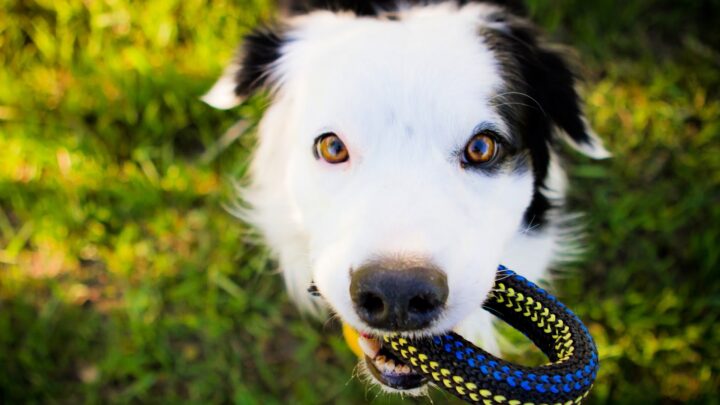
Ask any Australian dog owner what their pet means to them and the answer rarely takes long. Companionship. Unconditional love. A reason to get up in the morning.
Australia now has 7.3 million dogs living across nearly half of all households, with 86 per cent of pet owners saying their pet has positively impacted their lives. For older Australians especially, that bond runs deep. Pet ownership can improve quality of life, reduce symptoms of depression and anxiety and even slow down symptoms of dementia.
So a significant new study published in the journal Royal Society Open Science in 2026 has delivered a finding that is both scientifically rigorous and genuinely heartwarming: playing with your dog is more powerful than training when it comes to deepening your emotional bond.
Put simply – a game of tug-of-war beats obedience class, every time.
What the researchers found
Researchers at Linköping University in Sweden recruited volunteers and assigned them to one of three groups for four weeks: a Play group, a Training group, and a Control group. The Play group engaged in at least five minutes of additional daily play using activities including tug-of-war, rough-and-tumble, chasing games, hide-and-seek and teasing games. The Training group used positive reinforcement to practise tasks each week, using food rewards but not play.
After four weeks, relationship quality was measured using a validated psychological tool. Only the Play group showed a significant improvement in emotional closeness. Training showed no such causal effect.
Five minutes a day. That is all it took to measurably deepen the bond between a dog and their owner.
Why play works — and training may not
The researchers suggest that training can be goal-oriented in ways that create pressure for both owner and dog – particularly when dogs do not respond as expected. Play, by contrast, is inherently mutual and joyful. There is no right or wrong outcome. Nobody fails at tug-of-war.
There is also physiological evidence at work. Play has been shown to reduce cortisol concentrations – the stress hormone – in dogs. Research has also found that dogs and their owners show correlated heart rate patterns during play, suggesting the emotional experience is in some sense shared. Lifelong playfulness in dogs may even be an adaptive trait shaped by thousands of years of domestication, specifically because it strengthens the bond with humans.
What the owners noticed
Around 80 per cent of owners in the Play group reported positive changes in themselves over the four weeks. But the nature of those changes was telling. An improved relationship was the most frequently reported outcome in the Play group, while Training group owners more often reported satisfaction with their dog’s training outcomes.
Training made owners feel proud of what their dog could do. Play made owners feel closer to who their dog was. Owners in the Play group also most frequently described their dog as having an improved mood and a better perception of their owner – suggesting that even a few minutes of daily play can be meaningful for both ends of the lead.
Where to start
Tug-of-war was the most popular activity chosen by owners in the study, followed by rough-and-tumble and chasing games. Hide-and-seek – indoors and outdoors – was also widely loved. The diversity of preferences is itself reassuring: there is no single right way to play. Different dogs and owners find their own rhythm. The point is simply to be present and have fun together, without an agenda.
The bottom line
You do not need a training class, a clicker, or a pocketful of treats to strengthen your relationship with your dog. You need five minutes, a game, and your full attention. The science is clear. Play more. Your dog – and your own emotional wellbeing – will thank you for it.





 Proudly Australian owned and operated
Comments 0
Join the conversation. Comments are reviewed before they appear.
Be the first to comment.
Join the conversation
Tell us who you are to post a comment. We'll remember you next time.