
What Australians Aged 55+ Are Actually Buying and Borrowing for Their Next Car


If you’re in the market for a new set of wheels, you’re in good company – and according to new data from financial comparison site Savvy, Australians aged 55 and over are approaching car buying quite differently to the rest of the country.
Bigger loans, smaller repayments
According to Savvy’s analysis of car loan data from the 2025-26 financial year, Australians aged 55 and over took out car loans averaging $1,314 more than the national average, with a typical loan size of $38,660 compared to $37,346 nationally. Interestingly, it’s specifically those aged 55 to 63 driving that figure up – Baby Boomers as a group actually had a slightly smaller average loan size of $37,550, just under the national average.
Despite borrowing more on average, over-55s are paying less each month for the privilege. Savvy found monthly repayments for this age group averaged $27 less than the national figure of $817. According to Savvy, this comes down largely to asset position – borrowers in this age bracket are more likely to own property, which lenders tend to view favourably, often translating into better loan terms.
What over-55s are actually driving
When it comes to brand loyalty, Toyota remains the runaway favourite among older Australian borrowers, accounting for 11.88 per cent of all vehicles financed, according to Savvy’s data. Ford (8.44 per cent) and Mazda (6.56 per cent) round out the next two spots, while Great Wall and Hyundai are tied for fourth, each capturing 5.94 per cent of the market.
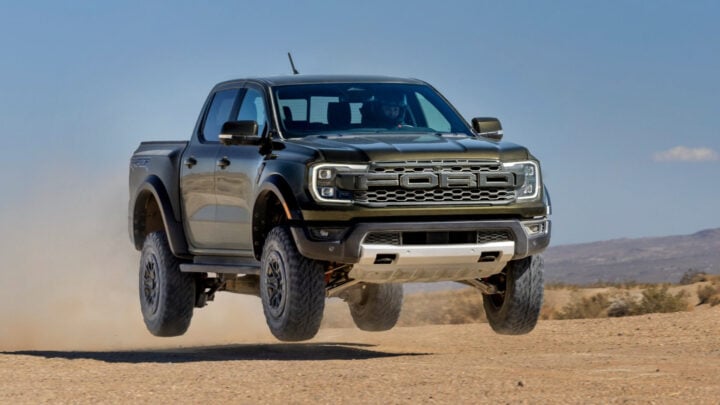
Break it down by individual model, and utes and 4WDs dominate the list. The Ford Ranger tops the table at 5 per cent, followed by the Haval Jolion and Toyota HiLux, tied at 2.81 per cent each. Rounding out the list, the Toyota LandCruiser, Nissan Navara and Mitsubishi Triton are tied at 2.19 per cent apiece.
New vs used: two very different lists
Interestingly, the new and used car preferences of this age group look quite different from one another. Among new cars, the Haval Jolion takes top spot, followed by the Chery Tiggo 4 and the GWM Cannon – a reminder of just how significantly newer, value-focused Chinese manufacturers have broken into the Australian market in recent years. The Mazda CX3, Ford Ranger, BYD Sealion 7 and Mitsubishi Triton round out the rest of the top new car picks.
When it comes to used vehicles, the list shifts firmly back toward familiar, well-established names. The Ford Ranger again leads the way, followed by the Toyota HiLux, then the Toyota LandCruiser and Nissan Navara tied for third. The Mercedes-Benz GLC and Suzuki Swift complete the top picks — an interesting mix of prestige and practicality.
A tip worth knowing if resale value matters to you
If you’re weighing up your options and want a vehicle that holds its value, it’s worth knowing that the Toyota LandCruiser consistently ranks as one of the lowest-depreciating vehicles in the entire Australian market, according to Savvy’s broader vehicle depreciation analysis. Some LandCruiser variants have been recorded losing as little as 2.45 per cent of their value in the first year alone, and still sitting under 15 to 21 per cent depreciation after four years – figures that put it well ahead of most other vehicles on the market, let alone in its own segment. Given the LandCruiser already ranks among the most popular models with over-55 buyers, that’s a genuinely useful piece of reassurance if resale value factors into your decision.
What this means
Whether you’re weighing up a new Haval Jolion, a tried-and-tested Ford Ranger, or eyeing off a LandCruiser for the long haul, the data suggests Australians aged 55 and over are approaching their next car purchase with a genuinely different financial position to younger buyers – borrowing a little more, but paying it off more comfortably, thanks to decades of building equity elsewhere.
Data and analysis in this article are sourced from Savvy’s Car Loan Statistics report.





 Proudly Australian owned and operated
Comments 0
Join the conversation. Comments are reviewed before they appear.
Be the first to comment.
Join the conversation
Tell us who you are to post a comment. We'll remember you next time.