
First Drive: Toyota’s New RAV4 PHEV Brings Plug-In Power to Australia’s Favourite Family SUV


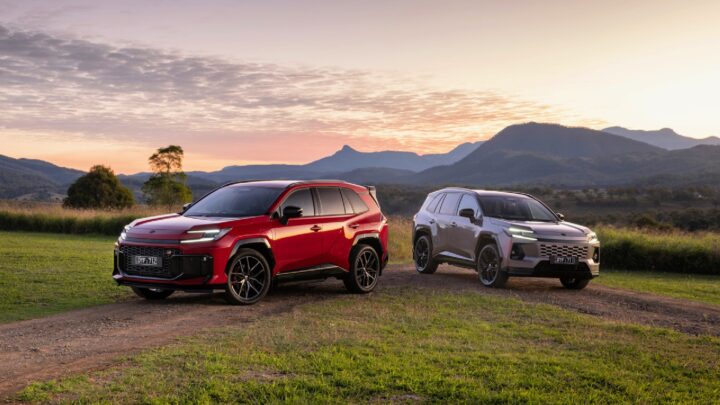
It’s been a big year for the Toyota RAV4.
The showroom numbers are nothing flash for a family SUV that has been Australia’s favourite in recent years, but there have been significant changes on all fronts.
The sixth generation arrived in the first quarter and now comes the hottest new green-mobile, a plug-in hybrid that can run fully electric for at least 144 kilometres.
Toyota Australia is also promising to cut waiting times to around three months, after securing an extra 30,000 vehicles – including plenty of RAVs – to recover the sales momentum it lost through the first half of 2026.
Given its half-year total was ‘only’ 95,000, a commitment to 230,000 deliveries by December 31 points to lots of action in the Brand-T showrooms over the coming months.
Part of that action will be provided by the RAV4 PHEV – that’s car-speak for plug-in hybrid electric vehicle – as it’s a landmark car for the brand. Toyota has been on a deliberate go-slow on electrification, something reflected in the sales of its bZ4X pure EV, but is now pushing harder.
The plug-in RAV comes as Toyota Australia also introduces a ’performance hybrid’ version of the LandCruiser, to address complaints about performance and tow capacity; a slightly larger Touring version of the bZ4X; and a fully-electric HiLux pick-up, for strictly limited deliveries.
The new RAV runner has a 2.5-litre petrol combustion engine with 105 kilowatts is combined with the battery-electric hybrid package; twin electric motors on all-wheel drive models, one at either end, and a 22.7kiloWatt-hour lithium-ion battery pack. The total power output is 227 kiloWatts.
The two-wheel drive has a single electric motor on the front axle for 151.4 kiloWatts with a 40.7 kilowatt motor at the back.
Toyota says the battery – water cooled with 104 individual cells –. is stored under the floor in the rear of the cabin, to prevent any loss of interior space. It is suitable for both 50kW DC charging and 11kW three-phase AC charging. Using AC, the time for a full top-up is around 2.5 hours and a DC fast charger can take the battery to 80 per cent in approximately 28 minutes.
The new PHEVs share the 5-year/unlimited-kilometre of the other RAV models, with 12-month/15,000 kilometre services capped at $325 for five years. There is also eight years and 160,000 kilometres of coverage if the battery’s energy storage drops below 70 per cent.
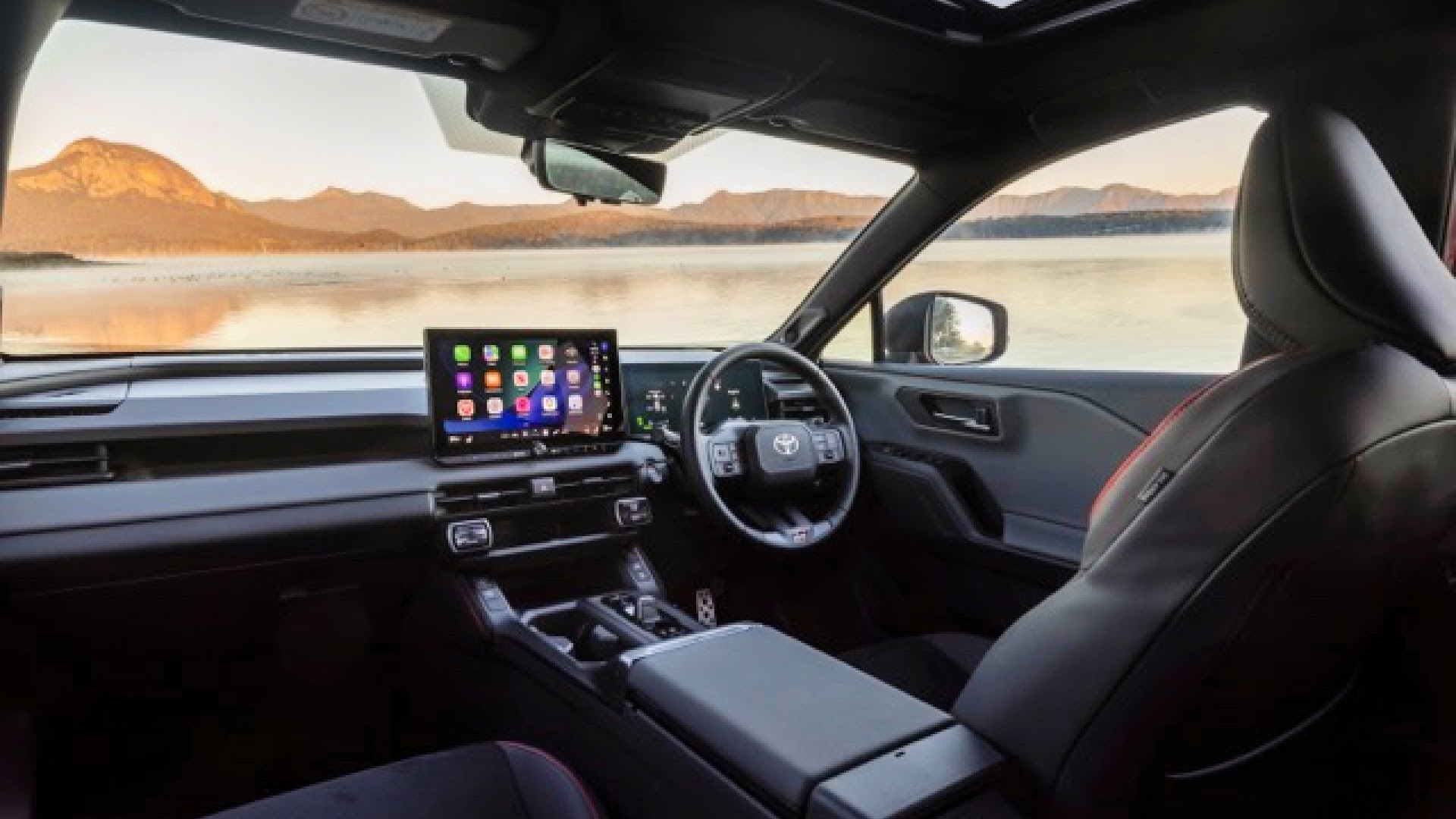
Sliding into the plug-in RAV is like coming home to an old friend. The sharper new look and upgraded interior from the sixth-generation car includes lovely buttons and not just a touch-screen, and the quality that’s still a benchmark for all affordable brands.
One surprising thing is how much the RAV has grown. You notice it when parking, and also sitting in the back seat, as it feels more like a Prado from a couple of generations ago than the original compact RAV from the early days of family SUVs.
On the mechanical side, Toyota has brought bigger disc brakes – up from 305 to 328 millimetres – to cope with the extra weight of the bigger battery and the car’s additional performance.
In good news for families, the XSE models have a three-pin AC power plug suitable for small appliances – coffee anyone, or perhaps a warm bottle of milk? – thanks to a 1500-watt inverter.
Driving the XSE version is relaxed and easy. It has a touch more punch than the regular RAV4 hybrid, but the two-wheel drive model is calm and measured.
The hybrid workings are as unobtrusive as you expect from a Toyota, with smooth throttle response in all modes. The car would be better with driver-adjustable regenerative braking, something that works through the ‘shift’ paddles on cars from Kia and Hyundai and is available on its bZ4X.
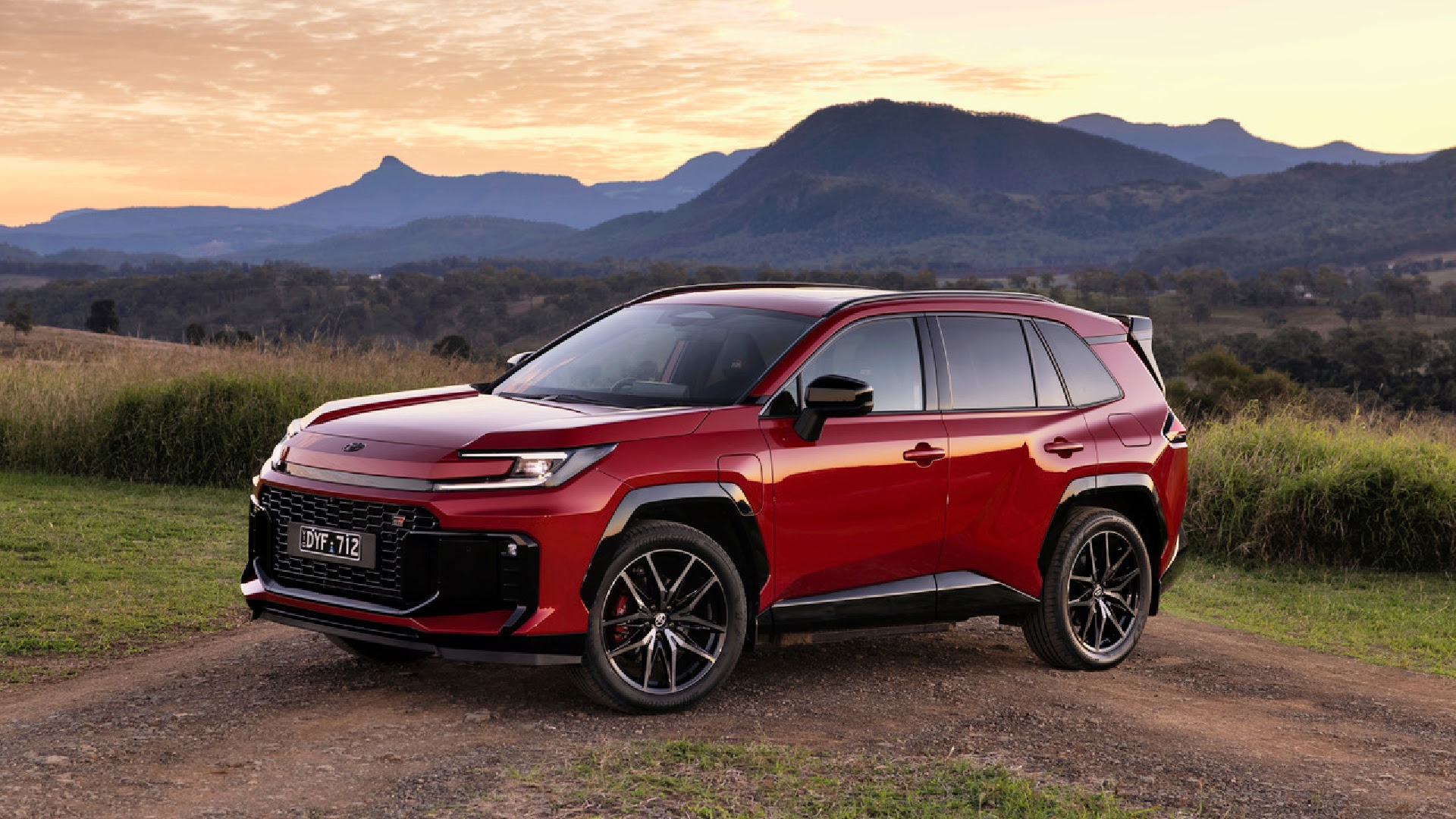
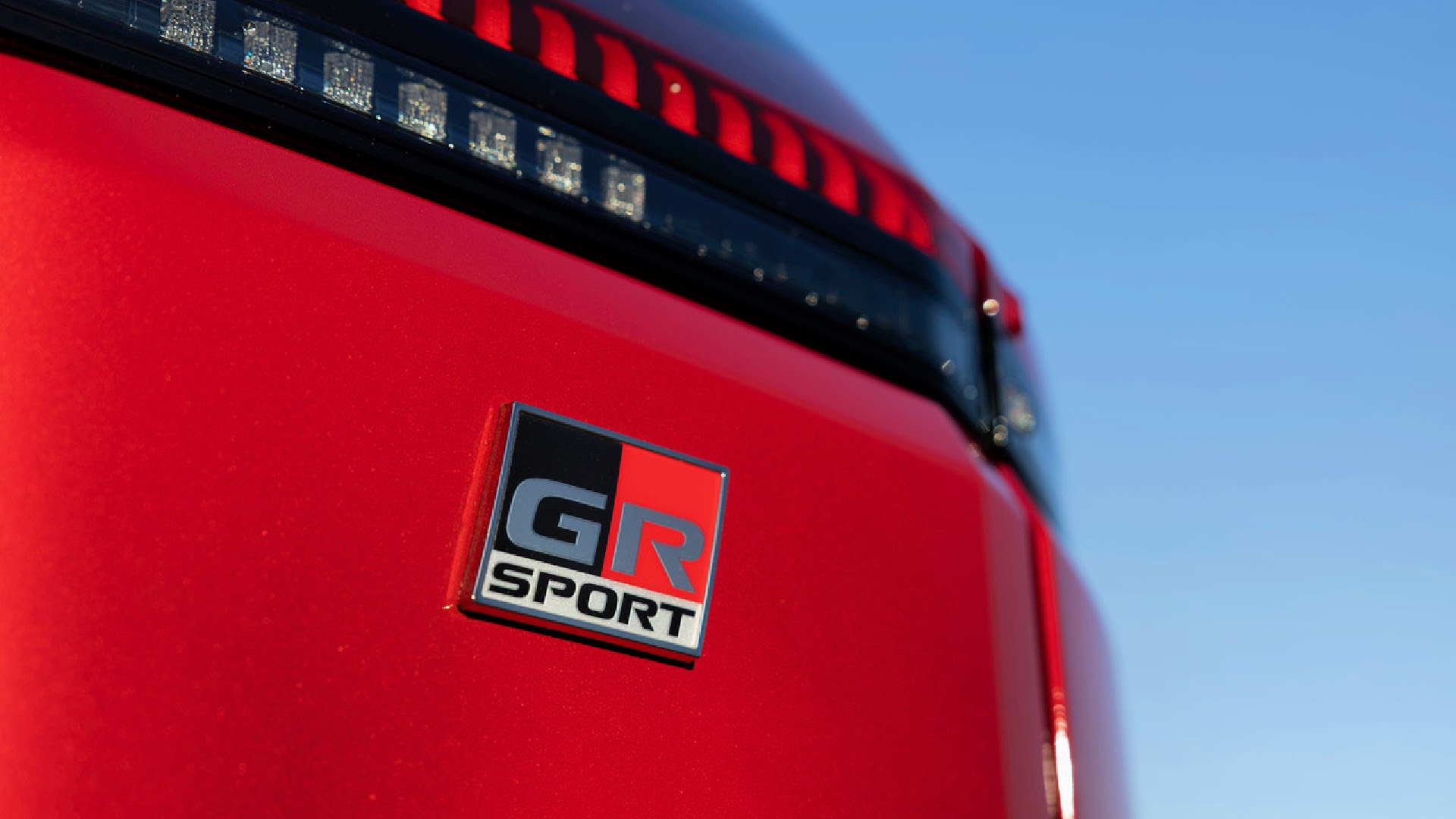
Things change in lots of ways as I jump up to the GR Sport model. It’s not just the wider track from wheels pushed out by 20 millimetres at each corner or the GR badges.
There are visual changes on the outside, with predictable black-coloured flares on the guards to cover the 20-inch wheels, extra air intakes in the nose, and a pair of spoilers set top-and-bottom on the tail. The glossy black alloys are wrapped by 235×50 tyres and – no surprise – sit over red-painted brake callipers.
Inside, proving the GR Sport is for drivers, there are heavily-bolstered front seats, a leather-wrapped steering wheel with heating and suede kneepads for cornering support.
The GR Sport should have been the highlight of the preview drive and the chance for some fun over the excellent twisting hills in the Gold Coast hinterland – except for one thing. Most of the early driving was in the countryside outside Brisbane and earlier enthusiastic drivers had depleted the battery.
So there was no chance for a genuine light-footed run in EV mode.
Still, GR Sport owners are likely to be keen drivers and the rest of the time with the GR was fun. It turns aggressively into corners, responds well to the throttle, and stops well. It only has a single-speed CVT transmission, but Toyota has managed to tune the latest so it’s not laggardly or unresponsive.
Unleashing full power gives more than enough punch for overtaking and twisty roads. It’s not as sharp as an N-badge SUV from Hyundai, but still far more enjoyable in the hills and valleys than a Nissan X-Trail.
The ride quality on the 50-series tyres was pretty ordinary on some of the bumpy Queensland roads, with too much impact harshness. It’s not that the car was under-damped, just that potholes and broken surfaces were passed straight through to the cabin.
On the driver-assistance front, the RAV4 was nicely controlled. There were no false alarms and even when a narrow road triggered the lane-keeping system it was done without overt jerking the wheel.
Interestingly, the all-wheel drive models have a 1.5-tonne towing capacity, up from 800 kilos in the two-wheel drive version.
So the bottom line is simple. The RAV4 PHEV does what it should as a family SUV and is certain to be a showroom winner with its new plug-in credentials. It is a solid 7/10 performer and that score could easily increase if you’re running genuine EV time close to home.
TOYOTA RAV4 PHEV
Models: XSE, Cruiser, GR Sport
Pricing: XSE 2wd $58,840, XSE awd $63,340, GR Sport awd $66,340
Driveline: 2.5-litre combustion engine with one or two electric motors
Combined output: 227kW (awd), 201kw (2wd)
Economy: 0.7 litres/100km (95 RON)
EV Range: 154km (2wd), 144km (awd) (NEDC)
Transmission: single-speed CVT
Safety: 8 airbags, Toyota safety sense ADAS with active cruise control, pedestrian and cyclist detection, emergency steering assist, panoramic view monitor
The Tick: plenty to like





 Proudly Australian owned and operated
Comments 1
Join the conversation. Comments are reviewed before they appear.
Pity it doesn’t have paddles.
Join the conversation
Tell us who you are to post a comment. We'll remember you next time.