


Dear Readers,
I have come to realise in my latter years, that there are two kinds of people in this world: those who clean their barbecue properly, and those who believe a quick, half-hearted scrape while clutching a lukewarm beer counts as “maintenance.” I am not here for the latter. No, no. I am here for standards.
Now, before we get into the nitty-gritty, a crucial amendment – one I learned the hard way. Yes, you absolutely must heat the barbecue before cleaning it. I know some of you are already reaching for your brush while it’s stone cold, like amateurs polishing a foggy mirror. Stop at once. A proper preheat, 10 to 15 minutes on high, softens all that ghastly, baked-on residue so it actually comes off, rather than clinging on out of spite.
However, and this is where the Australian climate adds its own little twist – do not simply fire up your barbecue without a preliminary inspection. This is not England. This is a land where creatures consider your barbecue less a cooking appliance and more a charming rental opportunity.
I once lifted the lid with entirely too much confidence and came face-to-face with a rat who had, by all appearances, been enjoying the facilities – the smell! We regarded one another in mutual horror. It darted, I yelped, and I can tell you now, I have never been so grateful to still be wearing my bicycle clips from my early morning ride. They may not be fashionable, but in moments of crisis, they are stalwart guardians of one’s dignity.
So – order of operations: First, approach cautiously and check for any undesirable tenants. A gentle lift of the lid, a quick peer inside. If anything scurries, squeaks, or looks at you as though you’re the intruder, close it again and regroup. And don’t forget to check the cabinet below if you have one. And for heavens sake, put your rubber gloves on – ladies do not have calloused hands.
Once you’re satisfied you are the sole proprietor, then preheat. Let the barbecue get properly hot- none of this timid warming. You want it hot enough to loosen yesterday’s culinary sins.
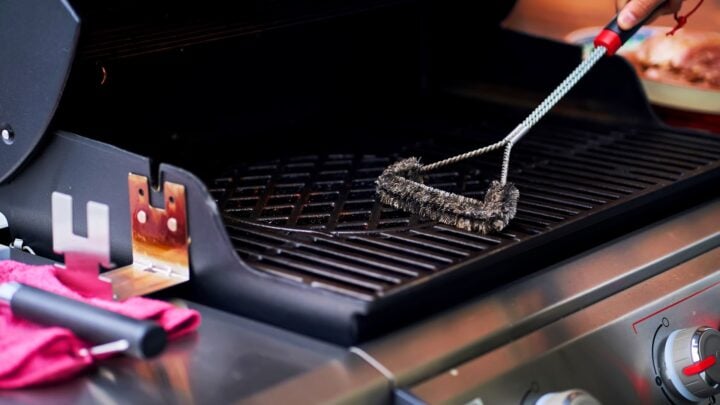
Next, turn it down or off (we are cleaning, not branding cattle), and scrape the grates while they’re still warm. You’ll find the residue comes away with far less resistance, which is both efficient and deeply satisfying in a moral sense. Make sure you have kitchen paper towels on-hand, it’s a must for helping get rid of the scrapings.
After that, when the grates are still warm but not hot, give them a proper soak in hot, soapy water. Not a cursory rinse – a good soak. The sort of soak that suggests genuine remorse. Then scrub, rinse, and dry thoroughly. Repeat if you need to.
Do have a look at the interior and burners while you’re there. Again, we are checking for both grease and any entrepreneurial wildlife. Australia does not reward complacency.
Finally, wipe everything down including the cabinet, doors and hood. And, if you’re feeling particularly virtuous, give the grates a light oiling before reassembling. It keeps things from sticking and gives the whole affair a quiet, well-run air.
And do make a habit of this. A barbecue is not a “clean once a year and hope for the best” situation – especially not here. Regular checks prevent both grease build-up and unexpected houseguests. I like to keep a packet of barbecue wet wipes in my cabinet. They come in very hand while barbecuing.
I due hope you take on my sage advice, because truly, nothing quite spoils a pleasant afternoon sausage like the suspicion that you are merely the latest in a long line of occupants.
Now if you will excuse me, it’s time to pop the snags on the BBQ.
Until next week. X





 Proudly Australian owned and operated
Comments 0
Join the conversation. Comments are reviewed before they appear.
Be the first to comment.
Join the conversation
Tell us who you are to post a comment. We'll remember you next time.