
How to Grow Everlastings in Autumn in Australia: Easy Guide for Beginners


Ah don’t we gardeners just love autumn gardening in Australia. With the heat finally easing you can do things properly again without feeling faint halfway through the task. If you are a beginner gardener, this is also the season where you are least likely to ruin anything through enthusiasm – which is always a bonus.
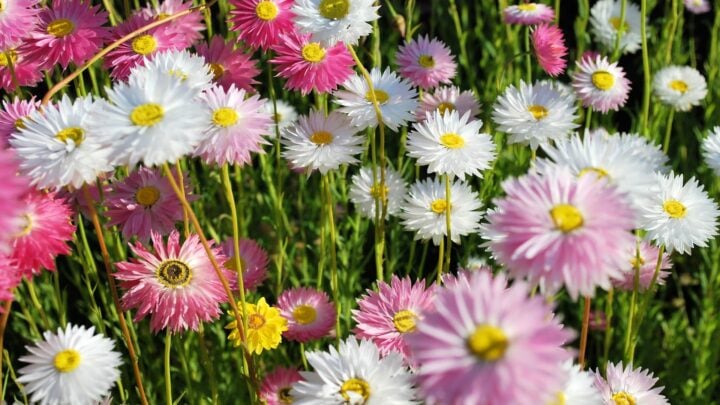
So let’s talk about everlastings: those wonderfully cheerful, papery flowers that look good in the garden and in a vase, and even continue looking good after they’ve dried. They are one of the easiest ways to get a big spring display with very little fuss.
What are everlastings? Everlastings is a common name for a group of flowers (mostly native daisies) that dry naturally on the plant while still looking fresh. The best-known is Xerochrysum bracteatum, often called strawflower. There’s also Rhodanthe chlorocephala and Ammobium alatum.
They’re popular in Australia because they suit our climate and don’t demand constant attention. In gardening terms, they are forgiving, which is exactly what beginners want.
In most parts of Australia, autumn (March–May) is the ideal time to sow everlastings. The soil is still warm which is good for germination. There’s usually more reliable rain and the plants have time to grow strong before spring flowering
If you sow them in spring, they often struggle with heat before they’re established, so save it for now.
To sow them you don’t need fancy equipment or special skills. Just pick a sunny spot, make sure it gets full sun, loosen the soil with a fork or trowels and simply sprinkle the seeds lightly on the surface. Press them in gently with your hand and water in lightly (a gentle shower, not a flood)
That’s it! Oh, and don’t bury them deeply, most everlasting seeds like light to help them germinate.
So which everlastings for your Australian climate
Here’s the beginner-friendly guide for planting everlastings in your part of Australia:
Temperate areas (Sydney, Melbourne, Adelaide, Tasmania). These areas are ideal if you’re starting out and you’re in the easy mode region.
Best choices:
- Xerochrysum bracteatum – very reliable, lots of colour
- Rhodanthe chlorocephala – soft pink carpets of flowers
- Ammobium alatum – neat white flowers, very easy to grow
Dry inland areas (central NSW, inland QLD, SA outback edges, inland WA)
Best choices:
- Rhodanthe manglesii – brilliant mass displays after rain
- Xerochrysum bracteatum – tough, colourful, drought-tolerant
These plants actually like poorer soil and less water. Don’t over-care for them.
Now for coastal WA and Mediterranean climates (south-west WA, parts of SA)
Best choices:
- Ammobium alatum – very happy in this sandy area
- Xerochrysum bracteatum – consistent performer
Good drainage is the main secret here. They hate soggy soil.
Subtropical areas (Brisbane, northern NSW coast)
Best choices:
- Xerochrysum bracteatum – choose heat-tolerant types
- Rhodanthe chlorocephala – only in cooler months
Think “autumn to early spring growing season” rather than summer.
For the Tropical North (Far North QLD, NT coastal)
Best approach:
- Xerochrysum bracteatum – grown only in the dry season
Timing is everything. Sow after the wet season when conditions are cooler and drier.
Here some beginner mistakes to avoid (very common)
- Sowing too deep – seeds fail to emerge
- Overwatering – seedlings rot easily
- Too much fertiliser – lots of leaves, not many flowers
- Planting in shade – weak, floppy growth
- Not thinning seedlings – crowded plants that don’t perform well
If you do only one thing right, make it this: sun + drainage = success.
If you want a bigger spring display (and most beginners do), add:
- Nigella damascena -pretty flowers + decorative seed pods
- Eschscholzia Californica – bright, cheerful, very low maintenance
- Lathyrus odoratus – fragrant climber, very rewarding
- Lupinus polyphyllus – tall colourful spikes (best in cooler areas)
Everlastings are one of the best “first success” plants for new gardeners. They don’t demand constant attention, they cope with Australian conditions well, and they give you an enormous payoff in spring for very little effort in autumn.
If you do nothing else this season, sow a small patch of strawflowers. Even a square metre. By spring, you’ll understand why gardeners get a bit smug about autumn planting and you’ll probably be planning where to put more.





 Proudly Australian owned and operated
Comments 0
Join the conversation. Comments are reviewed before they appear.
Be the first to comment.
Join the conversation
Tell us who you are to post a comment. We'll remember you next time.