
No let-up in coffee prices as bean supplies stabilise


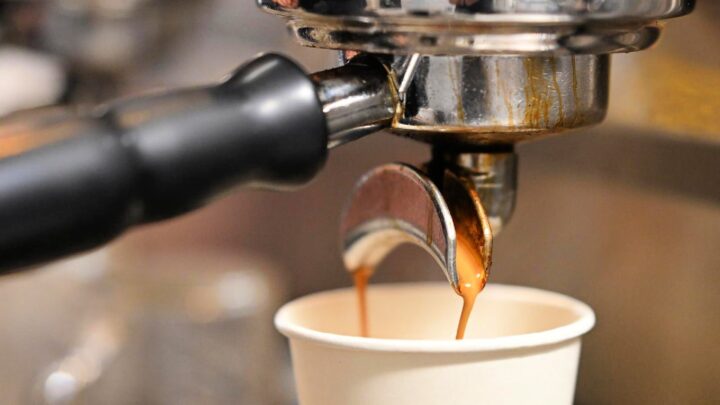
If you think you’re paying too much for a cup of coffee, there’s good news and bad.
The positive is that the extraordinary spike in the cost of beans, which caused cafes and supermarkets to increase prices in the past two years, has stabilised.
Drought in Brazil, the world’s dominant coffee grower, led to an 86 per cent spike in Arabica bean futures – the benchmark price for wholesale importers – since the start of 2024, Rabobank commodities analyst Paul Joules says.
As conditions gradually recover, prices have retreated from the record highs of about $US4.20 a pound in February 2025 to about $US3.70 a pound, and Mr Joules expects further falls by the end of 2026.
The bad news is that this doesn’t mean consumers will be paying any less for a cup of java any time soon.
Ben White, national sales manager at specialty roasters Padre Coffee, warns coffee drinkers should expect cafe prices to rise another $1 to $1.50 this year.
Commodity prices are still much higher than the pre-2024 average, which rarely climbed above $US2 a pound.
Even if they return to those levels, other cost pressures have been unrelenting.
For Padre, which operates five cafes across Australia and a roasting operation, raw beans account for approximately two-thirds of the cost of producing a bag of roasted coffee, with other inputs such as rent, electricity, wages and packaging comprising the remainder.
Then there’s the cost of turning the roasted beans into a cup of coffee, which means more variable costs such as milk and disposable cups, and overheads including electricity, rent and capital expenses.
“Profits have been absolutely squeezed for cafe operators,” Mr White says.
Coffee prices have undoubtedly risen as a result but despite apocalyptic warnings that Australians will soon find it hard to buy a coffee for single figures, they have not kept pace with costs.
The cost of an average flat white rose about 10 per cent nationwide between 2023 and 2025, according to digital payments data retrieved from cafes across Australia by point-of-sale software provider Square.
In Sydney, a flat white cost about $5.04 on average in 2025, up from $4.61 in 2023.
Cafes have suppressed price rises amid tepid demand and high competition, which has seen profit margins fall from about 3.5 per cent to less than 2.5 per cent, Australian Restaurant and Cafe Association chief executive Wes Lambert says.
“This is putting a lot of pressure on the industry and the cafe segment in particular, and that’s leading us to see, according to CreditorWatch, one in nine cafes and restaurants going into liquidation in the past 12 months,” he says.
“Ultimately, unless demand increases or prices increase, the industry is going to stay in the doldrums when it comes to profitability.”
Consumers will essentially have to decide on a trade-off between low prices and quality of product and service, Mr White says.
“There’s always going to be a customer base that is price-conscious but ultimately we’ve identified that quality is a really big factor, as well as that customer experience,” he says.
It’s a similar story for chocolate makers, although relief for the industry might come sooner.
Cocoa futures shot up at the start of 2024, amid similar weather disruptions in West Africa, where the bulk of beans are produced.
After peaking at about $US12,000 a tonne, wholesale prices are back down to about $6000 a tonne following an aggressive supply response by growers, including ramping up fertilisers and pruning to boost yields, Rabobank’s Mr Joules says.
Because cocoa and coffee trees take a relatively long time to cultivate compared to other agricultural commodities such as wheat, supply chains are particularly susceptible to inclement weather and shortages take a while to resolve.
Mr Joules isn’t expecting the cocoa market to return to surplus until the 2026/27 season.
Currently, prices remain about two to three times the long-term average.
Independent chocolate makers like Li Peng Monroe and Peter Channells of Canberra-based chocolatier Jasper and Myrtle are particularly susceptible to price fluctuations.
The pair are relatively lucky to have missed out on the worst of the price spike.
They ordered their last major shipment of 150 tonnes of cocoa beans from Bougainville in Papua New Guinea in 2023, when prices were about half what they are now.
But if prices remain at current levels when they need to restock at the end of this year, the viability of the business will be at risk.
“Obviously, I’ve got to find the capital to pay for the shipment, and it’s not tens of thousands – they might be hundreds of thousands (of dollars), so not many small businesses will have that kind of money sitting around,” Ms Monroe says.
Given chocolate makers are also facing the same inflation pressures in their overheads as cafes, Mr Channells says he can’t imagine any producers dropping prices
Growth should at least stabilise now the worst of the supply challenge is over.
“But the chocolate system is highly dependent on what happens in West Africa and that can turn on a dime at any minute,” he says.





 Proudly Australian owned and operated
Comments 0
Join the conversation. Comments are reviewed before they appear.
Be the first to comment.
Join the conversation
Tell us who you are to post a comment. We'll remember you next time.