
‘Natural’, ‘eco-friendly’, ‘sustainable’ – the words on your supermarket shelf that may mean absolutely nothing


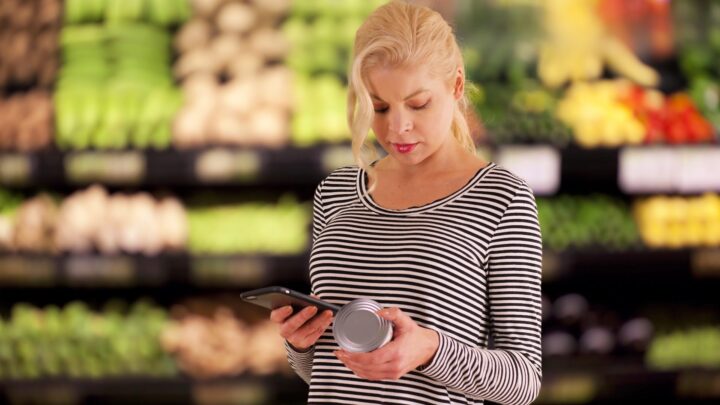
You are standing in the supermarket aisle, reading the label. One product says it is natural. Another is eco-friendly. A third carries a carbon-friendly claim. You choose accordingly, feeling you have made the responsible choice.
New research suggests you may have been misled.
Two major studies from The George Institute for Global Health – published simultaneously in peer-reviewed journals – have delivered the most comprehensive picture yet of how sustainability claims are used on packaged food in Australia. The findings are blunt: nearly four in 10 packaged food products on Australian supermarket shelves carry a sustainability claim, and the vast majority of those claims are unverified, vague and potentially misleading.
What the research actually found
The first study audited sustainability claims across more than 27,000 packaged food products at Coles, Woolworths, Aldi, IGA and Harris Farm. Researchers identified 69 different sustainability claims in use. The two most common – “natural” and “vegan” – together accounted for nearly half of all claims found on packaging.
Here is the catch: neither term has a legislated definition under Australian law. There are no criteria manufacturers must meet before printing either word on a label. They mean whatever the manufacturer wants them to mean.
More than two thirds of all claims related to production processes or were too vague to be independently verified – terms like “eco-friendly” and “sustainably sourced” with nothing behind them. Only 16 per cent of claims took the form of third-party certified logos – the only type of claim that requires independent verification. The remaining 84 per cent were self-declared text with no oversight whatsoever.
The second study examined whether products carrying carbon-related claims – terms like “carbon friendly” or “lower emissions” – actually had a lower carbon footprint than comparable products without those claims. The results were troubling. For confectionery and meat products – two of the highest-emitting food categories – products carrying carbon-related claims recorded higher median emissions than their unlabelled counterparts.
In other words, some of the worst offenders for carbon emissions are carrying labels that imply the opposite.
Why this matters for Australian shoppers over 60
Older Australian shoppers aged 55 and over bring their own shopping bags to stores, recycle product waste and compost food waste significantly more than other age groups. This generation is not indifferent to sustainability – quite the reverse. They are among the most consistent in their environmental behaviour, which makes the integrity of the information they rely on in the supermarket aisle all the more important.
A recent survey of Australians highlighted that difficulty navigating product labelling and widespread scepticism of business green claims were among the most prevalent barriers to purchasing sustainably. That scepticism, it turns out, is well-founded.
Associate Professor Alexandra Jones, Program Lead for Food Governance at The George Institute, said the findings pointed to an urgent need for reform.
“Consumers are increasingly trying to make food choices that are good for the planet, and manufacturers know it. What we’re finding is that the labels designed to guide those choices are largely unregulated and that creates real risks of greenwashing,” she said.
“Terms like ‘natural’ and ‘sustainable’ sound meaningful but without agreed definitions or verification requirements, they can be applied to almost anything. That’s not useful information. It’s just marketing.”
What needs to change
The researchers are calling on Australian policymakers to develop a stronger regulatory framework for sustainability claims on food packaging – including legislated definitions for commonly used terms, mandatory criteria for substantiating claims, and a government-led front-of-pack sustainability label modelled on France’s Eco-Score system, which grades products from A to E based on verified environmental impact data.
The findings are consistent with a European Commission review that found more than half of sustainability claims on consumer goods across Europe were vague, misleading or unverified. The Australian Competition and Consumer Commission has previously raised concerns about broad environmental claims – but enforcement remains limited and standards remain unclear.
How to protect yourself at the checkout
Until regulation catches up, the responsibility falls on shoppers. A few practical rules:
Look for third-party certified logos rather than text claims. Certifications such as Australian Certified Organic, Rainforest Alliance, MSC (Marine Stewardship Council for seafood) and Fairtrade require independent verification. A company printing “eco-friendly” on its own label requires nothing.
Be sceptical of vague language. “Natural”, “sustainable”, “environmentally friendly” and “responsibly sourced” are marketing terms with no legal meaning in Australia. They tell you nothing about the product’s actual environmental impact.
Check the ingredients. A product with a long list of artificial additives is unlikely to be as natural as its label claims, regardless of what the front of the pack says.
The researchers’ message is simple: the label is not enough. Until Australia introduces the kind of rigorous, independently verified sustainability labelling system that consumers deserve, the most reliable guide is a healthy dose of scepticism – and a closer look at what is actually inside the packet.





 Proudly Australian owned and operated
Comments 0
Join the conversation. Comments are reviewed before they appear.
Be the first to comment.
Join the conversation
Tell us who you are to post a comment. We'll remember you next time.