
Are Australians getting food safety wrong? The answers might make you put down your chicken


It’s World Food Safety Day, and to mark the occasion the Food Safety Information Council has released its latest report card on how Australians are actually behaving in the kitchen.
The short answer: there’s room for improvement. Quite a lot of it, in some areas.
The Council estimates there are 4.67 million cases of food poisoning in Australia every year, resulting in 47,900 hospitalisations, 38 deaths and a $3 billion hit to the economy. CEO Lydia Buchtmann says the Council’s job is to help reduce those numbers through better consumer education – and this year’s World Food Safety Day theme, “From burden to solutions – safe food everywhere”, sits at the heart of that mission.
So how are we tracking? Here’s what the research found.
We’re blaming the wrong meal
Two thirds of Australians surveyed – 66 per cent – recall experiencing some form of food poisoning or gastro. Of those, 51 per cent blame the last thing they ate. The problem is that food poisoning symptoms can take anywhere from hours to several days – and sometimes weeks – to appear after eating contaminated food. That kebab you’re blaming? It may well have been last Tuesday’s leftovers.
Washing raw chicken is getting more common – and that’s a problem
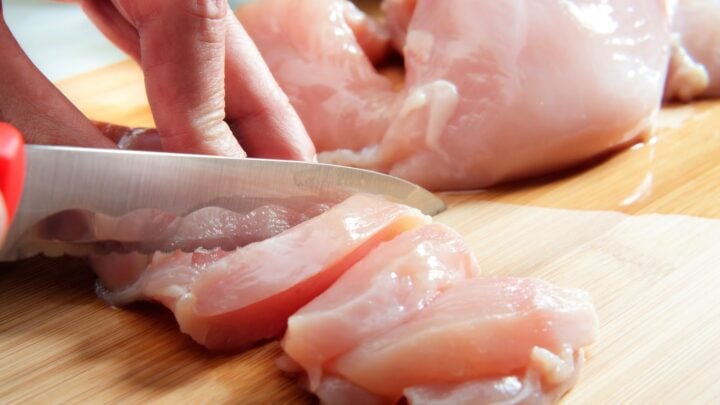
Here’s one that may surprise you. Between 2021 and 2025, the proportion of home cooks who wash raw chicken before cooking has actually increased – up from 49 per cent to 51 per cent for whole chicken, from 43 to 48 per cent for skin-on pieces, and from 40 to 44 per cent for skinless pieces.
You should never wash raw chicken. While washing during commercial processing does reduce bacteria, some pathogens always remain – and washing chicken in your kitchen sink spreads that contamination to surrounding surfaces, utensils and anything else in the splash zone. The only thing that reliably kills the bacteria in chicken is proper cooking: to an internal temperature of 75°C, checked with a meat thermometer in the thickest part. After handling raw chicken, wash your hands, boards and knives before touching anything else.
The handwashing numbers are not great
This is the finding that should concern everyone. The survey found that 28 per cent of Australian men and 18 per cent of women don’t always wash their hands after using the toilet. More alarmingly, 13 per cent of men and 11 per cent of women said they don’t always wash their hands after a bowel movement.
As Buchtmann puts it plainly: faeces can contain harmful bacteria, viruses and parasites. If you don’t wash your hands after going to the toilet, you risk spreading those pathogens to everyone around you – a risk that compounds considerably given that 43 per cent of men and 39 per cent of women surveyed also admitted they don’t always wash their hands before handling food.
Most of us aren’t reading the label
Only three in ten Australians say they always read cooking and storage instructions on food packaging. Six in ten always check use-by dates and five in ten check best-before dates. The good news is that despite not always reading the instructions, most people do seem to comply reasonably well with cooking and storage practices in practice.
Air fryers are everywhere — but the instructions aren’t
Two in three Australians now have an air fryer, with 54 per cent using it weekly and 38 per cent several times a week. The challenge? Forty-four per cent of air fryer owners say they can only find cooking instructions for crumbed and packaged foods “most of the time” — and a similar proportion find those instructions only occasionally. As air fryers cook differently to conventional ovens, getting the temperatures and timing right matters.
The encouraging news
Not everything in the report card is cause for alarm. Buchtmann notes that food safety practices tend to improve with age and experience — as people take on more responsibility for cooking for others, their habits generally strengthen over time.
Which means if you’re reading this, you’re probably already ahead of the curve. Just perhaps reconsider the chicken-washing.





 Proudly Australian owned and operated
Comments 0
Join the conversation. Comments are reviewed before they appear.
Be the first to comment.
Join the conversation
Tell us who you are to post a comment. We'll remember you next time.