


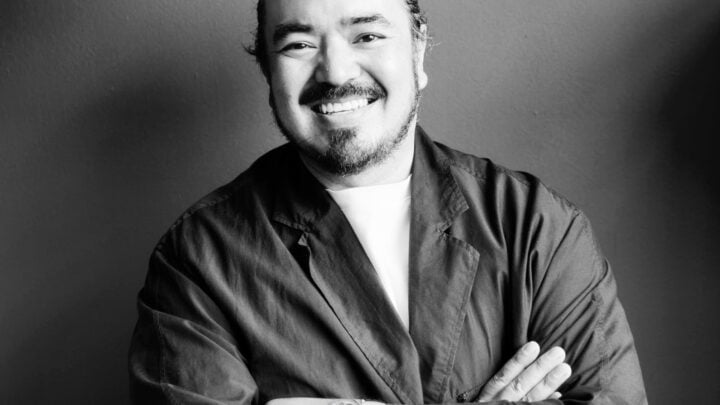
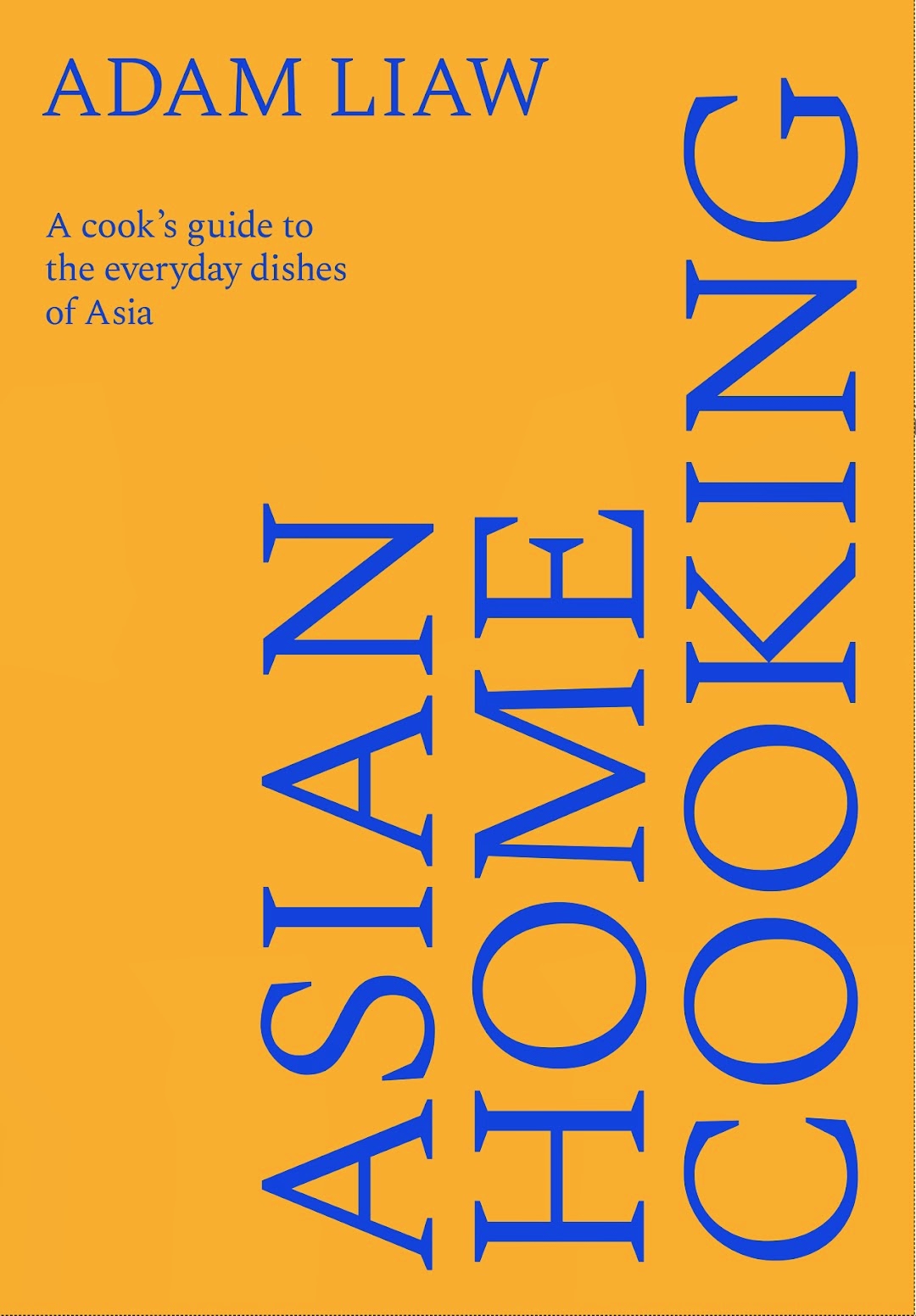
This is an edited extract from Asian Home Cooking by Adam Liaw, published by Hardie Grant Books. Photography: David Loftus.
Some years ago, I read an article in which a well-respected Western cookery writer confessed her belief that Asian food was ‘too complicated to make at home’. She advised her readers to just order it from restaurants instead. What, I found myself wondering, did she think 60 per cent of the world’s population were cooking every day?
Your first experience of any cuisine that’s not your own is quite likely to be in restaurants. You might even define that cuisine as a restaurant experience. But the idea that you can make restaurant dishes at home every night is – if you’ll pardon the pun – a recipe for failure. There is little overlap between restaurant food and home cooking. They’re both wonderful, and certainly not mutually exclusive, but they’re fundamentally different.
Restaurant dishes are a commercial transaction – their aim is to make a profit. By contrast, home cooking exists out of necessity. We cook for ourselves and our families. Home-cooked dishes tend to be simple to prepare, affordable, nutritionally balanced, and adapted for our individual cultures and lifestyles.
A Japanese household doesn’t spend hours making ramen for dinner; instead, they make Tonjiru or Shioyaki. Families in Northern India grow up with Khichdi, not butter chicken. And you’re far more likely to eat Rad na than pad thai at home in Thailand.
The difficulty for those of us interested in cooking new cuisines is that home cooking is hard to come by. In a restaurant, you simply order, eat and pay for a meal. To experience home cooking, you need to be invited to someone’s home. And even then, it is likely to be for a special event or dinner party, where the food is elevated beyond what might ordinarily be served.
My aim with this book is to share the kinds of dishes that ordinary home cooks throughout Asia prepare every day. By choosing to try these recipes, you can be sure you are making something that has been successfully executed by tens of thousands of home cooks before you.
Home cooking as a palimpsest
Since the first human societies, we have chosen food as our main cultural repository. Our earliest cave paintings were of hunting and gathering food. In this way, home cooking can be seen as a palimpsest. Every dish we cook and eat carries with it echoes of earlier cultures, including the forces that shaped our politics and our societies, our geography and even the origins of our species.
Take, for example, the most popular dish in Japan today – a simple Japanese-style curry. An adopted taste in the country, and not particularly representative of what we might call ‘Japanese cuisine’, it is now made in almost every household. But how did it become so loved?
One layer of the story might relate the popularity of curry to a modern Japan where more women are in the workforce and individuals are working longer hours, leaving less time for food preparation. Curry provides a fast, easy, cheap and tasty meal solution.
Deeper in the Japanese curry palimpsest, you’d find the fundamentals of our human evolution: why human tastes evolved to like the curry’s salty-sweet taste, why it is served with sour pickles, and even why our species is the only animal on Earth that seems to seek out spice wherever we can.
Japanese curry is just one simple dish, but every recipe in this book carries with it an extraordinary history and legacy that has brought it to these pages and into your home. Each echoes its own history, culture, geography and society. And each can be made in many different ways.
Learning Asian cooking
I grew up cooking and eating multicultural Malaysian–Chinese cuisine, which combines domestic Malay flavours with a collection of influences from China, India and elsewhere in Southeast Asia.
My Chinese grandparents were wonderful cooks. My grandfather migrated from Southern China to Malaysia as a young man, and he and my grandmother worked as cooks and cleaners, first for the British colonials and then for the Japanese occupation during World War II, as part of the wave of Hainanese cooks who brought dishes like Hainanese chicken rice to Southeast Asia.
My mother was born in Singapore to mixed British, French and Javanese heritage. An excellent cook in her own right, she brought her love of Indonesian and Southeast Asian flavour to our home table as an exercise in domestic efficiency, feeding eight hungry children every night while working full-time as a medical doctor.
In my early twenties, I moved to Japan, which was a very different country to what it is today. I couldn’t speak a word of the language and when I walked into a supermarket, there were more ingredients I didn’t recognise than those I did. As a matter of necessity, I began to learn how the local population cooked – a process I am now nearly three decades into.
An indefinitive guide
I have spent decades exploring Asian recipes and cultures, but if you’re expecting a definitive guide, this is not it. One thing that those decades have taught me is that to claim any sort of expertise in food of such variety in technique, flavour, culture and history would be foolish.
When trying to decide whether the Japanese curry recipe in this book should be made with chicken, beef or pork, I asked some Japanese families I happened to be camping with which meat they usually use. This led to a long discussion, with no resolution. Some made it only with chicken, while others used different meats at different times. In my family, we make it most commonly with beef, but also with either pork or beef mince.
If something as ordinary as a bowl of curry can be the subject of such passionate debate among people from a particular region, any concept of authority, definitiveness or expertise is surely impossible. For every recipe in this book, there are thousands of variations, differences of opinion and competing histories and philosophies. These recipes are not intended to end those discussions, but rather to bring you into them.
In writing this book, I hope to give you the best chance of understanding Asian cuisines as I see them – rich with history and with stories of culture that extend far beyond the bowl.





 Proudly Australian owned and operated
Comments 0
Join the conversation. Comments are reviewed before they appear.
Be the first to comment.
Join the conversation
Tell us who you are to post a comment. We'll remember you next time.