
A taste of summer: Lacto elderflower and strawberries


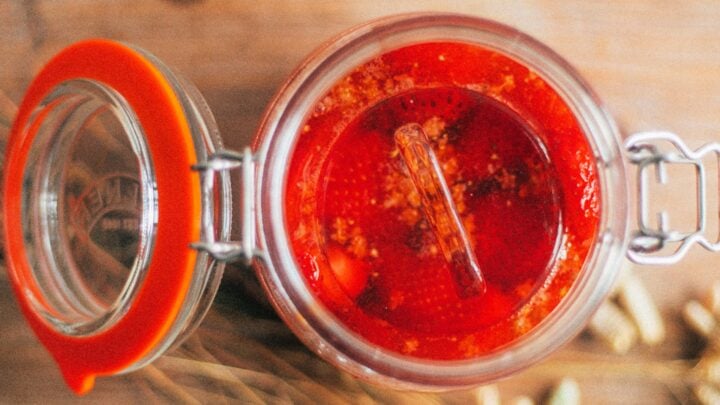
There’s something special about making the most of strawberries when they’re ripe, fragrant and full of flavour, and this fermented recipe takes them in an entirely different direction.
Combining fresh strawberries with elderflowers and raw honey, this simple ferment relies on the natural yeasts present on the fruit and flowers. Over several weeks, the honey begins to thin, the strawberries soften and the mixture develops a lightly tangy, floral flavour.
Once ready, the syrup is wonderfully versatile. Spoon it over yoghurt or soft cheese, use it in salad dressings, add a splash to sparkling water or turn it into something a little more celebratory with gin or sparkling wine.
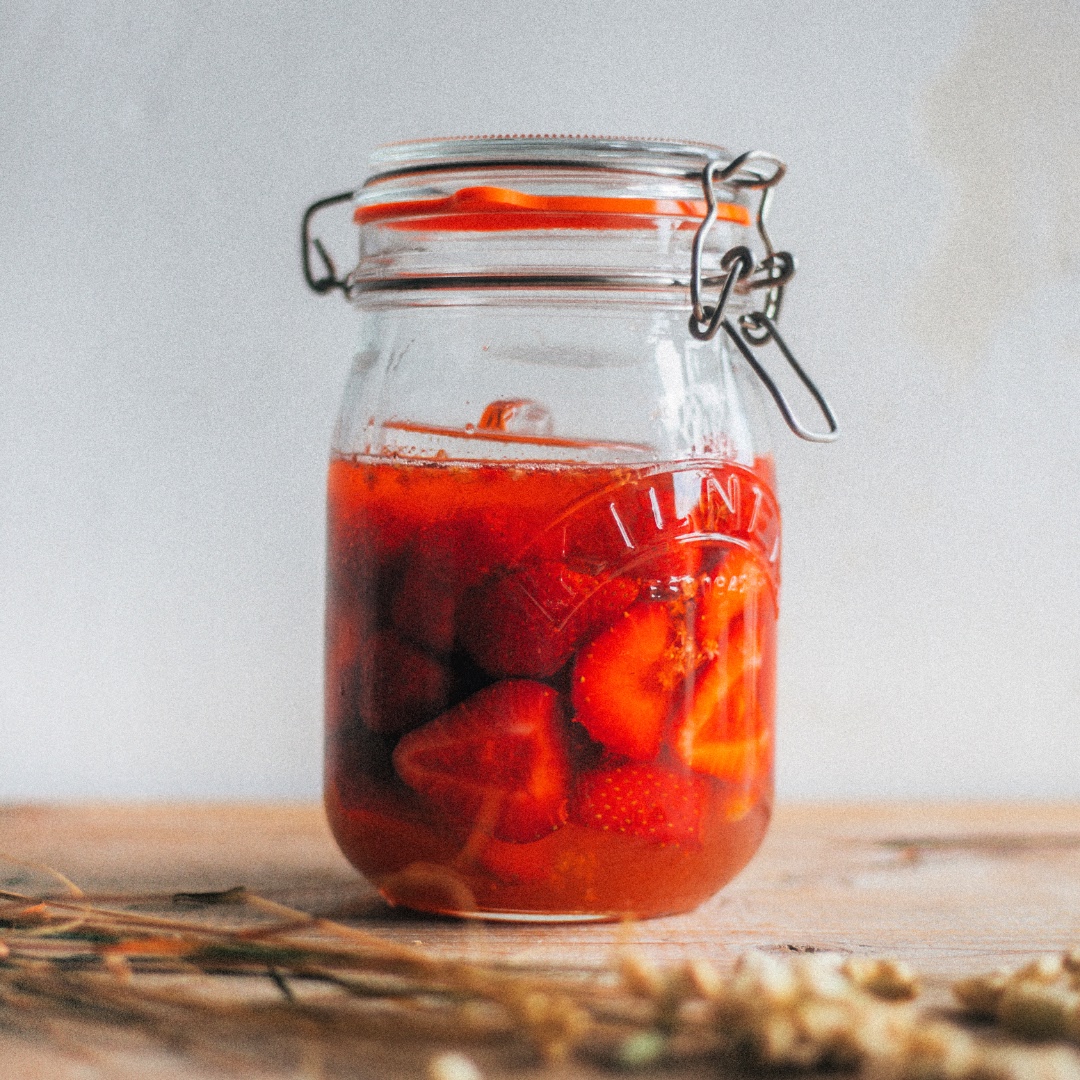
Lacto elderflower & strawberries
Equipment
1-litre glass jar, sanitized
fermentation weight
airlock (optional)
muslin cloth or fine sieve (optional)
Ingredients
400g ripe, fragrant strawberries, hulled and quartered
14g sea salt
15 elderflower heads, rinsed (flowers only, no stems or green stalks)
400g raw honey
15g lemon juice
30g toasted barley (optional)
Method
In a bowl, mix the strawberries and salt, then set aside for 30 minutes to draw the juices out.
Add the strawberries, salt, and any strawberry juices to the jar along with the elderflowers.
Mix the raw honey and lemon juice, and pour over the strawberries and elderflowers until just covering. It will seem thick and reluctant at first, but in time will thin.
Stir gently to coat everything and place the fermentation weight on top.
Add an airlock, if using, to allow gases to escape. If you are not using an airlock, add the lid and “burp” the jar (see p30) daily for the first week to release the build-up of carbon dioxide. Leave the jar at room temperature out of direct sunlight.
Over the next few days, the strawberries will begin to release their juices, thinning the honey and kick-starting fermentation. Stir daily with a clean spoon to keep everything submerged and prevent mould. Bubbles will begin to rise within 3–5 days.
Continue fermenting for 2–3 weeks, depending on your room temperature (a warmer room will lead to a faster ferment) and flavour preference. The mixture should become lightly effervescent, slightly tangy, and deeply aromatic. Taste along the way, and when it reaches a balance of sweetness and acidity you like, it’s ready.
Strain through a muslin cloth or fine sieve, if desired, or leave the fruit in the syrup.
Transfer the syrup to the fridge to slow further fermentation, where it will keep for several months and continue to develop flavour complexity.
Recipe ideas
DRIZZLE
Spoon generously over a wedge of goat’s cheese, ricotta, or even a dollop of clotted cream, and serve with rye bread, French toast, or warm scones.
COCKTAILS
Strain the syrup and shake into gin with a squeeze of lemon and a splash of soda for a hedgerow spritz, or add it to a glass of dry sparkling wine for a floral, fruity twist.
GLAZE
Use the syrup to glaze apricots, peaches, or plums before roasting, or drizzle it on after, while the fruit is still warm. A pinch of fresh thyme brings it into savoury territory.
CAKES AND DESSERTS
Let the strawberries and syrup infuse a sponge cake, trifle layer, or jelly. It’s like a loose jam with a little mischief in it.
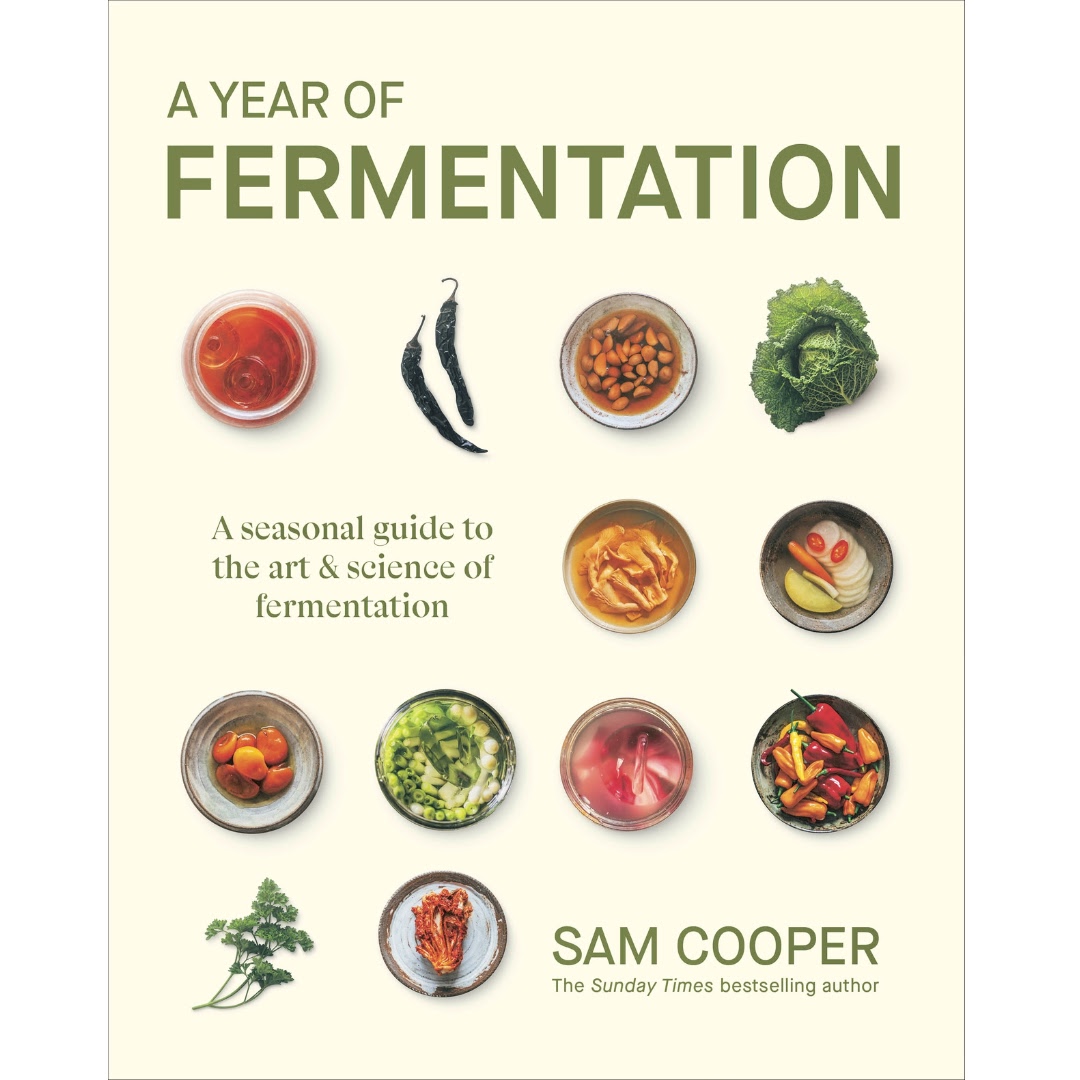
Extract taken from A Year of Fermentation – A seasonal guide to the art & science of fermentation by Sam Cooper published by Penguin. Available here





 Proudly Australian owned and operated
Comments 0
Join the conversation. Comments are reviewed before they appear.
Be the first to comment.
Join the conversation
Tell us who you are to post a comment. We'll remember you next time.