
Fresh produce, fresh thinking in focus for Aussie co-op


A thriving alternative to supermarket shopping is helping Australians eat better, spend less and rediscover the benefits of knowing their neighbours.
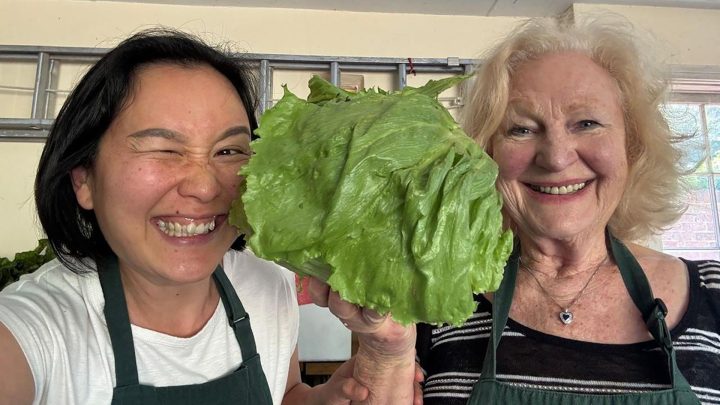
At 80, Marguerite Vidalis does the heavy lifting. About 7.45am every Tuesday, a truck laden with fresh produce pulls up at her home in Sydney’s north and she begins sorting boxes of fruit and vegetables in her garage before her business partner, 35 years her junior, has finished the school run.
“She’s the one on the computer where I’m the heavy lifter,” Marguerite tells AAP.
And she wouldn’t have it any other way. The daughter of an Armenian immigrant who arrived in Australia with nothing and built a successful retail business, Marguerite has worked all her life.
The suggestion she should put her feet up holds little appeal.
“The more you put your feet up, the more you want to, and then you get a bit down,” she says.
Three years ago, Marguerite and neighbour Selina Jackson established a community grocery hub in St Ives under the banner of Box Divvy a social enterprise seeking to change the way Australians buy their food.
For Marguerite, a keen cook who delights in entertaining, there’s enormous pleasure in the smell of fresh strawberries and apricots filling her garage, the exchange of recipes and the steady stream of visitors to her home.
“I’m a hugger. I like human contact,” she says. “Nobody seems to want to touch each other or hug and I love to give a hug and also you feel so much better and so does the other person.”
But while there’s something decidedly old-fashioned about the operation, the business model underpinning it is anything but quaint.
Box Divvy now connects about 17,000 households through almost 440 hubs across NSW, Victoria, Queensland and the ACT, harnessing technology to shorten supply chains, reduce waste and give supermarket giants some competition.
And it is doing so without relying on charitable funding.
Members place orders online before produce is sourced directly from farms, transported to neighbourhood hubs and divided into individual household orders, eliminating the need for lengthy storage and much of the handling associated with conventional grocery retailing.
Co-founder Jayne Travers-Drapes and her husband Anton van den Berg developed the model after discussions with Western Sydney Diabetes about improving access to nutritious food.
“People think fresh food is expensive. It actually isn’t. It’s just the chain that brings it to people, the end user,” Ms Travers-Drapes tells AAP.
By ordering only what customers need, the company says it can eliminate food waste, pay farmers promptly and keep prices competitive.
For Selina, 45, the economics are particularly compelling.
Even with a 15 per cent surcharge on orders to remunerate hub operators, she says groceries can cost up to 30 per cent less than at Coles and Woolworths.
For families unable to stretch their budgets to shop at Harris Farm Markets or farmers’ markets, it offers an affordable alternative.
The pharmacist – whose experience of gestational diabetes prompted a rethink of her family’s diet – wants to instil healthy eating habits in her six-year-old daughter.
“I’m passionate about it because in the long run it’s going to show my child by example that we need to care about our environment, our community, local farmers and our produce, what we eat, what we put into our mouth,” she tells AAP.
Independent evidence shows the model’s nutritional benefits.
A study of more than 2200 Box Divvy members by researchers from Western Sydney University and the University of Wollongong, published in the journal Appetite in 2025, found rates of severe food insecurity, characterised by missed meals and recurrent hunger, more than halved after respondents joined.
Members also reported eating an average of 3.3 additional serves of vegetables and 2.5 additional serves of fruit a week, with even greater improvements among those experiencing severe food insecurity.
Food aside, the community focus has given Marguerite and Selina an unexpected gift of new friends.
“I have grown to have 40 more friends and more because some have left,” she says.
Those friendships have evolved into a support network, with “Kindness Boxes” delivered to those doing it tough.
They have provided a month’s worth of groceries to a single mother of seven; a table laden with gifts and necessities to a mother who lost her son in a car accident; and donated Christmas hampers to people in need.
“In the old days we used to cook when someone was sick and leave it on their doorstep,” Ms Travers-Drapes says.
Rekindling that community spirit is central to her ambitions but so too is building a commercially viable and resilient alternative to the dominant food retailers.
Hub operators typically earn between $16,000 and $20,000 a year for about five hours’ work a week, she says, with no franchise fees or establishment charges.
During the 2019 bushfires, the founders turned their attention to fighting fires, leaving the network to run itself.
“They just got on with it. Delivery happened. The hubs did their thing. It was just amazing,” Ms Travers-Drapes says.
She says the business also navigated the COVID-19 pandemic without the supply disruptions that plagued conventional retailers.
The company plans to expand into South Australia and Western Australia in 2027, with New Zealand and Europe also in its sights.
Ultimately, Ms Travers-Drapes wants to establish 8000 Australian hubs, broadly mirroring the number of takeaway food outlets she estimates are operating across the country.
“My grandmother didn’t shop at a supermarket because they didn’t exist,” she says.
With climate change threatening food production, she believes communities need to reclaim some control over their food supply.
“Everyone’s talking about AI at the moment. But the thing they should be talking about is food and water.”
For Marguerite, the benefits are evident every Tuesday in her garage.
There are conversations about what to do with a tray of tomatoes, tips on making soup and pasta sauce, and often a little extra produce to take home.
At Christmas, there will be champagne and a platter of food. And plenty of hugs.
“Everybody comes in happy and they leave happier,” Marguerite says.





 Proudly Australian owned and operated
Comments 0
Join the conversation. Comments are reviewed before they appear.
Be the first to comment.
Join the conversation
Tell us who you are to post a comment. We'll remember you next time.