
Can Bunnings’ pre-fab homes help the housing crisis?


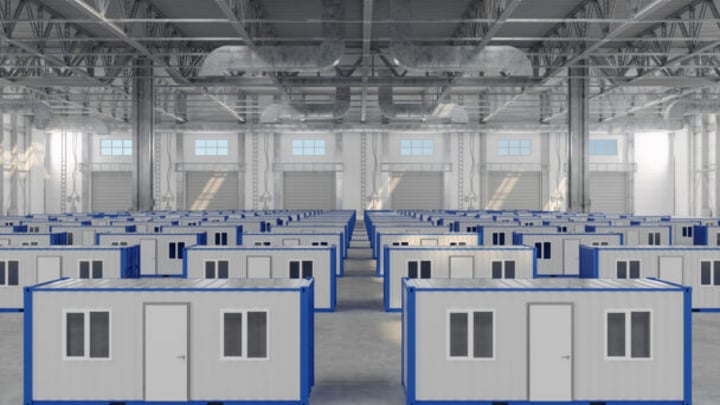
As Australia grapples with a deepening housing crisis, the introduction last week of flat-pack backyard housing pods by hardware giant Bunnings has sparked discussion about possible new directions in housing solutions.
According to an analysis by Western Sydney University Senior Researcher, Ehsan Noroozinejad, from the Urban Transformations Research Centre, while the product has attracted sizeable public interest, it will fall short of addressing the systemic issues identified in the latest national housing analysis.
The National Housing Supply and Affordability Council’s State of the Housing System 2025 report outlines the scale of the challenge. It finds that housing affordability continued to deteriorate in 2024, with both prices and rents reaching record highs while supply remains well below demand. Only an estimated 177,000 new homes were completed in 2024, well short of the 223,000 homes estimated to be required that year and one of the lowest levels of supply in a decade.
The report forecasts that 938,000 new dwellings will be constructed across Australia during the five-year National Housing Accord period to June 2029. That figure falls about 262,000 homes short of the federal government’s target of 1.2 million new homes, with no state or territory on track to meet its share. After accounting for demolitions, the report projects net new supply of around 825,000 dwellings.
“The Australian housing system remains far from healthy and is continuing to experience immense pressure,” said Council Chair, Susan Lloyd-Hurwitz.
“The nation is still very much in the grips of a housing crisis that has been decades in the making through our persistent failure to deliver enough homes to meet demand.”
The analysis also notes affordability strains on households. In December 2024, approximately 50% of median household income was needed to meet mortgage repayments, and 33% for new rental leases, while the average time needed to save a deposit stretched to over a decade.
Pods are a supplement, not a solution
Bunnings’ new flat-pack backyard pods, priced from around $26,000 and assembled in 2-3 days, have been positioned as a modular alternative to traditional housing. But industry observers caution they are not designed or approved for long-term residential use. Their small size and classification as ancillary structures in many areas mean they are more suitable as studios, offices or guest rooms rather than permanent homes.
The listed price of the pods excludes site preparation, connections for utilities, compliance costs and necessary permits, all of which can add significantly to total expenditure. Ownership of land or permission to place a pod on existing property is also required, further complicating their utility as a widespread housing fix.
Although Bunnings has not framed the initiative as a response to the housing crisis, its entry into modular buildings reflects growing interest in prefab and factory-built housing as part of broader industry responses to affordability challenges.
Such methods have been shown potentially to speed construction, in some government analyses, up to 50% faster than conventional building, but currently account for a small share of Australia’s market.
Why bigger solutions are critical
Analysts say meaningful improvement requires scale. In Sweden, where prefab construction makes up a large majority of detached homes, manufacturers benefit from large-volume production that spreads costs, deep supply chains and workforce experience. In Australia, the sector remains in an infancy, with most manufacturers producing only a small number of units annually.
The Council’s report calls for broad reforms to address structural constraints on supply, including increasing social and affordable housing, reforming planning systems, improving construction capacity and productivity and adjusting tax settings to better support supply. The federal and state governments have also been urged to align investment and policy to support industrialised building methods at scale.
Bunnings’ backyard pods may draw public attention to non-traditional construction methods, Noroozinejad said, but they are not a substitute for the industrial-scale building required to shift Australia’s housing system out of crisis.





 Proudly Australian owned and operated
Comments 0
Join the conversation. Comments are reviewed before they appear.
Be the first to comment.
Join the conversation
Tell us who you are to post a comment. We'll remember you next time.