
60-plus and writing: stories woven with wisdom and hope


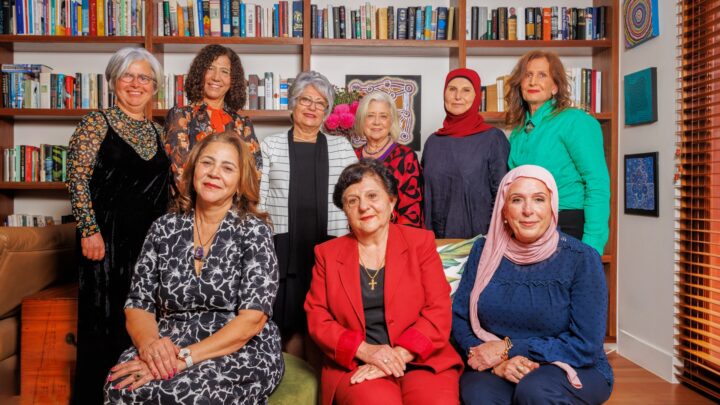
By the Don’t Ask the Trees Collective
When we imagine authors, we often picture young women in cafés with laptops, or seasoned academics with long publishing histories. Rarely do we imagine immigrant women in their 60s and beyond, for whom English is their second or third language; women who have spent lifetimes raising families, enduring the devastations of war, and quietly rebuilding their lives in new countries, contributing their stories with their own voices, challenging stereotypes and assumptions.
In the autumn of their lives, these women shed all pretense. They let go of the pressure to appear young. In the process of this carefree acceptance of ageing, they often become overlooked and even dismissed. ‘Love’ and ‘Darling’, infantilising words, are used for expediency at the post office or the supermarket to address them. But to be invisible, to stand at the margins looking in, is a vantage point from which they can observe with a critical eye and with the wisdom of hindsight, as they travel in the domestic and public spaces of their new homeland.
When we – nine immigrant women from the Arab world – decided to get together to write, we did it as a way of resisting the silence that surrounded our voices and to reclaim an identity that may have been eroded and somehow buried by time. We came to writing while cradling a grandchild, or cooking for our children’s families working to pay their mortgages. We wrote in between mentoring a neighbour’s teenage son struggling at school or supervising a PhD student trying to finish the last chapter of their thesis. As elders, we felt a social responsibility whenever we saw a need. At 60 we had become the masters of multitasking, of integrating all of life’s tasks while being fully in the present.
Writing together, we found a way to tell our individual stories without embellishment, understanding that without failure there are no lessons learnt and vulnerability leads to growth. This did not come easily. There were many difficult and challenging memories that lay dormant. They needed dusting, shaking and airing. They were important not just to ourselves, as we discovered, but to others and as part of the register of the wider history of this country. Our writing became an offering of love for each other, to the lands we left, and to the one we now call home. We supported each other while we unraveled these stored-away reels of our pasts. We listened, cushioned each other when we tripped, transforming each other into the proud protagonists of our tales. We found in each other the trusted sisters we needed and when we met all barriers fell. We were able to transform our long-buried memories into empowerment.
Even after the age of 60, we are still able to dream, we still have ambition and are eager to contribute, to create, to inspire hope. In this magical process of writing, creativity was an affirmation of our own journey, an act of resistance against silence and invisibility in a society that worships eternal youth. It was also a love letter to our children and readers; a bridge between generations, between cultures, and between worlds.
We laid bare our own journeys of forced or voluntary migration (epic journeys that astounded even us who experienced them). The daily struggle of adapting to a new language and culture, the loss of identity, the endless days of loneliness and the longing to belong, and finally, the slow but certain process of inner transformation.
Our migration was more than a physical crossing. It was a human journey of uprooting and replanting – of carrying the fragrance of the old land into the new, and offering its fruits to the wider community. A tree uprooted from its soil never loses its essence but rather carries it wherever it is replanted.
Our migration did not erase the identities we came with, but enriched them, offering a chance to rebuild a self that is stronger and more compassionate. Through our writing, we realised how women as carriers of culture, have built strong communities, and raised a generation ready to contribute richly to Australian life.
Through words, our experiences found voice, our wisdom gained form, and memory was preserved as a living heritage. And for the women who come after us – those newly arrived, who may face the same fears, confusion, and loneliness, they might recognise themselves in our stories, find comfort, courage, and hope.
When you read our stories, we beckon you to view migrant women not through statistics or policies, but as individuals through their lived journeys – woven with wisdom and hope.
FOOTNOTE: The Don’t Ask the Trees Collective is a group of nine Arab Australian women writers – Mariam Maatooq, Loubna Haikal, Mary Hanoun Khilla, Sivine Tabbouch, Hend Saab, Kilda Eid, Camilia Naim, Oula Ghannoum, and Nouha El-Khoury Francis – who came together to share their stories of migration, identity and resilence in the landmark anthology Don’t Ask the Trees for Their Names: Stories of Leaving and Becoming.
Don’t Ask the Trees for Their Names: Stories of Leaving and Becoming, available from October 1, is published by Gazebo Books, an independent publisher of contemporary literature from Australia and beyond. Visit gazebobooks.com.au





 Proudly Australian owned and operated
Comments 0
Join the conversation. Comments are reviewed before they appear.
Be the first to comment.
Join the conversation
Tell us who you are to post a comment. We'll remember you next time.