
Labels on your groceries could soon disappear


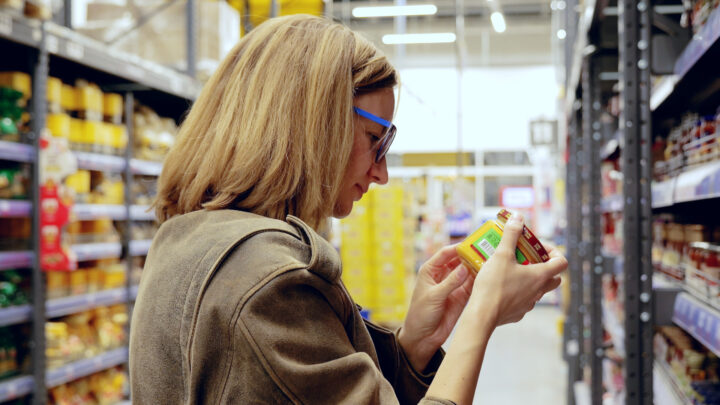
Australian supermarkets may begin a major transition away from traditional product labels from next year, as brands respond to regulatory pressure, expanding disclosure requirements and sustainability targets.
Marketing expert Kiarne Treacy, founder and chief executive of Sustainable Choice Group, predicts the shift will mark a turning point for consumer packaging.
“2026 will mark the beginning of the end of physical product labels,” she said in a recent online post.
Treacy argued that physical labels are no longer capable of carrying the growing volume of information now expected on everyday products, including pricing, nutrition, allergens, country of origin, recyclability, animal welfare and ethical claims. Instead, she expects brands to increasingly move this information to digital platforms.
“We’re seeing the beginnings of this shift globally,” Treacy added.
“Frameworks like the EU’s Digital Product Passport and Australia’s sustainable packaging reforms under APCO (Australian Packaging Covenant Organisation) demand a level of detail that simply won’t fit on a label – from supply chain data, material breakdowns, emissions and even proof behind environmental claims.”
Under this approach, packaging could feature minimal visual branding, with products carrying muted designs, reduced ink and a discreet code or embossed marker linking shoppers to digital information. Information-rich 2D barcodes, including those being introduced under GS1’s Sunrise 2027 initiative in the United States, are expected to enable real-time updates to product data, certifications and disclosures.
Treacy does not expect the change to happen overnight. Instead, she believes consumers will gradually access product information digitally, potentially through emerging augmented reality technologies.
“I’m not convinced that we know what the technology is going to even be called in a year, or two, or three,” she told Yahoo News.
“Technology is moving so rapidly right now… it could be your contact lenses that are feeding you this information, but I’m not sure.”
She also predicts that digital labelling will allow for increasingly personalised information, tailored to individual consumer preferences.
“[They] know who we are, what we care about and what we want to know next,” she said in a video shared on LinkedIn. “We’re surrounded by systems that learn our preferences, and I think we like it that way.”
According to Treacy, different consumers may prioritise different data points, from sugar content and carbon footprint to whether a product was made in Australia or how animals were treated in its production.
The shift is also positioned as an environmental measure. Treacy said reducing physical labels could cut down on excess packaging, ink use and material waste.
“Often there’s a plastic bag that’s in a box, and then in a bag again,” she said. “Or there are lots of labels hanging off a garment so the manufacturer can share more information.”
Sustainable Choice Group also operates Sustainability Tracker, a platform designed to provide consumers with access to sustainability information, certifications and supporting evidence for consumer products.
While the transition to label-less packaging is still in its early stages, Treacy expects 2026 to mark the start of broader change across Australian supermarkets as digital disclosure becomes more widespread.





 Proudly Australian owned and operated
Comments 0
Join the conversation. Comments are reviewed before they appear.
Be the first to comment.
Join the conversation
Tell us who you are to post a comment. We'll remember you next time.