
IOC moves to protect women’s sport — but it’s too late


After years of controversy and confusion, the International Olympic Committee (IOC) has finally moved to draw a line in the sand.
In a major shift, the IOC appears ready to ban transgender women from competing in female categories across all Olympic sports – a move that has been described as a long-overdue return to fairness and common sense.
It’s a decision that will likely come into effect before the 2028 Los Angeles Games, and while many believe it should have happened years ago, few can deny it’s a step in the right direction.
Because at its heart, the Olympic Games is meant to be about fairness – and fairness only exists when athletes compete on equal terms.
A principle worth protecting
Female athletes have been saying it for years: strength, speed and endurance built during male puberty don’t simply disappear because testosterone levels are reduced. Muscle mass, bone density and lung capacity still provide a clear physiological advantage – one that no amount of training can overcome.
The IOC’s new president, Kirsty Coventry, a seven-time Olympic medallist from Zimbabwe, seems determined to restore integrity to women’s competition. She’s set up a “working group to protect the female category,” and reports suggest there’s overwhelming support from IOC members to make it official policy.
But for many athletes – especially women who’ve lost podium spots and sponsorships in the name of inclusion – this move comes too late.
The Australian reaction
In Australia, the reaction from former champions has been overwhelmingly supportive.
Swimming legend Dawn Fraser, never one to shy away from plain speaking, has long argued that allowing male-born athletes to compete against women was “deeply unfair.” “You can’t change biology,” she told the ABC last year. “It’s not about discrimination, it’s about giving women a fair go.”
Olympic beach volleyball champion Kerri Pottharst echoed that view, saying female athletes deserve certainty. “We train for years for these moments. Fair competition is the very essence of sport – and it has to be protected.”
Even Catherine Freeman, usually cautious about public controversy, has said in the past that women’s categories must be preserved to ensure equality. “We fought too hard for equal recognition to see it undone,” she said during a 2024 panel discussion on women in sport.
America leads the charge
Interestingly, it was the United States that helped push the issue back onto the global agenda. Earlier this year, President Donald Trump signed an executive order banning transgender women from female categories, including at the 2028 Los Angeles Olympics. He went further, declaring he would deny entry visas to transgender athletes attempting to compete in women’s divisions.
It was a bold – and controversial – move. But it forced international sporting bodies, including the IOC, to re-examine their positions. Whatever your view on Trump’s politics, it’s undeniable that America’s hard stance on this issue has reshaped the conversation around fairness in women’s sport.
When fairness gave way to confusion
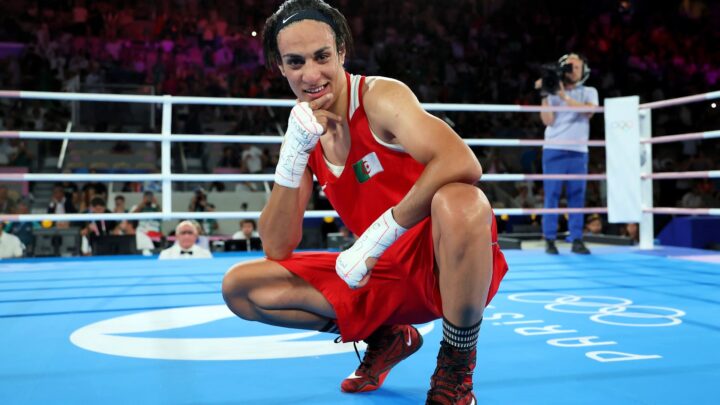
The 2024 Paris Olympics were marred by controversy after Algerian boxer Imane Khelif won gold in the women’s welterweight division, despite reportedly having XY chromosomes. The IOC cleared her to compete based on passport gender, but the decision left athletes and fans bewildered.
That moment became a tipping point. If the Olympics – the global symbol of sporting fairness – couldn’t define what “female” meant, what message was it sending to young women striving for equality?
Even the IOC’s own medical director, Dr Jane Thornton, has now acknowledged that the science supports separating categories by biological sex. Her findings show that male-born athletes retain performance advantages even after testosterone suppression – validating what many female competitors have been saying all along.
A long-overdue course correction
Let’s be clear: this isn’t about politics. It’s about preserving the fairness that makes sport worth watching.
For generations, women have fought for equal pay, coverage, and respect. Allowing male-born competitors into their categories undermines that progress. Protecting female sport isn’t exclusion – it’s equality.
Yes, this move by the IOC is late. But it’s proof that common sense can still prevail in a world that sometimes seems intent on overcomplicating the obvious.
Fairness matters. Biology matters. And finally – after too many false starts – the IOC seems ready to stand up for both.





 Proudly Australian owned and operated