
If Iran’s women footballers want asylum, Australia must hear them – but the decision cannot be made on social media


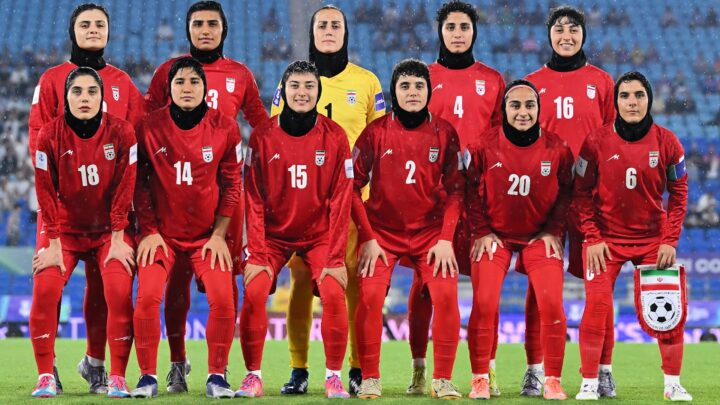
The Women’s Asian Cup was supposed to be about football. Instead, it has become the stage for a geopolitical drama that has drawn in activists, opposition politicians and even Donald Trump.
The US president has urged Anthony Albanese to offer asylum to members of Iran’s women’s national football team after some players refused to sing the Iranian national anthem during the tournament.
That act – small in Australia – can be dangerous in Iran.
And when images emerged of a player apparently making an international “SOS” hand signal from the team bus on the Gold Coast, the issue escalated from sporting controversy to something far more serious.
Now the question is being asked: should Australia offer asylum to the players?
The answer, politically and legally, is more complicated than the social media commentary suggests.
The reality: Australia can’t just “offer asylum”
Contrary to what many commentators assume, Australia cannot simply decide to grant asylum to a football team.
Refugee protection doesn’t work that way.
Each player would have to make an individual claim under Australia’s refugee laws, arguing they face persecution if they return home. Immigration officials would then assess whether they meet the international definition of a refugee – someone with a well-founded fear of persecution based on political beliefs, religion, nationality or membership of a particular group.
That decision ultimately sits within the immigration system overseen by the federal government.
In other words, the Prime Minister cannot simply wave a humanitarian wand because the issue is trending online.
But there is one thing Australia must ensure.
Every one of those players must have the chance to speak freely with Australian officials – privately and without supervision.
The shadow hanging over the players
The reason is obvious.
The Iranian regime has little tolerance for dissent, particularly when it becomes international embarrassment.
Iranian state media has already branded players who refused to sing the anthem “traitors”. In the political culture of the Islamic Republic, that is not a casual insult.
Women athletes in Iran already operate under strict controls, including dress codes and behavioural expectations. Public acts of defiance – especially broadcast to a global audience – can carry severe consequences.
Human rights groups warn that punishment could include imprisonment, sporting bans or worse.
But the deeper fear may not be what happens to the players themselves.
It is what could happen to their families.
The cruelest dilemma of all
Authoritarian governments have a long history of exerting pressure not just on dissidents but on their relatives.
Parents, siblings and extended family members can become leverage.
That means the players face an impossible calculation.
Stay in Australia and seek protection – but risk retaliation against family members back home.
Or return to Iran and hope the storm passes.
Reports suggest some members of the squad have already sought protection while others remain reluctant, fearing repercussions for loved ones.
It is a reminder that asylum decisions are rarely simple acts of personal freedom.
Sometimes they come with a heavy price.
What Australia should actually do
The answer here is not grandstanding.
It is due process.
Every player should be offered the opportunity to meet privately with Australian Border Force officials or immigration representatives and be informed of their rights under Australia’s protection visa system.
If a player believes she faces persecution and wishes to apply for asylum, Australia should assess that claim properly.
If she chooses to return home, that must also be respected.
What Australia cannot do is make life-changing refugee decisions on the basis of international political theatre.
When sport collides with politics
Sport has long been used as a platform for protest – from Olympic boycotts to athletes raising fists in defiance.
But this episode is different.
These women are not just making a symbolic gesture. For some of them, the consequences could be life-altering.
And that means the responsibility on Australia is clear: ensure they have the freedom to decide their own future. Whether they stay or return should ultimately be their choice. But it must be a choice made without fear.
Because once the Asian Cup ends and the television cameras leave the Gold Coast, the headlines will fade.
For the players involved, the consequences will not.





 Proudly Australian owned and operated
Comments 0
Join the conversation. Comments are reviewed before they appear.
Be the first to comment.
Join the conversation
Tell us who you are to post a comment. We'll remember you next time.