
How to choose the right Antartica cruise


By Sue Halliwell
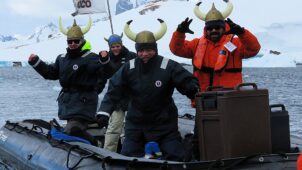
I had expected heart-stopping wildlife encounters in Antarctica, but not with this terrifying species. Part way into a magical zodiac explore around bergs and floes, we rounded a crystalline corner to a formidable threat. Our expedition guide immediately cut the engine as we braced for … hang on a minute.
Despite appearances, the menacing boat load of Vikings before us wasn’t after our blood or belongings. These brutes were actually dishing out hot chocolate, and their striking resemblance to members of the ship’s hospitality staff was no coincidence.
It was a bit of polar fun, and should have come as no surprise. This was Antarctica, and I was with renowned expedition cruise company, National Geographic/Lindblad, on their fabulous November 2024 Antarctica, South Georgia and the Falklands voyage. The unexpected could therefore be expected around every corner.
I wasn’t Antarctica’s only visitor last summer. The International Association of Antarctica Tour Operators (IAATO) reports current tourist numbers at 120,000-plus a year, a significant escalation on pre-covid years and marked increase on around 8000 in the mid-1990s.
They may have been ‘last-chance tourists’ eager to reach our southern-most continent before climate change does its darnedest, or seekers of thrilling seas and dazzling ice formations.
Some undoubtedly came for penguins, sea birds, seals and whales, while others sought its heroic and horrifying history.
Whatever brought them to the end of the earth, I hope they found it; those that did probably nailing one key factor – choosing the right cruise. That’s not necessarily the longest or priciest voyage, but the one that delivered them to their Antarctic must-sees, when they were there, in the manner they chose for a price they could afford.
With the plethora of options available, identifying your ideal cruise can seem daunting. Prior experience took the guess work out of selecting mine, but few Antarctic tourists have that benefit. So, while I can’t help with Antarctic wish lists, I can aid decision-making by sharing what I know, starting with when to travel.
With the exception of the astonishing Aurora Australis light shows that usually occur in Antarctica’s inaccessible winter months, most big ticket items are visible throughout the summer cruise season of late October to late March. However, if it’s a particular Antarctic animal or part of its life cycle you’re after, timing becomes crucial.
As a rough guide, Antarctica’s charismatic migratory animals begin arriving in late October.
Whales come to feed, while penguins, sea birds and seals arrive to give birth and breed. The young are generally born in November and December, nursing and mating occur in following months, and most depart Antarctica in March and April.
Colonies of these animals can be found wherever cruise ships go. However, to see specific sites requires knowing which of three major Antarctic gateways – Australia, New Zealand or South America – you need to depart from.
For example, to view the huts of famous polar explorers, Scott and Shackleton, you’ll need to leave from ports in Tasmania or New Zealand’s South Island, while the gateways to Elephant Island or the wildlife-filled Antarctic Peninsula are Ushuaia, Tierra del Fuego and Punta Arenas in South America, and occasionally, Buenos Aires.
Andes-framed Ushuaia was the departure port for my Antarctica, South Georgia and the Falklands voyage. The seal and bird extravaganza that is sub-Antarctic South Georgia Island had called me for decades, and it was also Shackleton’s burial place – my polar hero – so a no- brainer inclusion in my Antarctic itinerary.
I recommend taking any chance at a sub-Antarctic island stopover en route to Antarctica. Be it South Georgia, Australia’s Macquarie Island or New Zealand’s Snares, Auckland, Campbell, Antipodes and Bounty island groups, each offers a wildlife and wilderness experience to rival any on earth. Of course, they also bring welcome respite from the exhilarating roaring forties’, furious fifties’ and – prepare yourself – screaming sixties’ latitudes through which you will sail.
If fear of a rocking boat just sank your Antarctic dream, take heart. Most ships are now equipped with stabilizers, and some companies – National Geographic/Lindblad included – offer fly/cruise options from South America that wing their way over the swells to Antarctica, where your cruise ship awaits. Commercial flights without a cruise – called ‘fly-overs’ – depart from all Antarctic gateways and provide day-long, if elevated, Antarctic experiences. Or, you could take a ‘fly-in’ that will land you on the white continent for a walk around or organised inland excursion.
Of course, for direct coastal wildlife encounters and zodiac explores – with or without Vikings – you’ll need to book a cruise. Although, be aware that not all are created equal. Many larger ships – and a few smaller ones – avoid issues around permitting and environmental impact by not putting passengers ashore or even into zodiacs. So, if close wildlife encounters are non- negotiable for you, read the finer cruise print before signing up.
While you are at it, check whether the cruise company makes education a priority, abides by Antarctic Treaty guidelines, and is a member of IAATO. A comprehensive education programme brings immeasurable depth to your polar experience, while adherence to the guidelines and IAATO principles will protect you, the wildlife and their environment from harm.
As National Geographic/Lindblad passengers we expected and received first-rate information and instruction before meeting Antarctica’s locals and their habitat. And, with the cost of reaching Antarctica, so should you.
Yes, Antarctica is expensive. Even flight-only options will set you back upwards of AUD$8,000 per person, with flight/cruise and full cruise packages ranging from around AUD$14,000 to over AUD$60,000.
The longer the cruise and smaller the ship, the more you will likely pay. However, compact vessels generally provide greater luxury and more landing opportunities, and will definitely get you nearer to the action, ice and animals.
If you can, I suggest pushing the boat out to secure the highest quality Antarctic experience possible. Whether that’s aboard a classic beauty like my ship or one of the new armada of purpose-built polar vessels, paying extra for comfort and closer contact is worth it. Even – and perhaps especially – when it’s with the unexpected.





 Proudly Australian owned and operated