


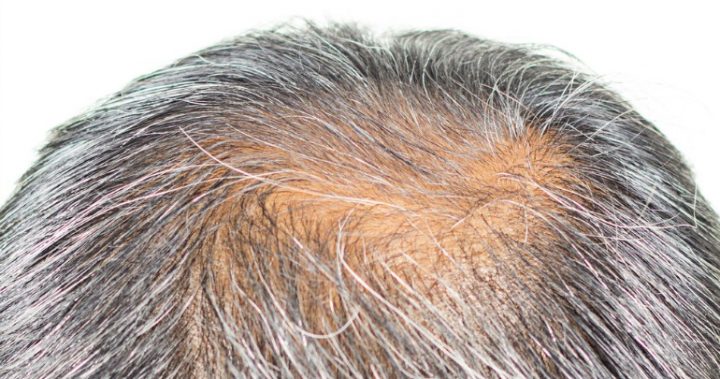
Whether you let your hair grow grey naturally, or fight it tooth and nail with home dyes or expensive salon treatments, it’s fair to say that most people would prefer, given the choice, to not turn grey. And the same goes for baldness, which effects many men and some women in older age.
It excellent news for the future of vanity, researchers have actually identified the genes responsible for greying hair and hair loss, bringing them closer to a potential treatment in the future.
Read more: New research links early baldness to array of positive conditions
The genes were discovered by researchers who were studying a rare genetic disease, neurofibromatosis type 1 (NF1), which causes tumours grow on nerves. While attempting to find the mechanisms responsible for tumour growth in the rare disorder, researchers instead identified the processes responsible for hair loss and greying.
The findings, which were reported in the journal Genes and Development, showed that once stem cells move to the base of hair follicles, a protein called KROX20 is activated in skin cells that form hair shafts, known as hair progenitor cells.
The researchers found that the hair progenitor cells produce SCF when KROX20 is activated, which they discovered is crucial for hair pigmentation.
In mice with skin cells that possessed both KROX20 and SCF, the researchers found that the skin cells communicated with melanocyte cells (which produce melanin, the pigment which gives colour to hair, skin, and eyes) to produce pigmented hairs.
When the researchers deleted SCF in the mice, the researchers found that the rodents grew grey hairs which turned white with age, and the mice stopped growing hair when KROX20-producing cells were erased.
The findings also indicated that abnormalities in KROX20 and SCF have a role in hair loss and greying, although studies in humans will be required to confirm their results.
Study co-author Dr. Lu Le are hopeful that the findings will pave the way for the development of new therapies to treat balding and greying.
“Although this project was started in an effort to understand how certain kinds of tumours form, we ended up learning why hair turns grey and discovering the identity of the cell that directly gives rise to hair.
With this knowledge, we hope in the future to create a topical compound or to safely deliver the necessary gene to hair follicles to correct these cosmetic problems.”





 Proudly Australian owned and operated