
When did staying healthy become so exhausting? Dr Kathryn Fox on the obsession that’s quietly making us worse


There’s an old joke that following a vegan diet can add years to your life – but they’re the longest year you’ll ever live. Like most decent jokes, there is a grain of truth in it.
Doctors, especially GPs, spend a lot of their time encouraging patients to stay healthy for longer. Prevention does away with the need for a cure.
In the past we advised people to stop smoking, limit alcohol, exercise, eat more fresh vegetables, maintain a healthy weight and get good, quality sleep.
The evidence for these health behaviours is indisputable.
But there’s a problem. Health has become the latest thing to worry about. And yes, even obsess about, even setting goals that are impossible to meet.
Not because healthy habits are bad. Health itself seems to have become another source of enormous social pressure. And it can lead to new anxieties and frustrations.
Thirty years ago, advice was simple.
Now we’re bombarded with advice and things to monitor for wellness.
Count your steps.
Track your sleep.
Monitor your heart rate.
Check your blood pressure.
Cut down alcohol.
Avoid processed foods.
Eat more protein.
Reach macronutrients.
Avoid carbohydrates.
Track calorific intake.
Increase your fibre.
Reduce caffeine intake.
Drink more water.
Monitor Vitamin D levels.
The list often seems endless.
In just 5 minutes of browsing social media, you’ll most likely discover another food, drink or healthy lifestyle habit that’s secretly killing you. And there are Apps to measure, quantify, record and track progress, reminding you of your success of failure and stress you even more.
Can anyone else see the irony of health advice to increase protein and eat whole foods but to meet the targets, people add protein powders to smoothies and repeatedly snack on ultra-processed protein bars?
The concept of health optimisation is changing behaviour in ways that may be detrimental. Particularly when it reduces social connection, spontaneity and enjoyment.
I’ve increasingly noticed people aren’t simply changing what they eat. They’re changing how they live. Friends decline an invitation because the restaurant doesn’t meet with their eating plan.
Others will decline social gatherings or avoid eating birthday cake because they are monitoring their blood glucose levels or cutting out carbs.
Some people have cut back on caffeine to improve their health and as a result are missing out on the regular coffee meetings with friends that previously helped to connect them with others.
Then there’s the guilt for not going on a walk, missing resistance training, or failing to achieve step goals because they spent time with family or friends.
Health goals that start well can have unintended consequences. And that’s where things become interesting. Because some of the strongest predictors of healthy ageing are not found on a smart watch. They don’t appear on a blood test. And they can’t be measured by a fitness tracker.
Social connection, friendship, purpose, intellectual stimulation are all vital for good health.
Laughter and belonging are priceless in terms of benefits.
We know that loneliness is associated with negative physical and mental health outcomes and that social isolation can lead to depression, cognitive decline and even an increased risk of mortality. Yet these aspects are rarely addressed by the wellness gurus.
We’ve become so focused on living longer that we’ve forgotten to ask what makes life worth living in the first place.
Researchers have described a condition, orthorexia, which is an unhealthy obsession with eating ‘correctly’ or ‘purely’. It’s where the pursuit of health begins to interfere with quality of life, social relationships and mental wellbeing. I know of professionals, even doctors, who clearly have it and starve themselves when busy because they can’t access optimum food at work.
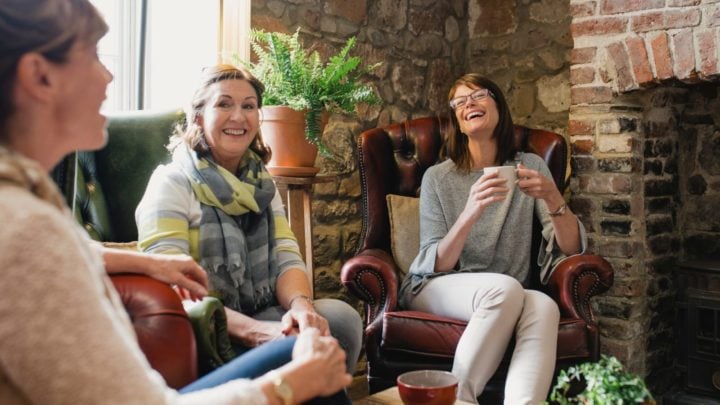
No one is posting videos of themselves reaping the cardiovascular benefits of meeting a friend for coffee and chatting for an hour. No one is measuring the impact of a night spent laughing with friends. No one is tracking the health benefits of belonging to a book club, choir, dance group or volunteer organisation.
Yet the evidence suggests these things matter enormously. Which raises an uncomfortable question.
At what point in our lives does the focus on our health become so all-consuming that it starts to destroy the very things that are vital to our health in the first place?
Health is important. But so is living. Shouldn’t the goal of trying to look after our health be to enable to enjoy our lives?
Surely, there’s a healthy balance between maintaining our health and fully enjoying the life we’re trying to preserve in the first place.
Dr Kathryn Fox is an Australian medical doctor and bestselling crime writer, best known for her forensic thrillers featuring pathologist Dr Anya Crichton. Drawing on her medical expertise, she crafts gripping, authentic crime fiction and is also a passionate advocate for forensic medicine education and public engagement. Her columns appear twice a week.
IMPORTANT LEGAL INFO This article is of a general nature and FYI only, because it doesn’t take into account your personal health requirements or existing medical conditions. That means it’s not personalised health advice and shouldn’t be relied upon as if it is. Before making a health-related decision, you should work out if the info is appropriate for your situation and get professional medical advice.





 Proudly Australian owned and operated
Comments 3
Join the conversation. Comments are reviewed before they appear.
So very true. We’re obsessed with following information from so called “health gurus” we’ve lost the plot!
I watch so many people sit down and order hot water , I go mediterranean and have a glass of wine with my lunch . I enjoy . followed by a coffee . not getting the point of the hot water at all . Don’t get me wrong i do drink a big glass of water too .
I loved this article, how much better I felt after catching up with an old friend chatting for hrs sipping on cups of coffee.
Join the conversation
Tell us who you are to post a comment. We'll remember you next time.