
Giant cars may be changing our safe driving habits


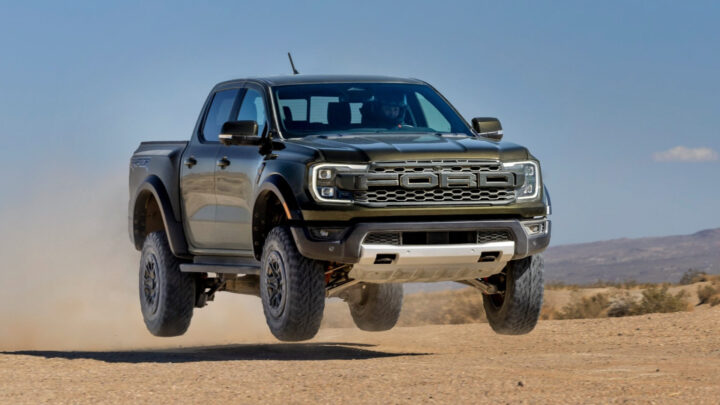
You’ve probably noticed a size increase in the cars Australians are driving, influenced perhaps by the giant SUVs Americans have been riding for many years.
Some pundits have coined the term “mobesity” to describe it.
At the same time, 2025 will go down as the fifth consecutive year of rising road deaths and the highest number of pedestrian fatalities in nearly 20 years. Is it a coincidence?
It is well established that bigger vehicles cause greater impacts in collisions. What is less discussed is whether driving a larger car also changes driver behaviour – if feeling safer inside a heavy vehicle makes drivers more willing to take risks.
Why are cars getting bigger?
Four in five new vehicles sold in Australia are now SUVs or utes, more than double the percentage sold 20 years ago. While consumer preference plays a role, the trend is not purely demand-driven.
Australia no longer manufactures cars domestically and instead imports vehicles shaped by global production trends, particularly from the United States. Two aspects of US policy have had a major influence.
The first is the so-called ‘SUV loophole’, where most SUVs are classified as light trucks under US law and are therefore subject to less stringent fuel-efficiency and crash-safety standards than passenger cars.
The second is how fuel-efficiency targets are set. Under US rules, targets are adjusted based on a vehicle’s footprint – the area between its wheels – meaning larger vehicles are allowed to use more fuel while still meeting regulations.
Together, these policies have encouraged manufacturers to produce heavier SUVs and utes, which also deliver significantly higher profit margins than small cars. Those vehicles are then exported into markets such as Australia.
The safety cost of size
Larger vehicles create a physical mismatch on the road, shifting risk away from their occupants and onto other road users.
According to the University of Melbourne, research shows that in collisions between large SUVs and smaller cars, occupants of the smaller vehicle face about a 30% higher risk of dying or sustaining serious injury. A 500kg increase in vehicle weight is associated with a 70% higher fatality risk for the occupants of the lighter car. For every fatal accident avoided inside a large vehicle, there are around 4.3 additional deaths among other road users.
The danger is even more pronounced for pedestrians and cyclists. Pedestrians struck by SUVs are about 25% more likely to suffer serious injuries and 40–45% more likely to die than those hit by smaller cars. For children, the outcomes are far worse: they are up to eight times more likely to die when hit by an SUV than by a small car.
Design also matters. Each 10cm increase in a vehicle’s front-end height raises pedestrian fatality risk by roughly 20%, while tall, blunt fronts are linked to more than a 40% increase in pedestrian deaths compared with lower, sloped designs.
These factors help explain why pedestrian deaths in the United States, after decades of decline, have climbed back to their highest level since the early 1980s – a pattern not seen in most other countries, where pedestrian fatalities have fallen.
Do bigger cars encourage risk-taking?
Studies from several countries suggest driving larger vehicles may be linked to more confident or risk-prone behaviour.
In India, SUV owners recorded 20–25% higher risk-taking scores than sedan or hatchback drivers. In Israel, analysis of 1.5 million speeding citations found drivers received about a quarter more speeding tickets when vehicle mass was 10% heavier.
Austrian roadside observations of 48,000 vehicles showed SUV drivers were more likely to drive without seatbelts, use phones and run red lights. Notably, women SUV drivers displayed violation rates similar to men, breaking the usual pattern of higher female caution seen in traffic studies.
In New Zealand, field data found SUV drivers were 1.5 times more likely to drive one-handed, a behaviour linked to lower perceived risk and reduced vigilance. German surveys similarly found large-car drivers reported higher rates of traffic violations and risky driving.
What can be done?
Policy changes could help offset some of the extra costs that heavier vehicles impose on road surfaces, congestion and emissions, and if implemented, could soften demand.
Two measures are often highlighted as having the potential to make a tangible difference.
The first is licence testing by vehicle class. Many drivers earn their licence in a small sedan but can legally drive a two-tonne ute the next day. Larger vehicles require different manoeuvring skills, longer braking distances and greater spatial awareness.
Requiring a practical test in a vehicle of comparable size – or a streamlined licence upgrade for experienced drivers when upsizing – would recognise that added responsibility and send a clear symbolic message that heavier vehicles carry greater obligations.
The second is penalties scaled to impact potential. Utes and SUVs travelling 10km/h over the speed limit carry more kinetic energy and take longer to stop than a small sedan. A tiered system where fines or demerit points scale with vehicle mass would better reflect the disproportionate risk larger vehicles pose.
Advocates argue that targeted, evidence-based reforms such as these deserve serious consideration if lives are to be saved.





 Proudly Australian owned and operated
Comments 0
Join the conversation. Comments are reviewed before they appear.
Be the first to comment.
Join the conversation
Tell us who you are to post a comment. We'll remember you next time.