


Global tensions in the Middle East are beginning to ripple through to Australian fuel pumps, as Donald Trump urges other nations to help reopen one of the world’s most critical oil corridors.
The US President said his administration is in talks with seven countries about helping secure the Strait of Hormuz, after Iran effectively blocked the waterway to oil tankers during the ongoing conflict in the region.
Around 20 per cent of the world’s oil normally passes through the narrow shipping lane between Iran and the Gulf states, making it one of the most strategically important energy routes on the planet.
Speaking to reporters aboard Air Force One, Trump said countries that rely heavily on Gulf oil should help keep the strait open.
“I’m demanding that these countries come in and protect their own territory, because it is their territory,” he said.
Trump suggested that several nations could send naval vessels to escort oil tankers through the waterway, although he did not confirm exactly which governments had been contacted. In a social media post, he said he hoped countries including China, France, Japan, South Korea and Britain would participate.
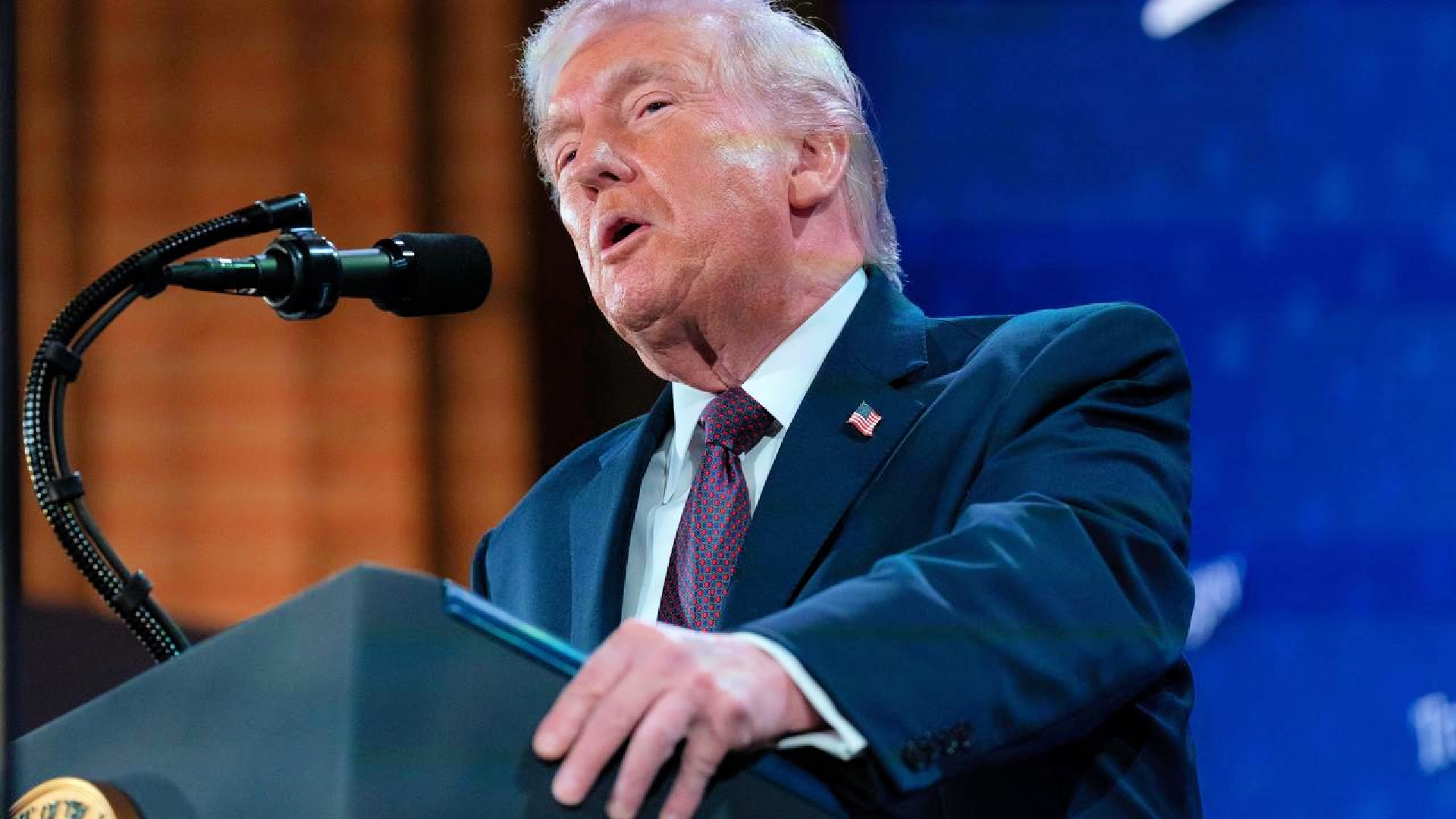
The US President also warned NATO allies that failing to assist could lead to “a very bad future”, while indicating a planned meeting with Chinese President Xi Jinping could be delayed if Beijing did not clarify its position.
The conflict has already sent global oil markets surging, with crude prices jumping above $US105 a barrel, and analysts warn the disruption could continue until the strait fully reopens.
While the geopolitical tensions are unfolding thousands of kilometres away, the effects are already being felt in parts of Australia.
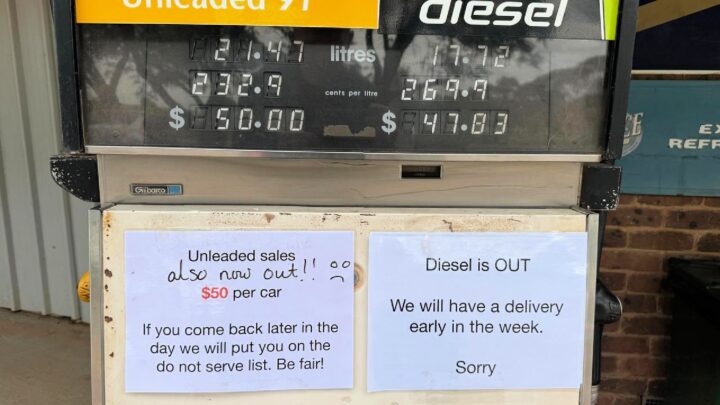
In the Victorian town of Robinvale, near the state’s north-west border, service station owner Nathan Falvo says he has seen the worst fuel shortages in more than 25 years.
Falvo was forced to ration his latest delivery after his station ran completely dry over the weekend — something he says he has never experienced in a quarter century in the business.
“I’ve been here for 25 years and I’ve never seen this happen before,” he said.
“Basically the whole town, which is one of the fruit bowls of Australia, was out of fuel.”
Robinvale’s other two petrol stations were also affected, introducing $50 limits on fuel purchases as residents queued to fill their tanks.
The shortages are particularly challenging in regional areas where people often rely on long daily commutes.
“Some of these workers are doing over 100 kilometres round trips per day to get to and from work,” Falvo said.
“We don’t have trains, trams or public transport here.”
Several other rural towns across Victoria, including Wedderburn and Bonnie Doon, also reported running out of fuel over the weekend, according to Victorian Farmers Federation president Brett Hocking.
Farm deliveries have also slowed, with some farmers reportedly facing waits of up to two weeks.
“It’s definitely under pressure and it’s quite widespread throughout rural Victoria,” Hocking said.
Fuel prices have surged in response to the Middle East crisis, with unleaded petrol climbing above $2.20 a litre in some parts of Australia and diesel pushing past $2.60.
In response, the federal government has announced that up to 762 million litres of petrol and diesel could be released from companies’ emergency reserves to help stabilise supply.
Energy Minister Chris Bowen has insisted Australia still has enough fuel overall, saying much of the shortage is being driven by panic buying and stockpiling.
Regional communities in New South Wales have also reported supply issues, prompting Premier Chris Minns to call for calm.
“It’s harder to restock those petrol stations if more than expected comes out of the bowsers on any given day,” Minns said.
Meanwhile, Australia has ruled out sending naval ships to help secure the Strait of Hormuz.
“We won’t be sending a ship to the Strait of Hormuz,” Transport Minister Catherine King said.
“We know how incredibly important it is, but that’s not something we’ve been asked or that we’re contributing to.”
As global leaders debate how to reopen the key shipping route, Australians — particularly those in rural communities — are already feeling the real-world impact of the crisis every time they pull up at the bowser.





 Proudly Australian owned and operated
Comments 0
Join the conversation. Comments are reviewed before they appear.
Be the first to comment.
Join the conversation
Tell us who you are to post a comment. We'll remember you next time.