
Ford Ranger Super Duty arrives: Built tougher, stronger – and ready to tow almost anything


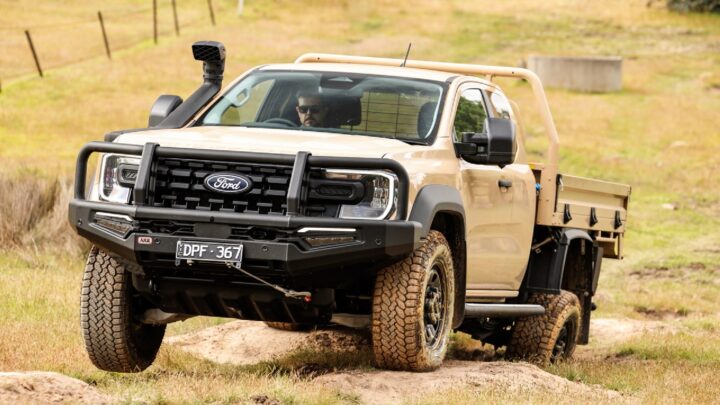
Last week it was the dashboard and this week it’s a snorkel – and giant rear-vision mirrors.
The giant display screen is the signature item for the Hyundai and it’s the snorkel and mirrors that do the job for the Ford Ranger Super Duty.
Well, that and the all-round chunkiness of everything from the bullbar to the tow hitch. And bigger wheels with extra nuts.
The Super Duty is a landmark car – actually it’s a truck – for Ford Australia, tapping into a history which tracks back to the 1950s in the USA.
The badge is only applied to specific models that earn it, by providing extra capability beyond the regular models in the lineup.
So the Super Duty is a Ranger with added – well, just about everything apart from the V6 turbodiesel engine. It has more towing ability, more climbing and off-road ability, and the capacity to be specially-tailored to individual needs with official upgrade packages for a wide range of uses.
But it’s not cheap, with pricing from $82,990 as a cab-chassis that rises quickly to right on $100,000 for a dual-cab XLT. Without the Ford-developed add-ons.
That’s a lot for a Ranger, but not if you think about Ford’s F-150 with a starting price of $114,950 and the extra cash so many buyers have splashed on upgrades to regular Rangers. It costs many thousands for off-road bits and pieces, and a GVM upgrade for towing is not remotely cheap.
But back to the Super Duty.
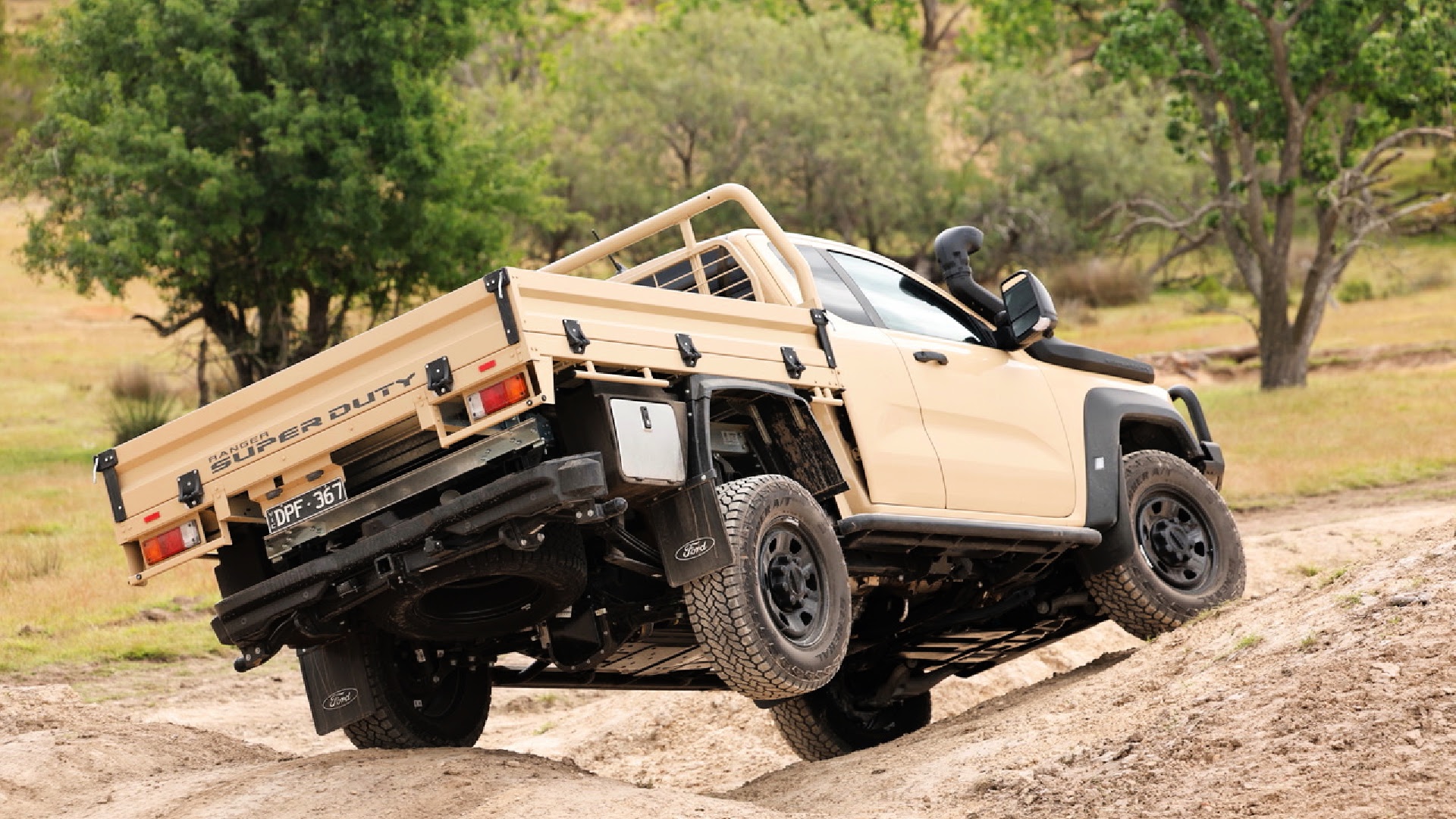
It looks much like every other Ranger. Which is both good and bad.
It’s good because it fits into the family, but bad because owners will likely want extra bragging rights for all the work that’s been done under the skin.
That engineering upgrading runs to everything from a beefed-up chassis with more crossmembers and thicker steel to wider body panels and eight-lug wheel hubs, dual locking differentials, and even onboard scales to check on any load.
What does it mean? More capacity and capability, especially for specialist users including farmers and country firefighters.
Towing, of course, is a big priority and Ford trumpets its 4.5-tonne capacity. That’s a full tonne up from regular Rangers, and its rivals, and means a big showroom saving from the hulking American pick-ups with a 5-tonne tow rating.
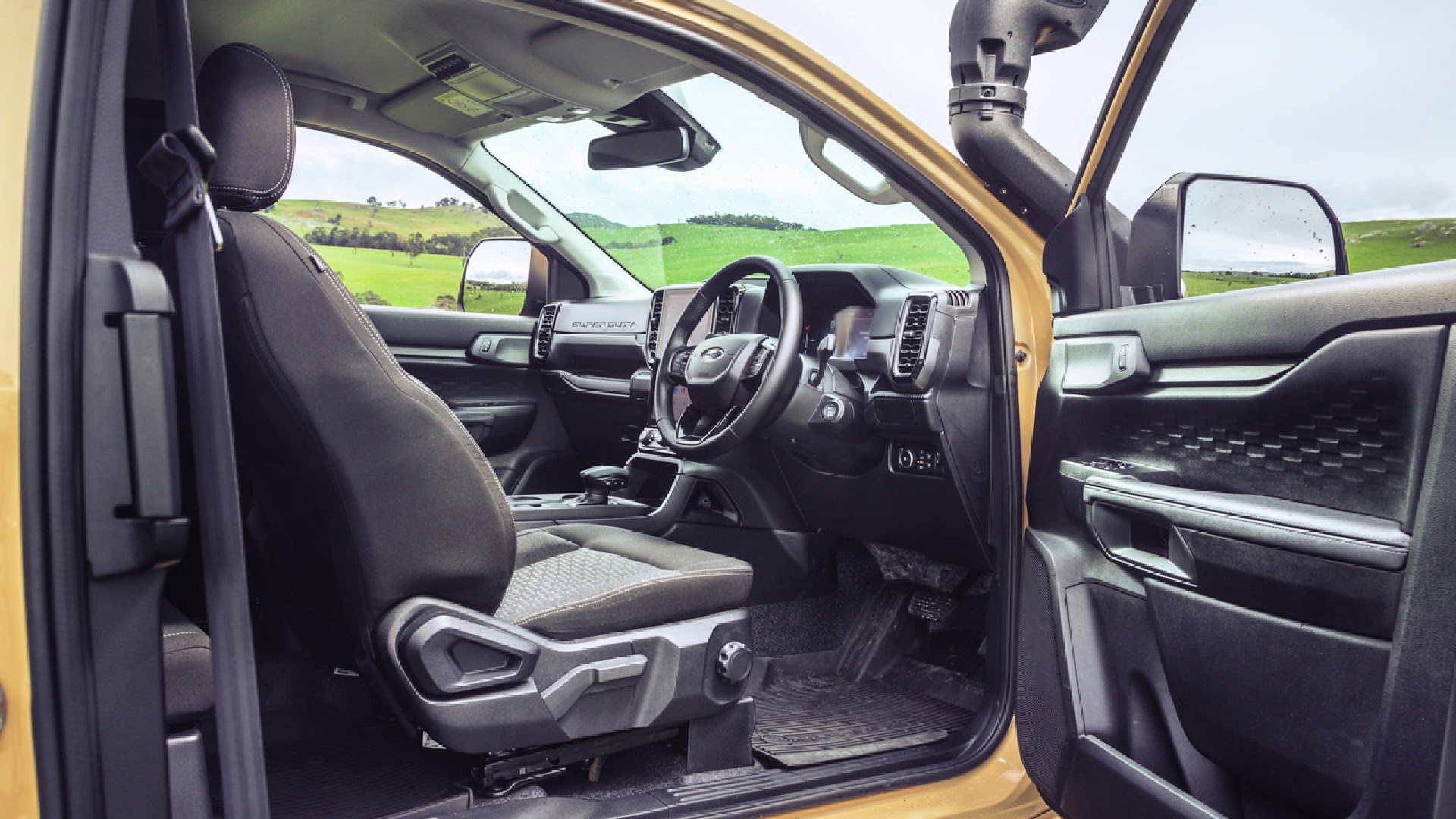
Jumping into the Super Duty – and you do need to jump up into the cabin – everything seems much the same. Nice seats, a clear dash and screen, dual-cab seating for the family.
Then I looked a little deeper and found the towing controls, an extra grab handle on the passenger’s side, as well as special Super Duty menu choices in the infotainment, including the scales and a shortcut to the off-road settings including differential locks.
Driving was just as I expected. No, actually, it was smoother and more compliant than I had expected.
It’s not particularly spritely, and it needs more tippy-toe thinking on tight corners, but it’s good considering its heft and off-road tyres.
I was also captived by little things, like the winch mount on the bullbar, the heavy-duty bits and pieces around the rear tray, and a little pump bottle integrated into the tray for hand washing.
So, did I take my Super Duty deeply into the off-road realm? No.
Did I hook a giant trailer on the back, or tow my boat to the nearest dam? No.
Why not? Because I trust the Ford engineers at Broadmeadows, Geelong and You Yangs who did those things, and vastly more, during development of the Super Duty.
They cannot afford to get it wrong. And they have it right for the people who want more from their Ranger, without spending big on an F-150.
Coming after the Raptor, the off-road funster in the Ranger family, the newbie should be a solid success.
The Super Duty is on point for its target users. And there will be plenty of them.
It’s not cheap, and I’m sure the fuel economy will suffer if you do heavy towing for any distance, but you get what you need from the Super Duty.
FORD RANGER SUPER DUTY
Price: from $82,990
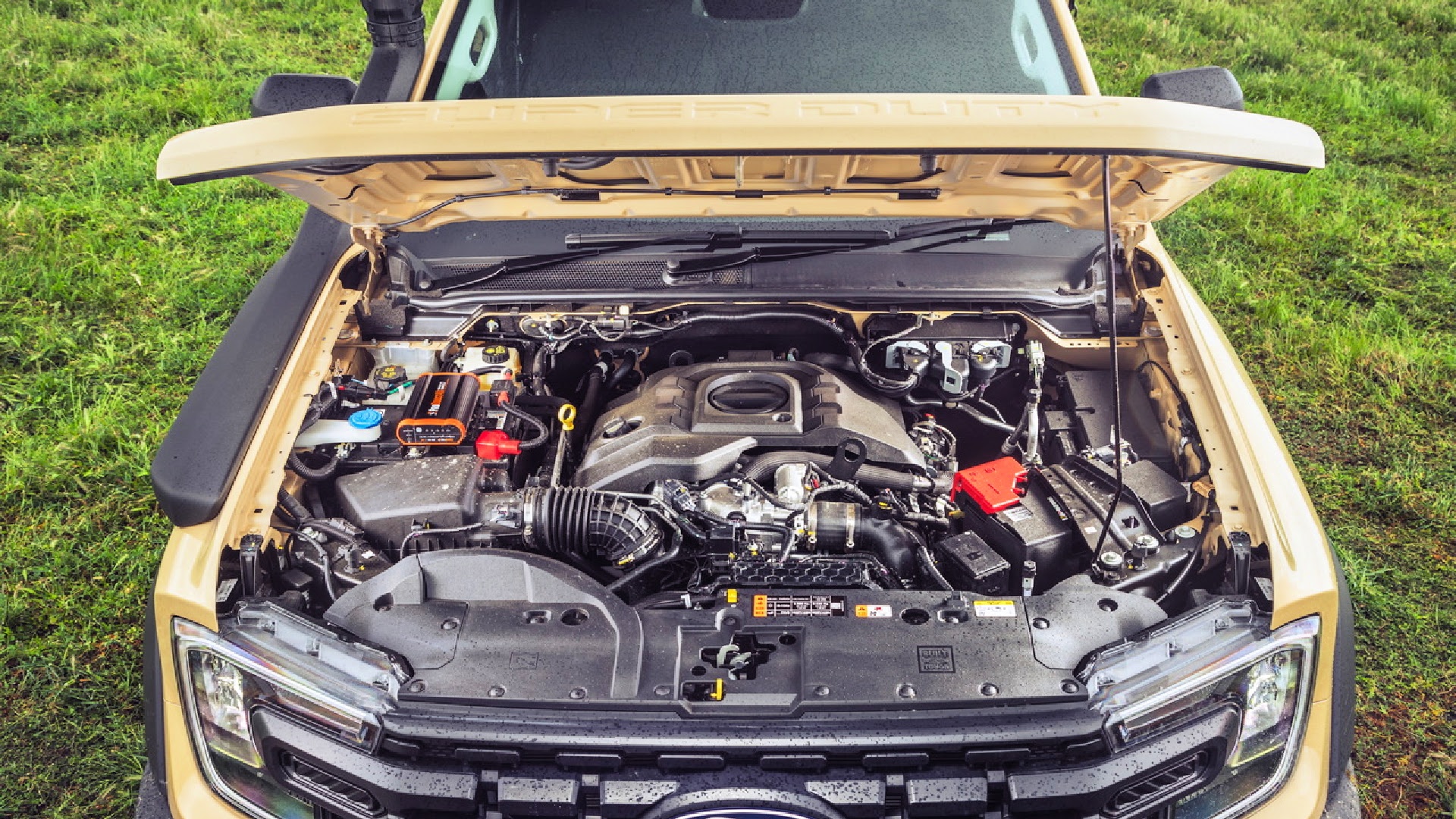
Engine: 3-litre turbodiesel V6, 154kW/600Nm
Gearbox: 10-speed automatic, four-wheel drive
Safety: not tested
The tick: a surefire winner





 Proudly Australian owned and operated
Comments 0
Join the conversation. Comments are reviewed before they appear.
Be the first to comment.
Join the conversation
Tell us who you are to post a comment. We'll remember you next time.