
Face yoga for the over-60s: a gentle revolution or a well-lit illusion?


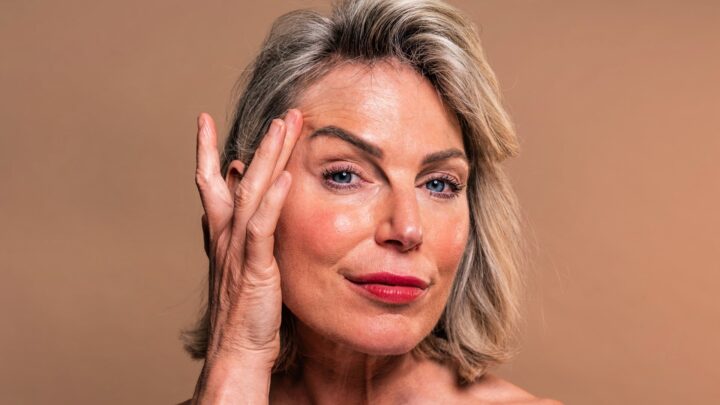
Scroll through social media and you’ll see it everywhere, people contorting their faces, pressing fingertips into cheeks, stretching tongues in lion-like poses. Face yoga, once fringe, is now pitched as a natural alternative to injectables, especially appealing to those over 60 who may prefer subtle, non-invasive approaches to ageing. But is it genuinely worth trying, or just another wellness fad dressed up in optimism?
The answer of course, as with many beauty trends, lies somewhere in between.
For older adults, the attraction of face yoga is obvious. It’s free, requires no equipment, and can be done at home. More importantly, it offers a sense of investment in a phase of life where the body, particularly the face, changes in ways that can feel depressingly out of our control.
Scientifically, the premise isn’t far-fetched. The face contains dozens of muscles, and like any muscles, they can weaken or change with age. Face yoga devotees argue that exercising them can restore tone and volume. Some small studies support this idea. A 20-week trial found participants appeared about two to three years younger, largely due to increased cheek fullness.
For people over 60, where volume loss and sagging are more pronounced, this specific effect, subtle plumping from beneath, may be the most relevant.
Studies on face yoga are limited and most studies involve small groups (often fewer than 30 participants), and many rely on subjective assessments like perceived age from photographs. That doesn’t invalidate the findings, but it does mean they should be interpreted cautiously.
A more recent 2025 clinical trial found measurable changes after eight weeks, including improved muscle elasticity and altered muscle tone. But again, the sample size was small.
Dermatologists tend to agree on a middle ground: facial exercises may improve muscle tone and circulation, but they won’t replicate the effects of medical treatments like fillers or surgery.
For a 60+ audience, this distinction matters. Face yoga might enhance what’s already there, but it won’t reverse decades of collagen loss.
But does it actually work, and if so, how fast?
Yes, face yoga can work but it does take time. We are looking at months rather than weeks.
Most experts and studies suggest:
Short-term effects (first 2-6 weeks): improved circulation, slight “glow,” reduced puffiness
Medium-term (8–12 weeks): subtle muscle tone changes
Long-term (3–6 months+): modest improvements in fullness and facial firmness
Consistency is the face yoga mantra. Programs typically recommend 20–30 minutes daily or near-daily practice. That’s a lot of work and this is why many people, especially older beginners, drop off. The time commitment can feel disproportionate to the actual results.
But, if you have the time, it is definitely worth doing a little research yourself. Why not be proactive and have a go. You will want to take a photo of your face before you start and one a couple of months down the track to compare.
Now there’s no single “best” routine, but effective programs tend to combine these three elements:
1. Cheek lifters (for volume loss) – these target the mid-face, where ageing is most visible. Exercises involve lifting the cheeks while resisting with fingers.
2. Forehead relaxers (for lines) – gentle resistance movements help reduce tension rather than build muscle – important for avoiding deeper wrinkles.
3. Neck and jaw work (for sagging) – moves like the “lion’s breath” or chin lifts engage the lower face and neck, areas that often concern people over 60.
A balanced routine alternates strengthening (lifting) and relaxation (softening tension), because overworking certain muscles may actually deepen lines over time.
It’s also a good idea to tap into a YouTube or Facebook video to help you get the technic right.
Face yoga’s popularity owes much to celebrity backing. Celebrities like Gwyneth Paltrow, Madonna, Meghan Markle, Kate Moss and Anne Hathaway have shared how their daily practice keeps their skin looking youthful and toned.
Although celebrity endorsement is not evidence that face yoga works – It does, however, reflect a broader cultural shift: ageing celebrities increasingly favour “natural” maintenance over obvious cosmetic procedures.
But what can we truly expect, say after a couple of months of daily exercise? Forums and discussion boards share that improved jaw relaxation, reduced tension, a sense of mindfulness and self-care, plus subtle improvements in tone or puffiness can be seen.
However, frustration with slow or minimal visible change and the challenge of a daily routine is the biggest downside to the practise.
There are of course some hidden benefits too.
Interestingly, the strongest argument for face yoga in older adults may not be cosmetic at all.
The practice incorporates massage, which improves circulation, induces relaxation reducing habitual tension in the jaw and forehead. It also improves mindfulness, similar to traditional yoga
Some evidence suggests facial exercises can even support mental wellbeing as well as calmness, which is great at any stage of life.
In this sense, face yoga functions as a hybrid of skincare and gentle wellness ritual.
Verdict: worth trying – if expectations are realistic.
But the real value lies in reframing expectations. If we look at face yoga as a daily ritual for maintenance and wellbeing, it can absolutely be worth trying. If approached as a natural facelift, disappointment is almost guaranteed.
In the end, face yoga may offer something more modest, but perhaps more sustainable. Not a younger face, but a more engaged relationship with the one you have. And really, what is wrong with looking your age?
Don’t get me wrong, I do love potions and gadgets, that can help you on your self love path. It truly is about expectations. It’s about becoming the best version of yourself at the age you are now – not the you of 30 years ago.





 Proudly Australian owned and operated
Comments 0
Join the conversation. Comments are reviewed before they appear.
Be the first to comment.
Join the conversation
Tell us who you are to post a comment. We'll remember you next time.