
The long road still calls for Joe Camilleri



Image: Tania Jovanovic
The BIG Sunday interview, with Matt Lennon
At 77, with a new compilation album cycle underway and another national tour looming, Joe Camilleri shows no sign of stepping off the road, more than 50 years after first setting out on it.
If anything, the veteran songwriter and performer sounds newly energised – even eager to test fresh material in front of audiences and to keep shaping a catalogue that already stretches across decades.
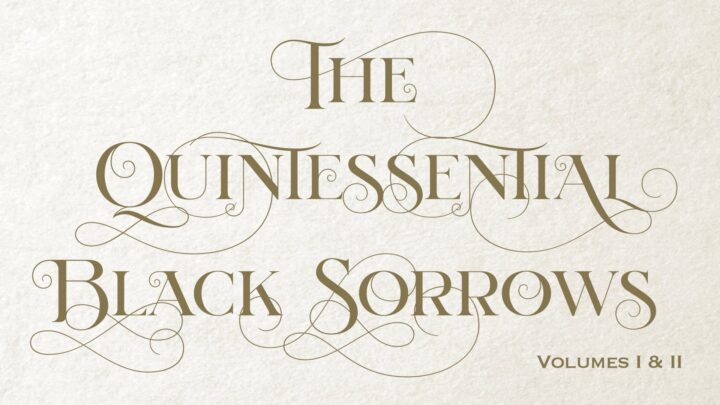
Recent releases like the curated double collection The Quintessential Black Sorrows underline both his longevity and his restlessness. Described as a journey through the “songwriting fire”, the album that has defined the band celebrates a body of work that continues to evolve rather than calcify into nostalgia.
For Camilleri, such milestones are less about looking back than about reaffirming a lifelong commitment to craft.
“I always want to do it, and I always want to be doing a good job,” he tells Starts at 60. “I like the idea of having a fistful of really good songs to be working on, so it makes me feel like there’s a really good place in the world for me.”
Throughout his career, Camilleri has often been described as a workaholic – a label he half-embraces and half-resists.
“I love to work,” he says simply. “I was born to work… I find more enjoyment out of doing something.”
The sentiment rings true when surveying a career that includes leadership of two seminal Australian bands, collaborations across genres and generations, and a touring schedule that would exhaust performers decades younger. Camilleri is still that old-school performer who only knows one way to do it – full speed, night after night – and resisting the temptation to slow down. It’s how it worked in the 70s and 80s, so why wouldn’t it still work in the 2020s?
Yet Camilleri insists the motivation has never been ambition alone. Music, for him, is fundamentally social – rooted in friendship, shared experiences and the unpredictable alchemy that happens when musicians gather in a room and just do their thing.
“There’s a bond between musicians… we’re like-minded people,” he says. “But it all depends on an audience too. It’s not about you.”
That belief still shapes his performances today. He says he approaches each show as an exchange, rather than a display.
“When I’m on stage, it’s about you,” he explains. “It’s about how to make you feel good and be part of the party.”
Reinvention as a survival skill
The durability of Camilleri’s career owes much to his refusal to repeat himself. With some 53 albums – there’s a 54th due out soon – he has consistently moved between styles, ranging from punk energy, roots grooves, cinematic storytelling, all guided more by instinct than by market trends.
“Never write the same song twice,” he says. “You might get six or seven songs out of that vein…but then shut the mine down, go find another diamond mine.”
That philosophy was tested during the making of one of his most beloved songs. Record executives struggled to grasp the departure represented by “Harley and Rose,” urging him to replicate earlier successes. The song became arguably The Black Sorrows’ biggest hit, with the album peaking at number three on the ARIA charts in 1990. But Camilleri’s response to that corporate demand was almost spiritual.
“I said ‘well… I’m not that guy anymore’,” he recalls. “I was that guy four years ago. We’re always evolving, aren’t we?”
Listeners embraced the song immediately. Its characters, Harley and Rose themselves, were never meant to be specific people.
“They’re everybody,” Camilleri says. “It’s you, it’s me… it’s just a slice of life.”

The hit he almost buried
If “Harley and Rose” revealed Camilleri’s artistic conviction, the anthem “Chained to the Wheel” exposed his fallibility. He initially dismissed the track outright.
“I didn’t even want it on the record,” he admits. “I thought I was too old for the narrative.”
Only when he heard it playing on the radio – and saw the emotional reaction of a taxi driver who identified with its themes – did he realise its power.
“Then I knew I had a hit,” he says.
Such moments remind him that songs often take on lives of their own. Once released into the world, they become part of listeners’ personal histories – sometimes in ways the songwriter never anticipates.
“I love that they love that,” he says. “And I love that I have that.”
Midnight sessions and modern realities
Camilleri came of age in an era when recording was fast, physical and unforgiving. Bands honed material through relentless gigging before capturing it on tape in marathon overnight sessions.
“We would do the show, come back, go into the studio between midnight till six,” he recalls. “Punch out the demos.”
An industry secret at the time was that midnight-to-six timeslot was the cheapest time a studio was available. The musicians would work the recording equipment themselves, removing the need for a technician to be on-site and thus increasing the bill.
Camilleri laughs at the idea that modern tracks and albums, especially among the world’s megastars, have teams of people working for days or weeks to perfect a sound, minutely tweaking miniscule elements to an indistinguishable level of perfection. In the 1970s, his first album took just six hours to complete. Is that purity at work?
But success brought new pressures.
“You’re seduced by your popularity,” he says. “You’re seduced by all the things that are not necessarily any good for you… you lose your intensity.”
The digital revolution compounded those challenges, reshaping how musicians earned a living and connected with fans. Camilleri remembers a period when intimate “dinner and show” venues became a primary outlet for artists struggling with declining record sales.
“That’s where I thought my world was going to end,” he says. “There’s nothing like playing to 120 people eating their steak while watching you play.”
Yet adaptability proved to be his greatest strength. Touring remained viable, and he embraced the road with renewed determination.
A working band, not a heritage act
Few Australian acts have matched the touring intensity of The Black Sorrows. Camilleri proudly describes the group as a “working band” capable of performing more than 150 shows a year.
“We go to you. You don’t come to us,” he laughs.
This grassroots approach aligns with his broader resistance to formulaic performance. Camilleri avoids fixed set lists, preferring spontaneity and emotional responsiveness.
“There’s nothing worse for me than to see a show… and every song is the same,” he says. “I don’t have a song list. I’m using my brain.”
The result is a live experience that evolves nightly and is unique to that moment in time. A philosophy consistent with his belief that music must remain alive to remain meaningful.
Slowing down in order to hear
A decade ago, Camilleri made a conscious decision to step away from city life. He moved to the country, seeking space to think and write.
“The city didn’t owe me anything anymore,” he explains. “I didn’t feel like I needed to be slogging it out one brick at a time.”
There, surrounded by birdsong and silence, he rediscovered the value of stillness.
“You get a sense of the slowdown,” he says. “You can breathe… you feel beautiful in the environment.”
Finding a new voice
Rather than attempting to recreate the energy of his youth, Camilleri has embraced ageing as an artistic opportunity.
“I think I’m getting better,” he says. “I finally found a way of singing.”
His goal is not to preserve songs in amber but to reinterpret them continually.
“We serve the song,” he explains. “But there is movement in there… the song is brand new every night.”
That mindset informs his approach to new material. Decades of experience have given him a clearer instinct for what works.
“I know when we’re working on the songs where the song needs to be at,” he says. “I know how to do it better now than ever before.” He is his own harshest critic.
A place in the tapestry
Camilleri is reluctant to define his own legacy, preferring to leave that judgement to audiences and critics. Still, he recognises his place in the broader story of Australian music.
“The Black Sorrows are part of the Australian music tapestry,” he says. “We were doing things that no one else was doing.”
Industry observers tend to agree. Over more than four decades, he has remained at the forefront of roots-driven songwriting, guiding The Black Sorrows with the same creative curiosity that first ignited the band in the 1980s.
For Camilleri, however, the most meaningful validation comes from fans who share how particular songs shaped their lives.
“They’re beautiful things to hear,” he says. “I like to think that Australia puts up with me in a nice way.”
Still chasing the feeling
Despite chart success, awards and international tours, Camilleri continues to chase a fleeting sensation – the moment when a recording suddenly feels definitive.
“This is us,” he remembers thinking after hearing one of his early hits on the radio. “For the first time in my life… this sounds like an international record.”
That pursuit remains central to his identity.
The new album cycle, celebrating the best of The Black Sorrows, and the touring that will inevitably follow, represents another attempt to capture lightning without repeating the past.
“There’s a time frame when it all blossoms,” he says. “And then you’re chasing that. The best thing is, don’t chase it. Just relax into it.”
For Joe Camilleri, relaxing into it does not mean slowing down. It means trusting instinct, honouring the song, and continuing to turn up – night after night – ready to play.





 Proudly Australian owned and operated
Comments 0
Join the conversation. Comments are reviewed before they appear.
Be the first to comment.
Join the conversation
Tell us who you are to post a comment. We'll remember you next time.