
How Did Any of Us Survive? A Genuinely Astonished Look Back at 1970s and ’80s Parenting


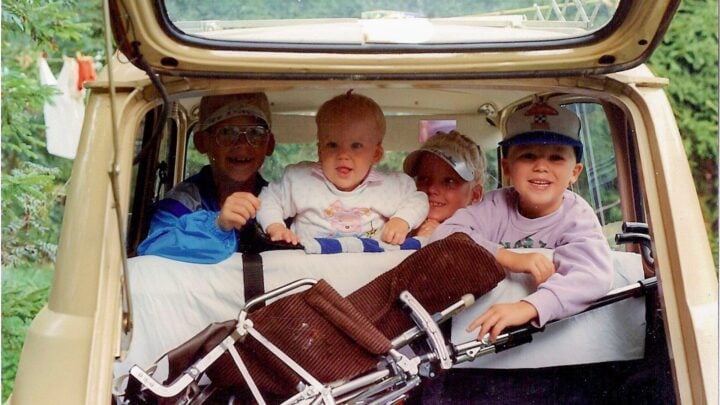
I want to begin with a confession that will surprise nobody who was actually alive at the time: an entire generation of Australian children was raised, essentially, as free-range livestock, and somehow most of us turned out fine. Not just fine. Functioning. Employed. Occasionally even fond of our own children, despite having spent our own formative years being flung, unrestrained, around the back seat of a Kingswood like loose shopping.
It’s worth pausing on this properly, because I don’t think the modern mind can fully process it in one go. Today’s parents arrive at the hospital with a car seat already correctly installed, verified, and possibly inspected by a qualified technician, before the baby has even drawn its first breath. In 1978, the baby came home on somebody’s lap. Mum in the front, newborn balanced against her like a warm loaf of bread, dad driving, nobody remotely alarmed. If you’d suggested a five-point harness, people would have assumed you meant something to do with S&M, not parenting.
The astonishing case of the unsupervised child
Here is the detail that genuinely stops me in my tracks every time I think about it: children of this era were routinely told to “go outside and play” and then, and this is the part that seems almost fictional now, simply left alone. For hours. Sometimes an entire suburb’s worth of hours, roaming from house to house in loose, feral packs, negotiating access to other people’s pools and trampolines through nothing more than sheer cheek and the assumption that someone’s mother would eventually feed you. The instruction was not “text me when you get there.” The instruction was “be home for dinner,” and dinner, notably, was not portable.
Compare this to the modern child, whose social calendar is now managed with the operational precision of a small logistics company – “Little Annie has dance at 3:30, Little Henry needs basketball by 4, and there is genuinely no configuration of this universe in which I can be in two places simultaneously” – and you start to understand why today’s parents look twenty years older than they actually are. Nobody in 1981 needed a shared family calendar app. Nobody in 1981 had a family calendar at all. The calendar was the sun, and the rule was: don’t be out after it goes down.
Mend it, don’t spend it
If your trousers acquired a hole in 1976, your trousers were mended. Sat down, threaded needle, patched, handed back, worn again, possibly worn by a younger sibling after that, and possibly worn by a family pet as bedding after that. There was no “fast fashion” cycle to make this feel embarrassing, because clothes were expensive and mothers, extraordinarily, still occasionally had a spare fifteen minutes. Today, a hole in a school jumper triggers an emergency Amazon order and a mild eco-guilt spiral. Progress, apparently.
Germs? What germs?
Frogs, lizards, unidentified pond creatures, the occasional deceased bird brought inside as a genuine gift – all standard fare for the 1970s child, and all received by parents with, at worst, a resigned sigh rather than a hazmat response. There were no antibacterial wipes standing sentry in every handbag. There was no elasticated trolley-seat cover protecting delicate infant thighs from the horror of a shopping trolley handle. Rolling in dirt was not a crisis. It was, if anything, Tuesday.
The drive of your life
Ask any Australian raised in this era about their fondest childhood memory and a startling number will, without hesitation, mention being allowed to “drive” – perched on a parent’s lap, hands on the wheel, parent operating the actual pedals, the car creeping along a driveway or an empty car park at a pace best described as “geologically slow but thrilling.” One person I know still recalls, with real fondness, the day her mother’s foot slipped and pressed “go” rather than “stop,” sending both mother and daughter directly through the side of a garden shed. She remembers this as one of the great days of her childhood. Nobody involved required therapy. The shed required rebuilding.
A few more that deserve a proper mention
The original telling of this story rather let itself off the hook by stopping at four or five examples, when the genuine list of era-appropriate parental nonchalance runs considerably longer. In the interest of a complete and properly astonishing record, allow me to add a few more.
Smoking with the windows up. An enormous number of Australians spent their formative car trips enveloped in a fine haze of Winfield Blue, windows firmly closed against the winter chill, parents chatting away entirely unbothered by the fact that their children were essentially being cured like bacon in the back seat.
Riding in the “way back.” Station wagons of this era came with a rear-facing third row commonly known as “the way back,” a space with no seatbelts whatsoever, into which children were cheerfully loaded for long trips, there to wave at following traffic like a small, unrestrained parade float.
Sending the kids to buy cigarettes. It was entirely unremarkable to send an eight-year-old down to the corner milk bar with a note and some coins to purchase a packet of smokes for Mum or Dad, and for the shopkeeper to hand them over without so much as a raised eyebrow.
The backyard pool, unfenced and unsupervised. Long before pool fencing laws existed, entire neighbourhoods of children learned to swim, or didn’t, in backyard pools with no barrier whatsoever between the water and the street, on a strict honour system that mostly relied on nobody drowning.
Bike riding, helmet-free, into actual traffic. Mandatory helmet laws didn’t arrive in Australia until the early 1990s, meaning an entire generation pedalled to school, to the shops and to freedom generally with nothing but hope and a decent head of hair protecting their skulls.
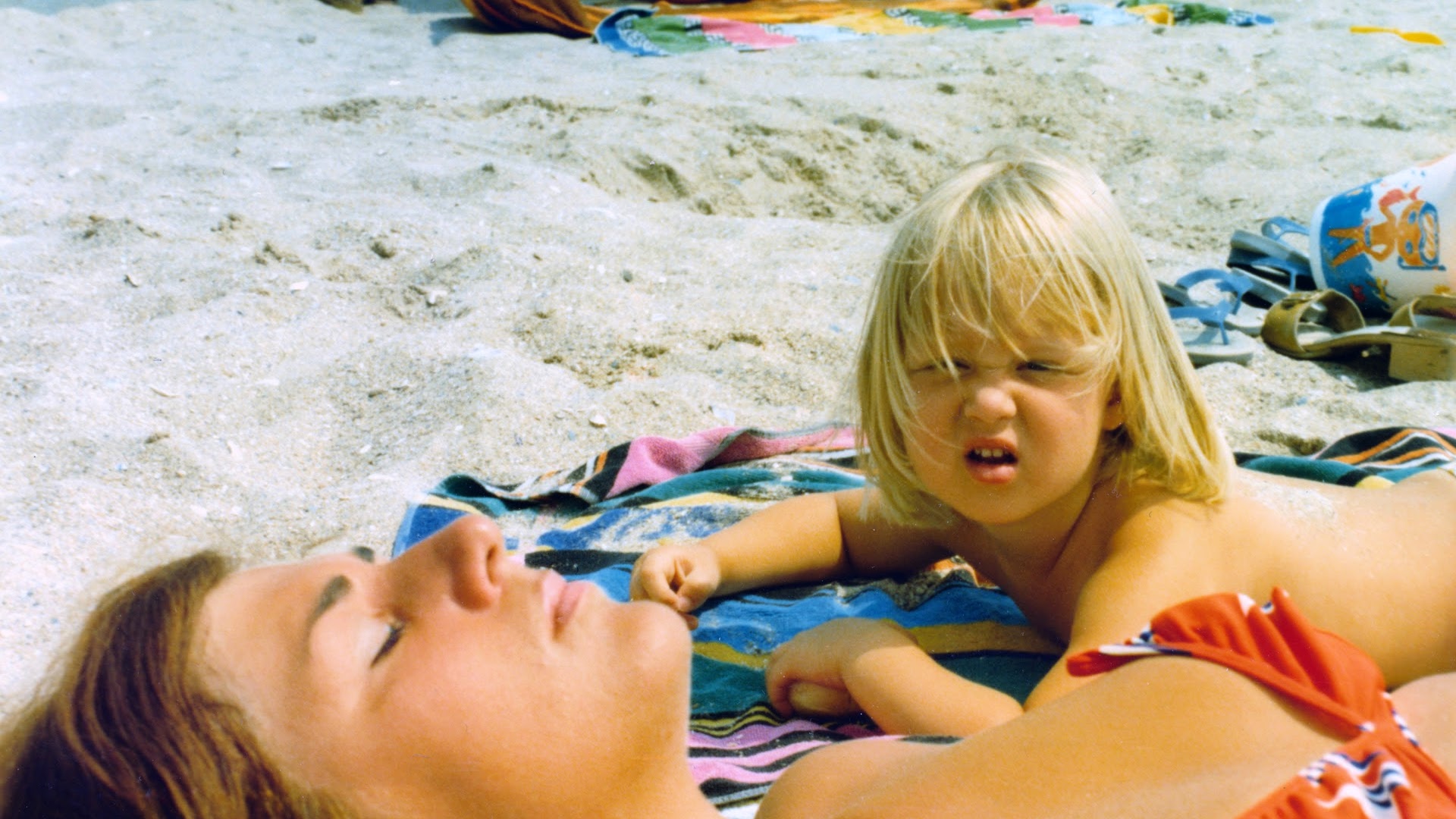
Sunbaking, deliberately, on purpose, for fun. Slip Slop Slap didn’t launch until 1981, and even after it did, baby oil and a good hard bake in the midday sun remained a completely normal weekend activity for children and adults alike, undertaken with the same enthusiasm modern parents reserve for applying SPF 50 every ninety minutes.
The verdict
None of this is a serious argument for turning the clock back, and I’d ask you not to email me insisting it is. Car seats and bike helmets and pool fences have quite obviously, measurably saved lives, and nobody sensible is nostalgic for the specific child mortality statistics of 1974. But there is something worth holding onto in the sheer, unbothered confidence of it all – a generation of parents who trusted their kids, trusted the neighbourhood, and trusted that dinner would sort out any remaining problems by six o’clock. We survived it. Most of us are still slightly amazed that we did.





 Proudly Australian owned and operated
Comments 12
Join the conversation. Comments are reviewed before they appear.
This made me laugh a lot! Parents knew where you were by all the bikes outside the house, school holidays were deliciously long days of doing nothing - but somehow everything. Cubby houses were built, demolished and rebuilt somewhere else in the garden, and if you did something wrong you got chased by a stick wielding parent to teach you not to do it again.
All of the above story was as it happened way before the 70’s. I was a child during the late 60’s into the 60’s, and that’s exactly how we loved. Played kick to kick in the street over the power lines with someone calling out “car” if one appeared, collecting clay from the bottom of the quarried hole over the road from our house to make little cups and saucers after baking it in the wood fired stove. Didn’t get a bike until 10 years old when we supposedly would be ok riding on the roads, (we were). Walked to school then rode bike when older, in whatever the weather was doing, never driven. Life was good.
Yes I agree Francis. More like 50s and 60s. My kids are 1976 and some of the above apply but I always knew where they were.
Goodness me. Me and my friend walked to kinder on our own sometimes and we were only nearly five.
I still can't believe my mum let us. Stopped when a little threw stones at us through her front fence. I suppose parents knew each other in the area and usually mums were home.
Yesss; born 1947, free range, methylated spirits on cuts and abrasions and told to 'walk it off'. Usually two or more kids in every school with plaster casts on broken arms with texta messages from fellow students.
Saw a neighbours kid in a "battery" operated go-kart (kind of thing), and we wonder why kids are getting fatter, and lazier??
we spent the weekend up an old oak tree , it was our house . we decorated it with plaited rushes and bunches of flowers . Meanwhile dad played cricket and mum sat with the other mums . No screens !! haha but lots of imagination… never bored just happy .
Oh how this made me smile and remember. This was quite literally my life. Street lights going out meant home! Bringing my newborn baby home laying freely in a bassinet on the back seat. Sitting close to your partner on the front of the car as he drove, no restrictive seatbelts. And so much more. The dangers were certainly there but our lives were not defined by fear.
I grew up in the 60s&70s and had my first baby in 1979 then 1984 and another in 1995 and I most certainly saw and felt the difference with each decade.
Back then and prior..bacteria was not something one obsessed over. The immune systems developed as they should. Now, with bacterial wipes etc at every turn we have fragile immune systems with no resistance to anything!! I was born 1943...used to get in the kennel with one of the sheepdogs...a savage one Mum couldn't get near..drink water from its' container, played in the dirt, or the cowyard , with chooks and cats...and my siblings as they came along. We drank milk straight from the cow, & ate home killed unwashed meat. We all have great immune systems!
Oh this is so funny. I can identify with the "drinking milk straight from the cow", among other things you mentioned,
In mid October of 1973 we brought our precious brand new baby daughter home after 6 weeks in a humidicrib and hospital nursery due to an 8 week premature birth.
There were no baby car seats available in those days but there was a device consisting of seat belt webbing sewn in a 70 odd mm mesh which could be fastened to the rear seat belts. We fastened her carry bassinet under it and drove home feeling that we'd done all we could to protect her from being thrown around due to a car accident.
She travelled thus until she was too big for the bassinet then used s booster seat and seatbelt.
I really don't know how useful this would have been in the event of an accident, but it was the best we could find at that time after searching for 6 weeks; while visiting for the time she was in the hospital.
So agree to above. Now one must be politically correct, don`t do this don`t do that, we climbed trees, climb over fences, (lived on the side of a mountain) slid down it on cardboard, had a bonfire with crackers etc, only suppervised by Parents, who were all standing around with a glass of whatever. Ride our bikes to our Friends, `be home before dark`. As didn`t have mobile phones, watches etc. Friends Parent, `time to go home`. Except in the Medical research and the knowledge we now have, but kids today, do not know what it is like to be free, and just live. We didn`t have a lot, as Mum didn`t work, until I was old enough to help with my Brother, but we had healthy lives, home cooked meals, vegetables grown in the back yard, chooks, and plenty of fresh air. After our jobs were done.
Loved your article & reading everyone’s responses. So funny & yes, we were blessed to have so much freedom & fun during our childhood which most of us survived without too much damage 🤗
Join the conversation
Tell us who you are to post a comment. We'll remember you next time.