
Jon Hamm at 55: The Second Act That Became Something More


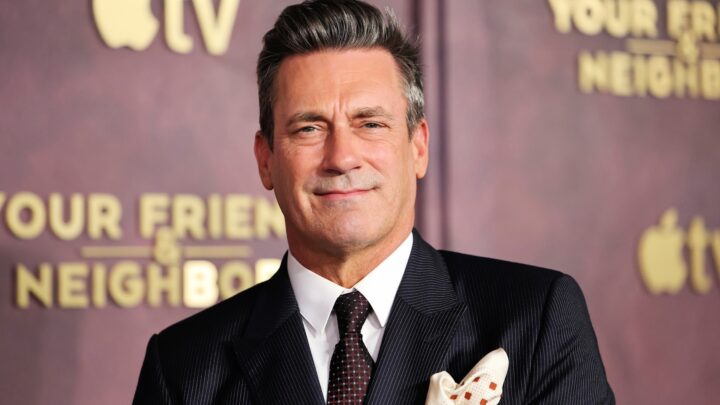
There was a time when Jon Hamm couldn’t escape Mad Men – and perhaps didn’t entirely want to.
Don Draper wasn’t just a role. He was a cultural moment. A sharply dressed, deeply flawed symbol of a certain kind of masculinity that defined an era of television.
But more than a decade on, and now 55, Hamm has done something far more interesting than simply outrun that legacy. With the return of Your Friends & Neighbors for its second season on Apple TV, he’s leaning into it – and quietly reshaping it.
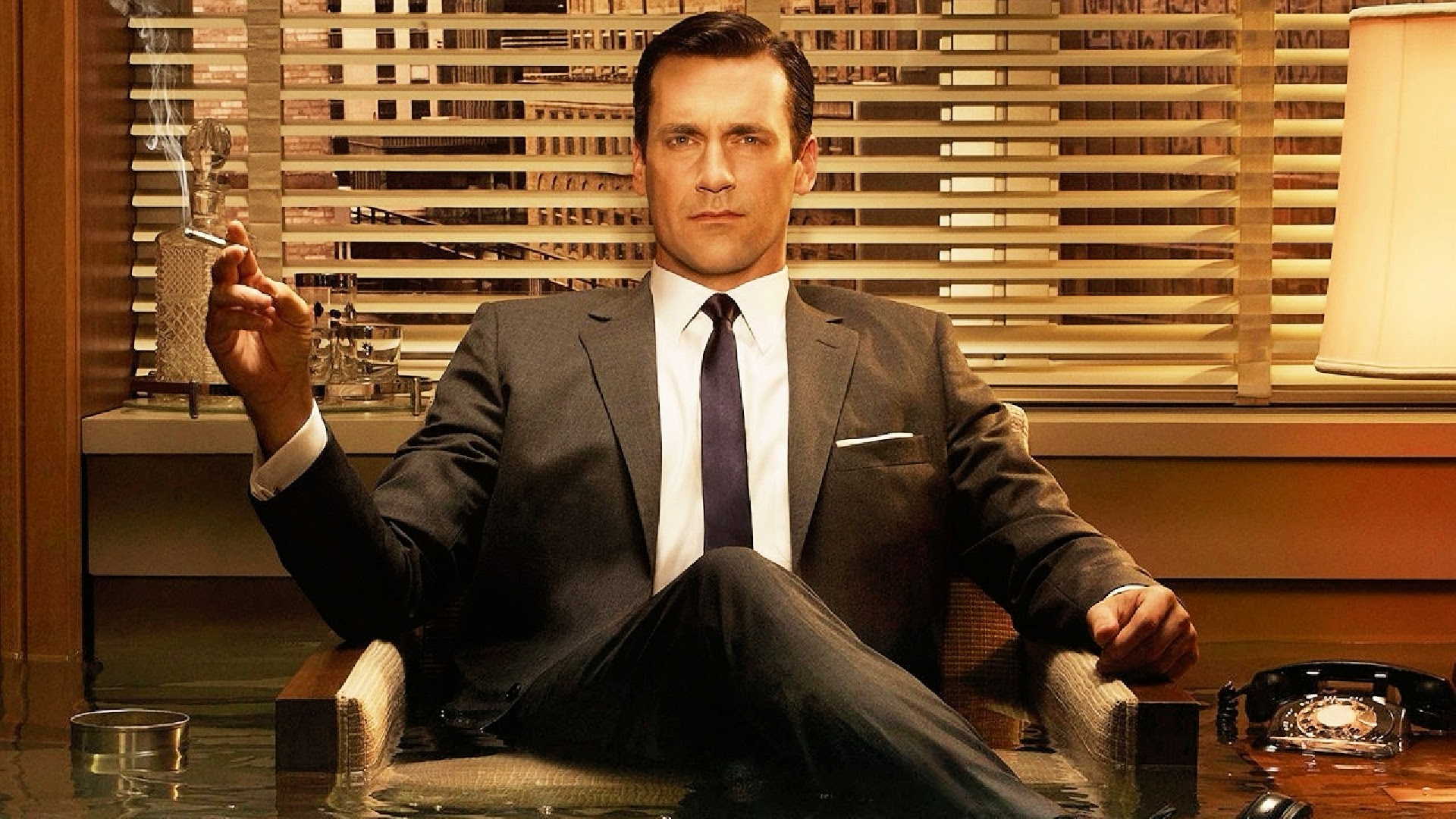
The man who couldn’t escape Don Draper
When Mad Men ended in 2015, Hamm faced a challenge familiar to many actors who land a career-defining role: what comes next?
The answer, at least initially, was uncertainty.
Despite the show’s success, Hamm didn’t immediately transition into leading-man dominance on the big screen. Instead, he deliberately sidestepped anything that felt too close to Draper – taking on supporting roles, comedic turns and darker characters in projects like Fargo and The Morning Show.
It was a strategic move, but not always a smooth one.
There were fewer headlines. Fewer obvious hits. And plenty of quiet industry chatter asking: what does a post-Draper Jon Hamm look like?
As it turns out, the answer took time.
A career reset – and a personal one
Off-screen, Hamm was navigating his own period of upheaval.
After nearly two decades with partner Jennifer Westfeldt, the relationship ended around the same time Mad Men wrapped. He entered rehab, confronted long-standing personal challenges, and – by his own account – began rebuilding.
It was, in many ways, a reset.
He has since spoken about that period as something he had to move through, not around. And in the years that followed, a quieter, more grounded version of Hamm began to emerge.
Now married to actress Anna Osceola, he appears far more settled – personally and professionally.
“I’ve always been kind of surviving,” he has reflected. “Only in the last 20 years have I really been able to participate in life.”
That sense of perspective shows in his work.
Enter Andrew “Coop” Cooper
In Your Friends & Neighbors, Hamm plays Andrew Cooper – a wealthy financier whose life unravels, pushing him into an increasingly risky double life stealing from those around him.
It’s a role that feels, at first glance, familiar.
There’s the suit. The quiet confidence. The moral ambiguity.
But where Don Draper was a master of illusion, Coop is something else entirely: a man in freefall, fully aware of it.
The show’s creator wrote the role with Hamm in mind – and it shows.
There’s a knowing quality to the performance, a subtle nod to the audience’s expectations. Hamm understands what viewers bring with them – and plays against it.
As he’s put it, Don Draper was a seller. Coop is a buyer.
And not always a wise one.
Why the role works
What makes Coop compelling is not just his bad decisions – though there are plenty – but the logic behind them.
Rather than returning to the high-powered world that rejected him, Coop chooses something far less stable, but more psychologically tolerable.
It’s a flawed, deeply human instinct.
“Characters often make the wrong choice,” Hamm has said. “Because of … reasons.”
That shrug says a lot.
Because at its core, Your Friends & Neighbors is less about crime than it is about identity – what happens when the life you built disappears, and you’re forced to confront what’s left.
It’s a theme Hamm knows well.
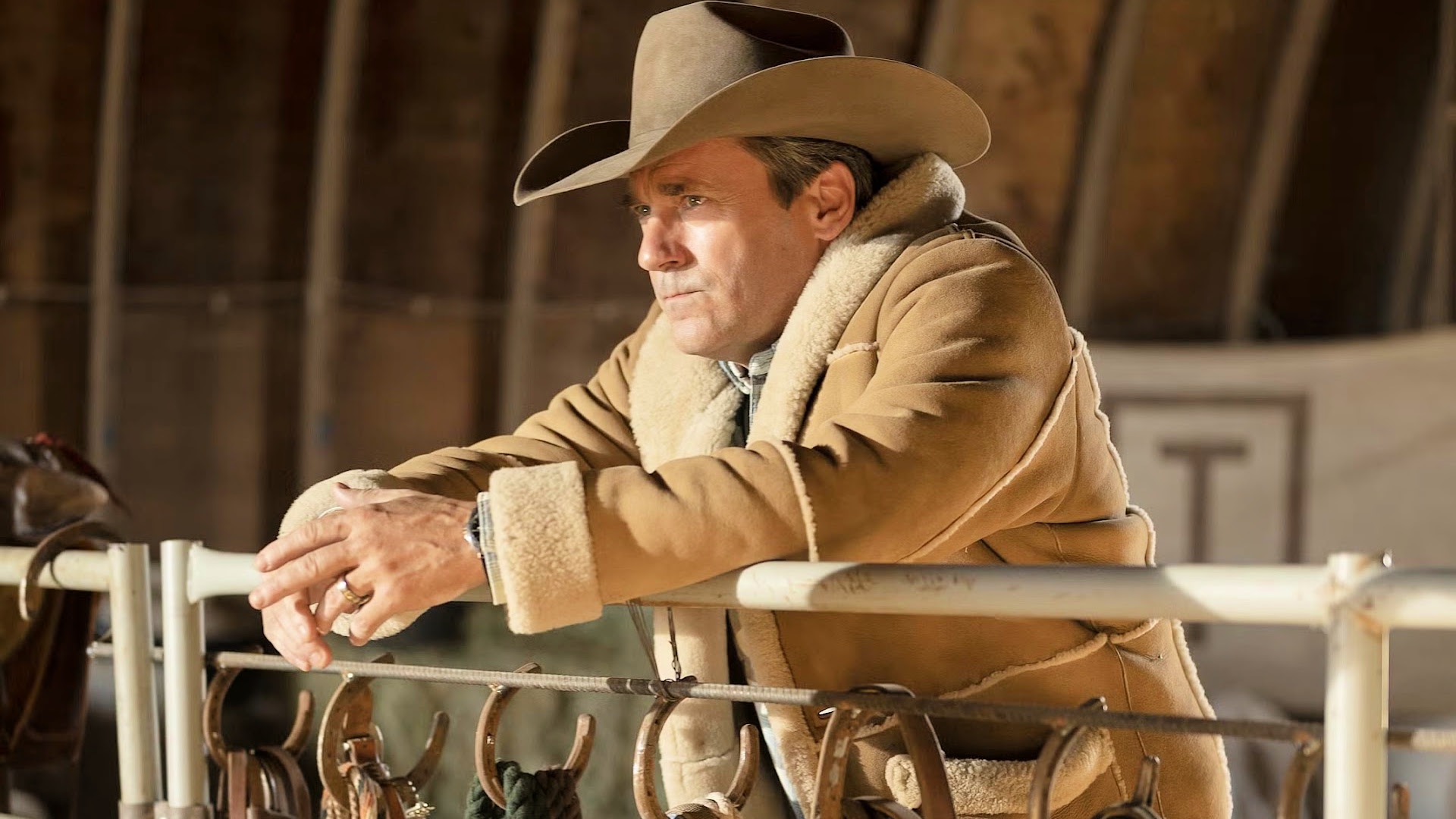
Finding his range
While Hamm will likely always be associated with Mad Men, his work over the past decade has quietly expanded his range.
His turn in Fargo, for example, revealed a darker, more unpredictable edge – a reminder that beneath the polished exterior is an actor willing to take risks.
Elsewhere, he’s leaned into comedy (Confess, Fletch) and ensemble drama (The Morning Show), building a career that’s less about leading-man dominance and more about versatility.
It hasn’t always been flashy. But it’s been deliberate.
And now, with Your Friends & Neighbors, it’s paying off.
The voice, the presence – and the longevity
There’s also something else Hamm brings to the table that’s harder to define: presence.
That voice – measured, confident, unmistakable – has served him well beyond acting, including a long-running stint as the face of Mercedes-Benz.
It’s the same quality that makes Coop’s narration in Your Friends & Neighbors so effective. There’s a rhythm to it. A sense of control, even when the character himself is anything but.
Hamm knows how to hold an audience’s attention – even when his character doesn’t deserve it.
At 55, still evolving
What’s most striking about Hamm at this stage of his career is not reinvention, but refinement.
He’s no longer trying to escape Don Draper.
He doesn’t need to.
Instead, he’s found a way to build on that foundation – to take the qualities that made that character iconic and apply them in new, more complex ways.
And perhaps more importantly, he’s doing it on his own terms.
There’s a confidence that comes with that. Not the performative kind, but something quieter.
Earned.
The third act?
If the first act of Jon Hamm’s career was about becoming Don Draper, and the second was about stepping out from his shadow, this current phase feels like something else again.
A third act, perhaps.
One where he’s no longer defined by a single role, but by the accumulation of them.
At 55, he’s not chasing relevance – he’s choosing it.
And with Your Friends & Neighbors gaining momentum (and already renewed for another season), it seems clear that Hamm isn’t just back in the conversation.
He never really left.





 Proudly Australian owned and operated
Comments 0
Join the conversation. Comments are reviewed before they appear.
Be the first to comment.
Join the conversation
Tell us who you are to post a comment. We'll remember you next time.