
How Dinah Lee came oh-so-close to another 1960s classic


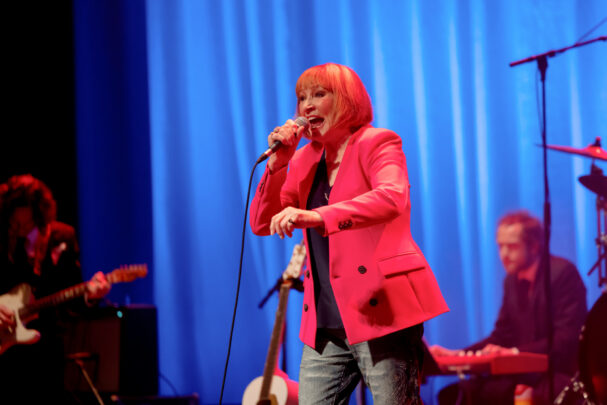
The BIG Sunday interview, with Matt Lennon
In another version of the 1960s – one that exists only in the realm of near-misses and what-ifs – Kiwi songstress Dinah Lee would have recorded a song called Spicks and Specks. It would have been just another bold, instinctive choice from a singer who built her career on picking songs others overlooked and making them her own. It might have been a hit. It might have been more than that.
Instead, the song was taken back.
“I was offered a song by the Bee Gees,” Lee tells Starts at 60.
“I was going to record it and then all of a sudden, they said, ‘oh no, we’ve decided that we’re going to record it.’
“Unfortunately, they did it [and] that launched them.”
The year was 1966 and at the time, the Bee Gees were still finding their footing, a young trio hovering on the edge of relevance. Spicks and Specks would become their breakthrough, the record that opened the door to global superstardom and the defining disco sound of the following decade. For Lee, it became something else: a reminder of how often she stood within touching distance of the centre of pop history – without ever needing to orbit it.
Because Dinah Lee’s story is not defined by what she missed. It is defined by what she made.
Lee came of age in the long shadow of Elvis Presley, when rock and roll was still young and the rules were still being written.
For a young woman entering the industry at that time, the template was limited.
“There weren’t that many,” she says of female pop singers. “There was Brenda Lee, Connie Francis, people like that who I idolised,” she shared.
But Lee’s influences ran deeper than chart pop. She listened closely to the phrasing and emotional control of Ella Fitzgerald, Nancy Wilson and Barbra Streisand, absorbing technique as much as style. When the British Invasion arrived, the Mersey sound, the Beatles, the Stones and the Who, it provided a commercial opening, but not a creative blueprint.
“I had my own sound,” she says. “I didn’t copy anything in those days. It was my voice.”
That independence would become central to her appeal, and her survival.
Lee’s breakthrough came with “Don’t You Know Yockomo”, a song she approached the way many artists of the era had to: by selection and reinterpretation.
“You pick songs that you think that nobody would do, especially a female, and I just interpreted how I thought they should go,” she says.
In short, the formula worked. The song shot to number one, establishing Lee as a major presence in Australia and New Zealand. But it wasn’t just the sound that cut through – it was the image.
“I had all these mod dresses, and no one, none of the singers in Australia were dressed like that,” she recalls. “It just took off.”
In a conservative television landscape, Lee arrived fully formed – visually modern, musically assertive, and confident. It was enough to place her on equal footing with her male contemporaries.
“I was up there with the boys… not just a little girl singer,” she says.
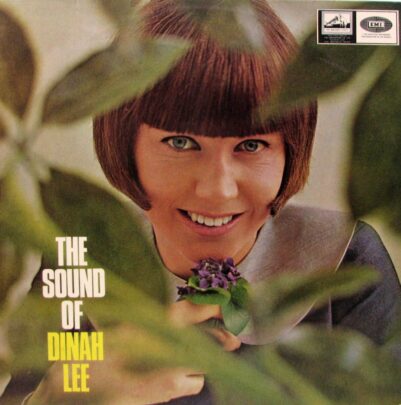
The 1960s circuit was tight-knit, and Lee moved through it at speed, crossing paths with artists who would later become defining figures of the era.
At one early appearance, three young boys, affectionately known as the ‘Brothers Gibb’, approached Lee for an autograph, which she happily obliged.
In Los Angeles, rehearsing for the influential television program Shindig!, Lee noticed another unfamiliar act trying to get noticed.
“It was Sonny and Cher before they started out,” she says. “Then all of a sudden they had ‘I Got You Babe’. it was just quite a time.”
Lee also shared stages with rising stars including Ray Charles and Glen Campbell, watching as careers ignited around her. The sense, in retrospect, is of an industry on the cusp – fluid, unpredictable, and open, at least briefly, to those bold enough to seize it.
Breaking America, however, proved far more difficult than simply arriving there.
“To stay in America was very difficult because you had to belong to a union, and it was a pretty closed shop,” Lee remembers. The same structural barriers applied in the UK, where Australian and New Zealand performers struggled for acceptance.
“We were colonial, and they looked at us as being from the colonies,” she says.
It was not simply a question of talent. It was about access, perception and timing. While she waited for opportunities overseas, work continued to come from home, and with it, a practical choice.
“You run out of money if you’re sitting and waiting, so when job offers come in, you take them,” she says.
Lee chose to keep working, building a durable career across Australia and New Zealand rather than gambling everything on a breakthrough abroad. It is a decision that, in hindsight, reads less like compromise and more like strategy.
“I don’t regret it at all. I’ve had a great career,” she says fondly.
One of the most consequential chapters of that career unfolded far from the recording studio.
During the Vietnam War, Lee volunteered to entertain Australian and New Zealand troops as part of government-subsidised morale-boosting troupes facilitated by the ABC, joining names such as Lorrae Desmond and Col Joye performing in conditions that were often basic and dangerous.
“I went and I didn’t get paid,” she says. “The first time, I was at the front line, performing on the back of trucks.”
She would return multiple times, later receiving medals from both countries in recognition of her service. But her recollections are not framed in terms of honour – they are personal, immediate, and occasionally surreal.
In Saigon, waiting to leave after one tour, she found herself alone in a bar when a towering figure entered.
“It was John Wayne,” she said. “He came and sat down and said, ‘Howdy ma’am, would you like a drink?’ I’ve still got his autograph.”
Moments like that – fleeting intersections with fame in unlikely places – run through Lee’s story.
By the early 1970s, Lee had achieved what many artists spend careers chasing: chart success, international exposure and a catalogue of defining moments. Yet she continued to move.
In Las Vegas, she saw Elvis Presley perform live during his celebrated residency.
“That was just phenomenal,” she says.
Back in Australia, Lee became part of the touring circuit that would eventually evolve into long-running nostalgia productions such as ‘The Good Old Days of Rock and Roll’. The audience, she notes, is part of the enduring appeal.
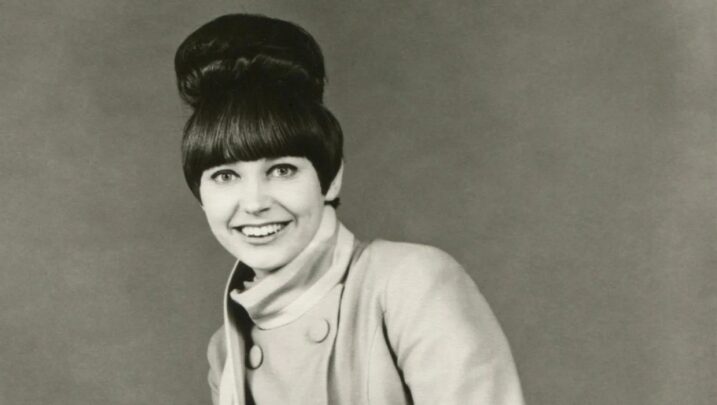
“You’ve got to remember the baby boomers. They grew up with that music,” she says. “When you look out, you can see their faces light up, they’re still remembering all the words.”
There is, in that observation, a quiet understanding of legacy – not as something fixed, but as something lived and relived in real time.
Lee’s career has never followed a straight line. In the 1980s, she even pivoted into bodybuilding, embracing it with the same intensity she had brought to music.
“Once I start doing something, I take it on full on,” she says.
It is less a digression than a pattern. Throughout her life, Lee has demonstrated a willingness to start again, to adapt, to push into unfamiliar territory. Even now, at the age of 82, she is embarking on new directions with speaking engagements and storytelling, revisiting the vast archive of her career.
“I’ve got heaps of scrapbooks. I’ve got everything,” she says. “I’m starting a whole new career again…it never ends.”
Asked what advice she would give her younger self, Lee does not hesitate.
“Have a good attitude, be strong, you don’t take any shit from anyone,” she says.
It is a blunt distillation of the lessons she learned in an industry that was, at best, indifferent to female ambition.
“Being a girl singer was quite difficult… it was all the boys,” she says. Her response though was not to conform, but to insist on parity.
And then, more simply: “Be original, do your thing and go for it.”
It is tempting, in telling Dinah Lee’s story, to linger on the near-miss – the song she didn’t record, the global breakthrough that might have been hers. But that narrative, while neat, is incomplete. Because the truth is that Lee did not need Spicks and Specks to define her.
She built a career that has spanned more than half a century, crossed continents, and intersected with some of the most significant figures in popular music. She has performed at the front line of a war, shared stages with legends, and remained a working artist long after many of her contemporaries stepped away.
Most of all, she has done it on her own terms.
And in a career shaped as much by resilience as by opportunity, that may be the most important line of all.





 Proudly Australian owned and operated
Comments 0
Join the conversation. Comments are reviewed before they appear.
Be the first to comment.
Join the conversation
Tell us who you are to post a comment. We'll remember you next time.