
Ask the Expert: Paul Gover’s straight answers on EVs, SUVs and smart car buys


ASK THE EXPERT with Paul Gover
Got a motoring question? Ask Paul by emailing [email protected]
Q: I am moving to an eco development with solar, batteries and charge point.
We will travel once or twice a week, about 300 kilometres round trip.
We are in a quandary whether to get a hybrid or a full EV, so could you suggest something that is about Mazda CX-3 size but reasonable room as I am 6’3″
Craig Pittard
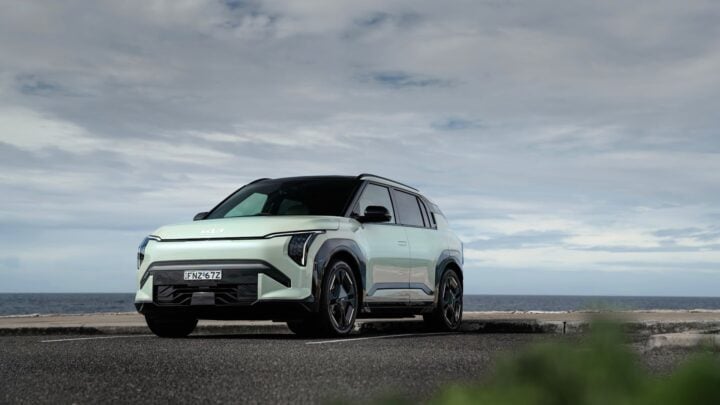
A: Hybrid is still the better choice for most people, but if you get a full charge there are plenty of EVs that will handle a 300-kilometre run. Cabin space is pretty good in lots of EVs, because the battery is under the floor, and from my experience you should be benchmarking the Kia EV3 as it’s not from a Chinese start-up with a proven reputation and dealer back-up in Australia.
Q: I’m writing to seek some clarification regarding the lane-assist systems on my 2023 Isuzu MU-X, as I’m receiving conflicting explanations and remain concerned about the vehicle’s overall behaviour.
My vehicle is fitted with both normal lane assist and advanced lane assist (lane centring) and I understand that advanced lane centring only operates when adaptive cruise control is engaged.
However, my concern is this: when the vehicle encounters even a slight bend in the road, a warning message appears stating that “Lane Assist has been cancelled” and the system then disables entirely, rather than momentarily disengaging or resuming once conditions stabilise.
Isuzu has advised me that this is a “safety feature” and that the system will also disable if road line markings are poor.
While I accept that poor line markings may affect performance, I have test-driven several other vehicles with comparable systems, and they continue to function reliably – including outside of adaptive cruise control – without fully cancelling the feature.
Given the number of electrical and software-related faults I have experienced with this MU-X, I’m struggling to accept that all of these behaviours are simply “normal characteristics of the car”,particularly when no meaningful investigation or resolution has been offered.
Do you know whether there are known issues, updates, or patches relating to lane assist disengagement?
Or whether system latency and slow activation times are considered normal, as many functions are noticeably sluggish to respond?
At present, the vehicle’s software performance feels outdated and unrefined, which is disappointing for a modern vehicle of this class.
Nick Rendina
A: Every lane-assist system is different and every single one has some sort of flaw – or flaws. Australian road conditions, from varying heights of signs to poor marking, make it worse. In every case, if the system is confused it is set to default back to driver control and that’s what your Isuzu is going. To test your system, and the centering in particular, drive on the straightest freeway you can find, in the centre lane, as that’s the default for calibration. Bottom line? Nothing yet can compare with a good human driver and no system is foolproof.
Q: I believe you now recommend a Suzuki Swift in place of a Toyota Corolla and, yes, I’m one of those old ones that love Corollas
My wife has a ’97 model, still going strong with under 200,000 on the clock.
What year should we consider, given the spending range of $6000-$8000?
Also, kilometres and potential wear points on the vehicle that we should look at or avoid.
Stu Norman
A: It’s not just about the year model, but the condition, kilometres and history. There are no suspicious wear points on the Swift, so it’s about checking a couple of cars to get a feel for how they drive, how they look, and service history. Then negotiate on one that works best for you.
Q: I’m in the market for an SUV but due to divorce only have a budget of $6000.
I carry a fair bit of stuff around with me so need something with some room.
I’m used to driving a Toyota HiAce Commuter and a VW Caravelle.
I’ve heard you recommend Suzuki Grand Vitara but there are multitude of styles in those, and every other brand has an SUV version to confuse thing even more.
If you only had $6000 which one would you buy?
Tari
A: With such a tight budget, and looking for something decent, I’d go for a Subaru Forester. There are lots around, they’re solid and reliable, with decent space. As for Grand Vitara, it’s all about finding something in your budget. In either case, best to go to www.carsales.com.au to research prices and models.
Q: My 60-year-old wife drives a 2018 Kia Sportage which has done 140,000 kilometres and wants to upgrade.
We looked at the latest-model Kia Sportage, which is really nice, but decided it was too big compared to her current car.
So we looked at the Seltos – smaller and more like her car inside.
I would also be interested in your thoughts on the Cerato.
Michael Hayward.
A: Both Seltos and Cerato are good cars and a smart choice, so it depends if you want the Cerato hatchback or the Seltos for easier SUV access and slightly more cabin and luggage space. Both get The Tick from me.
Q: I’m looking at the 2026 Toyota Corolla Hybrid hatch?
Do you know anything about the car and its price point?
Compared to, say, a 2026 KIA 4?
Vehicle is for my wife, no kids, metro driving, in our sixties.
Bruno Tassone
A: The Corolla, these days, is over-priced because of the Toyota badge. And it has a wait list. Best for you would be to test drive the Corolla against the Kia, back-to-back and more than just a lap around the block, and choose the one you like better.





 Proudly Australian owned and operated
Comments 2
Join the conversation. Comments are reviewed before they appear.
Hi Paul. I’m looking at a new Geely EV and Geely Hybrid. Could you pls give some advice on what would be the best option? I drive mostly locally and on rare occasions may go on a long trip.
Look forward to hearing your comment.
We're thinking of an Isuzu MU-X to tow a caravan with a payload of around 2900kg. We would be travelling on sealed roads most of the. We would be purchasing new or fairly new. Your thoughts would be appreciated. Thanks Paul.
Join the conversation
Tell us who you are to post a comment. We'll remember you next time.