


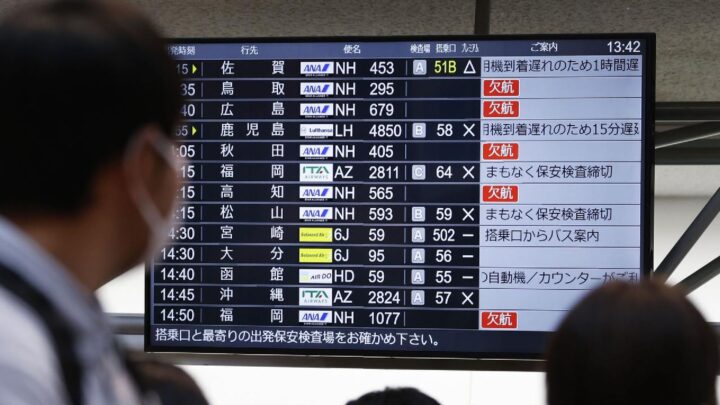
Australia’s major airports and airlines have been caught up in the global scramble to ground, inspect and repair Airbus A320 aircraft after a sudden worldwide recall forced carriers to halt services and implement emergency software fixes.
Qantas, Jetstar and Virgin Australia all confirmed that a portion of their A320 and A320neo fleets were affected, triggering late-night cancellations and delays on Friday and early Saturday. While the majority of Australia’s disrupted flights were short-haul domestic services, the grounding caused knock-on delays across Brisbane, Sydney and Melbourne as airlines worked to reshuffle aircraft and crews.
Jetstar – the largest A320 operator in the country – said the fix was progressing “as quickly as possible”, with engineers working overnight to ensure aircraft could return to service. Virgin reported a “handful” of cancellations but said it expected normal operations to resume by Sunday morning. Qantas, which uses fewer A320s domestically, said the recall had “minor but manageable impact”.
The patch was required to be completed before any affected aircraft could be cleared to fly, meaning some passengers endured long waits or were rebooked onto alternative services. However, industry analysts noted Australia’s time zone helped soften the blow, with many short-haul flights already winding down when the alert hit.
Global effort underway
Airbus CEO Guillaume Faury has apologised to airlines and passengers worldwide for disruptions amid a scramble to fix the software glitch – an abrupt, large-scale recall that has impacted thousands of flights across Asia, Europe and potentially the US during one of the busiest travel weekends of the year.
Global airlines have raced to remedy a software issue on Airbus A320 jets after regulators ordered checks and fixes before flights could resume. The recall affected more than 6000 A320-family aircraft, over half the global fleet of the world’s most-delivered commercial jet.
Several carriers on Saturday said they had completed or nearly completed the fix, including American Airlines, Air India, Delta Air Lines and Hungary’s Wizz Air. Many reported little or no impact on operations.
The urgent overnight effort helped head off fears of mass cancellations across Asia and Europe. The United States, however, faced the recall just ahead of the post-Thanksgiving travel rush.
“It’s not as chaotic as some people might think,” said Asia-based aviation analyst Brendan Sobie. “But it does create some short-term headaches for operations.”
The recall followed an unintended altitude loss on an October 30 JetBlue flight from Cancun to Newark, which injured ten passengers. France’s BEA accident agency is investigating the incident, which has been linked to the faulty software and potential interference from solar radiation.
The alert came at a time of day when European and Asian carriers were winding down operations – allowing many to complete repairs overnight. In the US, it hit during peak travel hours, causing deeper disruption.
Saudi carrier Flyadeal said the timing was fortunate, allowing the airline to complete repairs during the evening and resume operations by midnight.
“It was a great team effort but our luck also held up in the timing,” CEO Steven Greenway said.
Fixes faster than expected – but industry still stretched
The mandated fix involves reverting to a previous version of the software controlling aircraft nose-angle calculations. Some older jets also require hardware changes.
By Saturday, Airbus privately advised airlines that fewer jets than initially feared – well under the original 1000 – would need hardware replacements, reducing the severity of the disruption.
Still, executives say the recall is a costly headache at a time when global maintenance operations are already stretched by labour shortages and limited spare parts.
There are also unresolved concerns about the role of solar flare radiation in the JetBlue incident, though French investigators currently classify it as the lowest tier of safety event.
The fix takes two to three hours per jet, and must be completed before carrying passengers.
Globally, more than 11,300 A320-family aircraft are in service, including 6440 of the core A320 model — many operated by the world’s busiest low-cost carriers.
Despite the recall, real-time tracking data from Cirium and FlightAware showed most major airports reporting only moderate delays.





 Proudly Australian owned and operated