
15 TV catchphrases we still know word for word


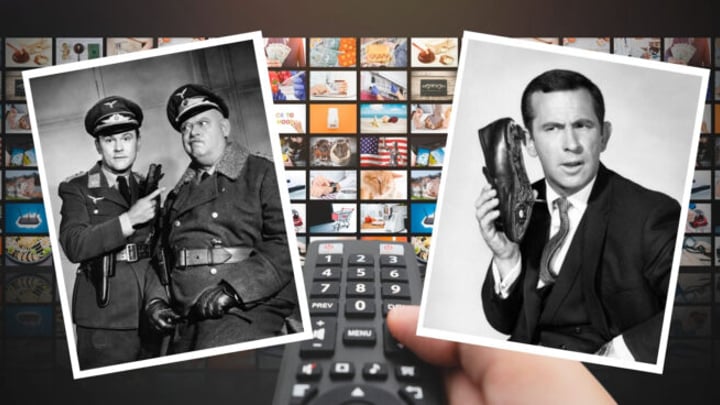
From Sergeant Schultz and Maxwell Smart to Ted Bullpitt and Kath Day-Knight, some television characters needed only a few words to become unforgettable.
There was a time when you didn’t need to send someone a clip, tag them in a post or explain the joke.
You simply said the words.
“Would you believe…?”
“I know nothing!”
“Don’t panic!”
Somewhere nearby, somebody knew exactly what you were talking about.
The great television catchphrases travelled far beyond the shows that created them. We repeated them at school, around the dinner table and across the workplace. Some became shorthand between friends and families. Others survived long after the programs themselves disappeared from our screens.
Even now, as we celebrate 70 years of television this year, it’s almost impossible to read some of them without hearing the character’s voice.
Here are 15 that have stayed with us.
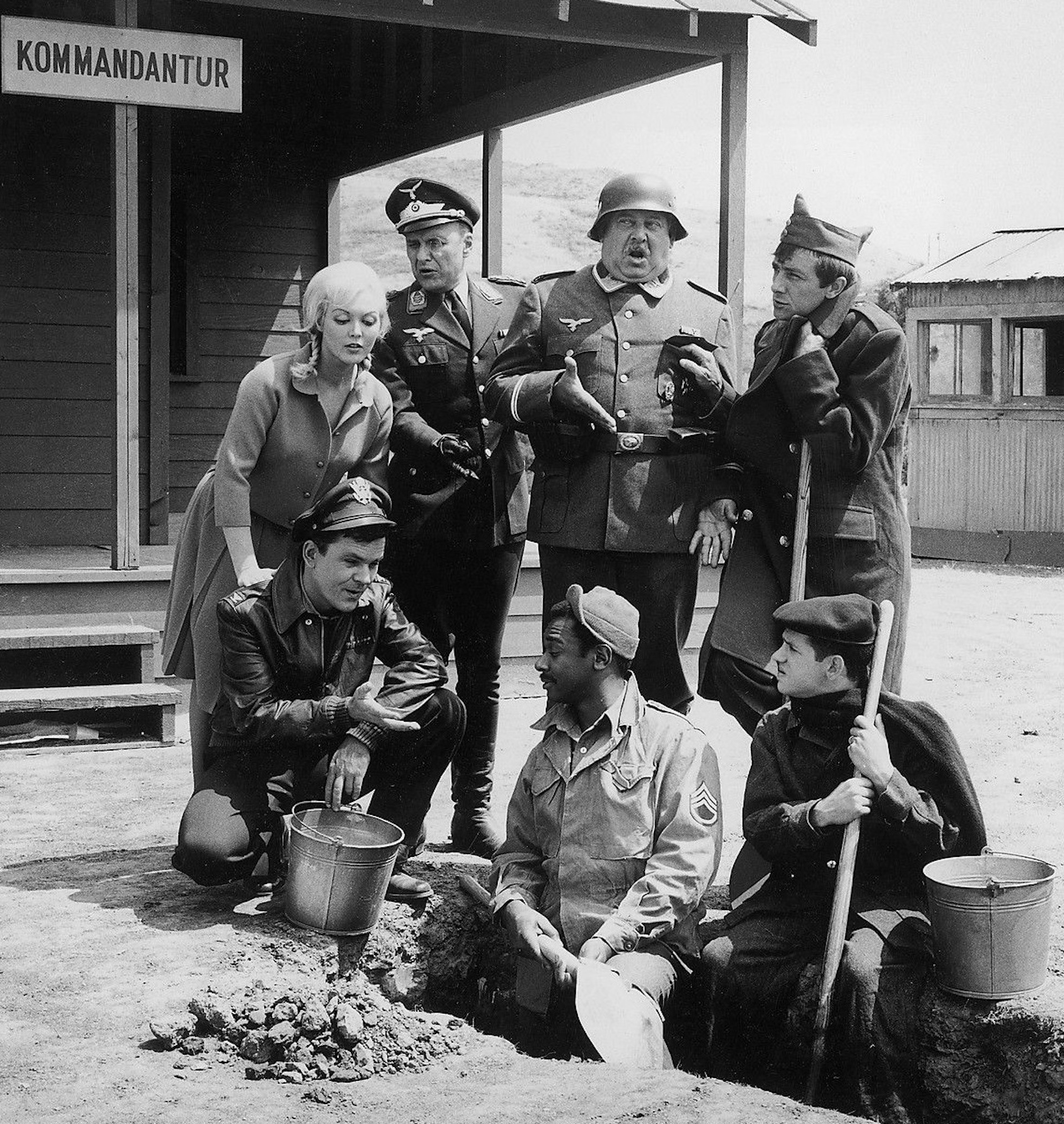
Sergeant Schultz — Hogan’s Heroes
“I know nothing!”
For a man charged with guarding prisoners of war, Sergeant Hans Schultz had a remarkable ability to become completely oblivious whenever Hogan and his men were up to something.
John Banner’s genial guard could see trouble unfolding directly in front of him and decide that knowing absolutely nothing about it was probably the wisest course.
Variations of Schultz insisting he knew, saw or heard nothing became inseparable from the character.
And really, the joke depended on all of us knowing that Schultz knew quite a lot.
Basil Fawlty — Fawlty Towers
“Don’t mention the war.”
Basil Fawlty gives his staff one simple instruction when German guests arrive at the hotel.
Then Basil does exactly what Basil Fawlty does.
John Cleese’s increasingly frantic hotelier proceeds to make the war virtually impossible to avoid, culminating in one of the most famous sequences in Fawlty Towers.
The line has long since escaped the confines of the episode. Say “don’t mention the war” today and plenty of people know exactly where it came from.
Ted Bullpitt — Kingswood Country
“Pickle me grandmother!”
Now we’re back on home soil.
Ross Higgins’ Ted Bullpitt was loud, opinionated, devoted to his Kingswood and responsible for a collection of expressions that became part of Australian television folklore.
“Pickle me grandmother!” was one of them.
The National Film and Sound Archive specifically describes it as one of the series’ famous catchphrases in a 1980 episode featuring Graham Kennedy.
Then, of course, there was Ted’s beloved car.
“The Kingswood! You’re not taking the Kingswood!”
Australian viewers of a certain vintage probably heard that sentence in Ted’s voice before they reached the end of it.
Mr Humphries — Are You Being Served?
“I’m free!”
The setup barely needed to change.
Someone at Grace Brothers would ask whether Mr Humphries was free.
There’d be a pause.
Then John Inman would turn and deliver the answer in a way nobody else possibly could.
“I’m free!”
It was simple, wonderfully camp and completely dependent on Inman’s timing. By the time Are You Being Served? became a television favourite around the world, the response had become synonymous with Mr Humphries.
Victor Meldrew — One Foot in the Grave
“I don’t believe it!”
Three decades on, you can still hear Richard Wilson’s delivery.
Victor Meldrew wasn’t simply grumpy. He seemed genuinely astonished that the world could keep finding new and inventive ways to irritate him.
“I don’t believe it!” became so strongly associated with Wilson that strangers continued saying it to him years after the sitcom finished. Wilson even began charging people to hear him perform it, with the money going to charity.
That’s when you know a catchphrase has well and truly escaped its television show.
Mork — Mork & Mindy
“Nanu nanu.”
Two nonsense words were enough.
Robin Williams arrived as Mork from the planet Ork, complete with his own customs, observations about Earth and an Orkan greeting that soon found its way into the real world.
“Nanu nanu” was accompanied by Mork’s distinctive hand gesture and became an instant part of the character.
Williams’ extraordinary energy made Mork unpredictable, but the greeting was one thing audiences could always recognise.
Maxwell Smart — Get Smart
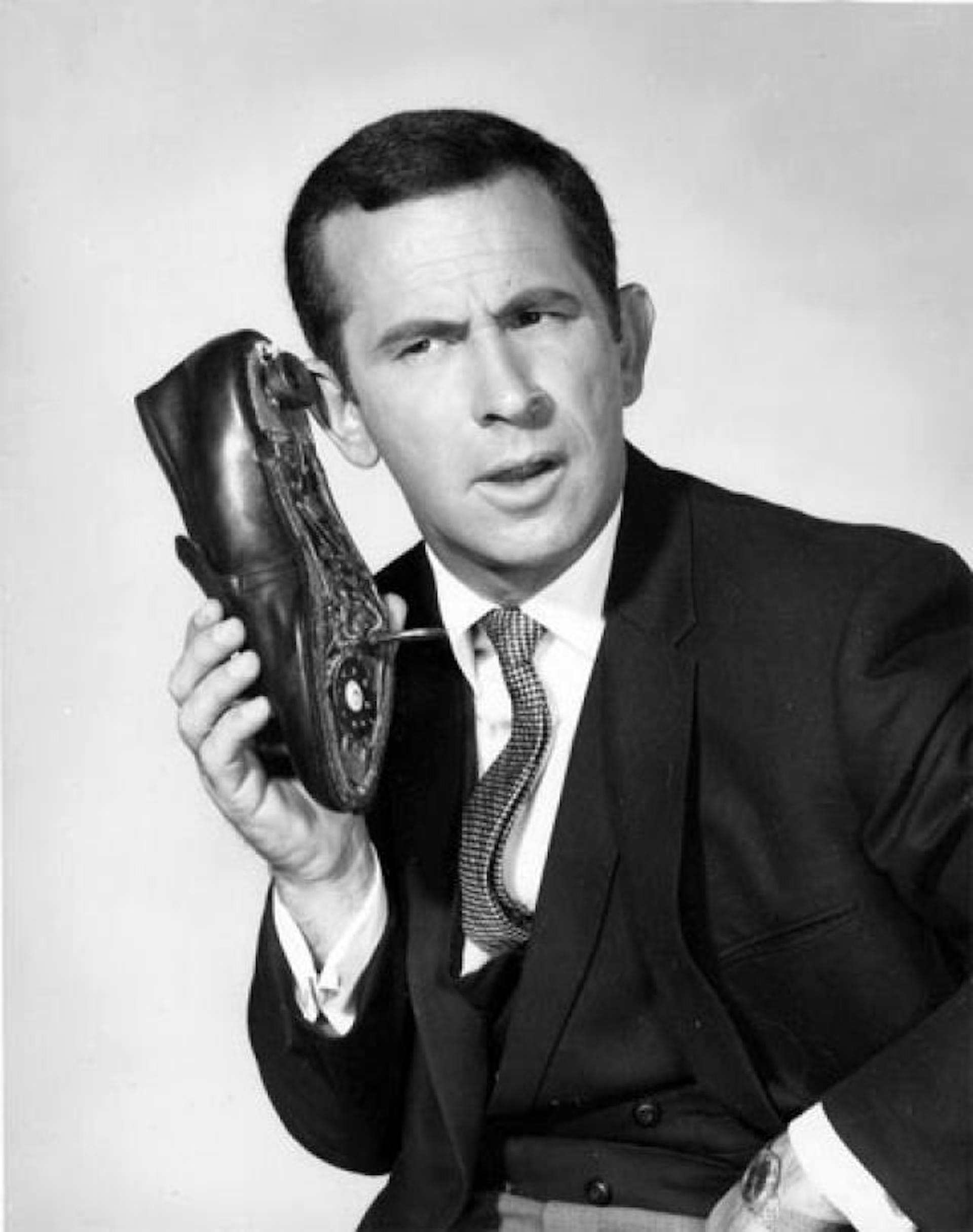
“Would you believe…?”
Few television characters could turn being completely wrong into an art form quite like Maxwell Smart.
Don Adams’ Agent 86 would make an outrageous claim, watch it fall apart and then retreat to an increasingly less impressive alternative.
“Would you believe…?” became one of the show’s defining running jokes.
This one isn’t merely remembered that way, either. Television Academy interviews include director Jay Sandrich discussing the popularity of Adams’ “Would you believe” catchphrase.
Max had plenty more where that came from, including “Sorry about that, Chief” and “Missed it by that much”.
And Max may be about to make a comeback, with US comedian John Mulaney reportedly in line to play Agent 86 in a new Get Smart movie reboot now in the early stages at Warner Bros.
Frank Spencer — Some Mothers Do ’Ave ’Em
“Ooh, Betty!”
Some catchphrases become bigger than their scripts.
Michael Crawford’s accident-prone Frank Spencer became so strongly associated with “Ooh, Betty!” that merely saying it in a high-pitched voice was enough to launch thousands of Frank impressions.
And that’s what makes this one fascinating: the public memory of the expression arguably became more powerful than its actual use in the program.
Frank’s beret, nervous mannerisms and unmistakable voice did the rest.
Fonzie — Happy Days
“Ayyyy!”
Did this even qualify as a word?
It didn’t matter.
Leather jacket, thumbs raised and a perfectly delivered “Ayyyy!” were enough to announce that Arthur Fonzarelli had arrived.
Henry Winkler’s Fonzie became one of the most recognisable television characters of the 1970s, eventually growing from supporting player into one of Happy Days’ central attractions.
The Television Academy’s archive documents just how important Fonzie became to the series.
Sometimes a catchphrase doesn’t need a sentence.
Arnold Jackson — Diff’rent Strokes
“Whatchu talkin’ ’bout, Willis?”
The look was nearly as important as the words.
Gary Coleman’s Arnold would stare up at his older brother Willis with an expression of complete disbelief before delivering the question that became one of American sitcom television’s most famous lines.
There’s a lovely bit of television history behind this one.
Writer Ben Starr recalled devising the catchphrase, and the Television Academy says it was originally written in standard English as “What are you talking about, Willis?” Coleman’s distinctive delivery helped turn it into a recurring part of the show.
Lance Corporal Jones — Dad’s Army
“Don’t panic!”
He was usually saying it while doing precisely the opposite.
Clive Dunn’s Lance Corporal Jones was one of the great comic creations of Dad’s Army: enthusiastic, loyal and liable to become extremely excited at the first hint of trouble.
His cries of “Don’t panic!” invariably made a situation feel significantly more panicked than it had moments earlier.
That contradiction was the joke — and viewers never tired of it.
Captain Mainwaring — Dad’s Army
“You stupid boy.”
One show, two unforgettable lines.
Captain Mainwaring didn’t need to raise his voice to put young Pike in his place.
Arthur Lowe’s beautifully pompous delivery of “You stupid boy” did the job.
Like so much of Dad’s Army, the humour came from character rather than the words themselves. On paper it’s an ordinary rebuke. Coming from Mainwaring, with exactly the right expression and pause, it was something else entirely.
Mrs Slocombe — Are You Being Served?
“And I am unanimous in that!”
Grace Brothers gives us a second entry too.
Mollie Sugden’s formidable Mrs Slocombe had strong views about almost everything and an equally strong conviction that those views had been comprehensively endorsed.
Usually by herself.
“And I am unanimous in that!” was classic Mrs Slocombe: grand, confident and gloriously illogical.
The joke could be seen coming a mile away.
That never seemed to make it any less funny.
Kath Day-Knight — Kath & Kim
“Look at moi.”
A relative youngster among these television classics, but surely an Australian inclusion.
Gina Riley’s Kath didn’t simply ask for attention. She demanded it.
“Look at moi” became so embedded in Australian popular culture that the Australian Screen archive describes it as the show’s most famous catchphrase.
The pronunciation was everything.
Even written on a page, it’s difficult not to hear Kath saying it.
Colonel Klink — Hogan’s Heroes
“HOGAN!”
Sometimes a surname is enough.
Werner Klemperer’s Colonel Klink might have been commandant of Stalag 13, but Hogan always seemed several moves ahead of him.
Eventually there would be a discovery, a suspicion, some new humiliation — and that unmistakable cry:
“HOGAN!”
Klink’s exasperation was one of the pleasures of Hogan’s Heroes. Hogan usually knew considerably more than Klink did.
And Sergeant Schultz? He knew nothing.
How many did we miss?
That’s the trouble with making a list like this. The moment you reach the end, another one comes flooding back.
Baldrick had a cunning plan in Blackadder. Hannibal loved it when a plan came together in The A-Team. Robin peppered Batman with his “Holy…” exclamations. And Get Smart alone could probably fill half this list.
Television Academy interviews confirm that recurring phrases were an important part of shows including Get Smart, Happy Days and Batman, showing just how deliberately some of these verbal signatures became part of a character.
But perhaps that’s why the best ones have survived.
They take us somewhere.
Back to a particular lounge room. A particular couch. A television set that required getting up to change the channel. Maybe Mum or Dad was beside us. Maybe the whole family was watching the same program because, with only a handful of channels, that’s simply what families did.
And then a familiar character would appear and say those familiar words.
Decades later, somehow, we still remember them.
Which television catchphrase did you use all the time — and which classic have we forgotten?





 Proudly Australian owned and operated
Comments 6
Join the conversation. Comments are reviewed before they appear.
I'll get you for this Butler
On the buses
Your not taking the Kingswood
Kingswood country
Cat did a whoopsie in my beret
Frank Spencer
Ahhhh, the serenity! The Castle, a movie I know, but such a classic.
What about “ He’d be dreaming “ from “ The Castle “
What about “He’d be dreaming “ from
“The Castle “
"Not happy Jan!" from the Telstra Yellow Pages commercial.
Christ on a bike!
Inspector Keating
Grantchester
Join the conversation
Tell us who you are to post a comment. We'll remember you next time.